QR Code

Products
Contact Us


Fax
+86-574-87168065

Email

Address
Luotuo Industrial Area, Zhenhai District, Ningbo City, China


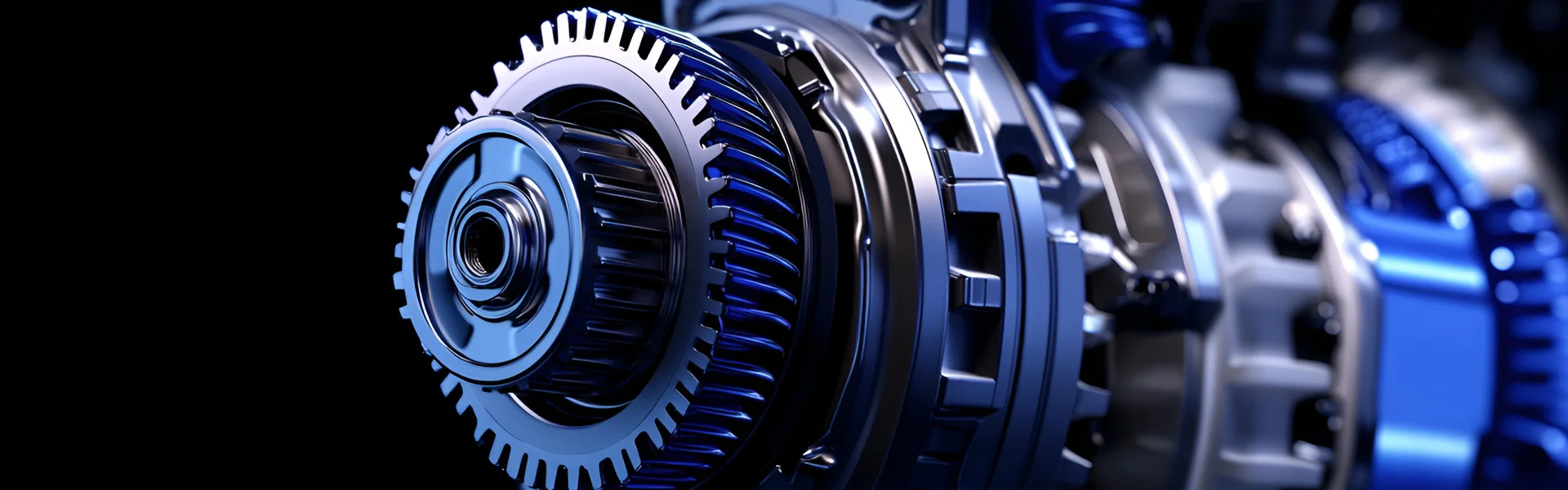
Choosing the right screw gear is a critical decision in the design and operation of precision machinery. A screw gear is not simply a transmission component but a core element that directly influences positioning accuracy, motion stability, load capacity, and long term operational reliability. In high precision environments, even minor deviations in gear parameters or manufacturing quality can result in cumulative errors, vibration, accelerated wear, and unexpected downtime.
At Raydafon Technology Group Co.,Limited, our long term engagement with global equipment manufacturers has demonstrated that successful gear selection starts with a clear understanding of application demands and ends with strict control over design and production details. Our factory focuses on delivering stable and repeatable Precision Gear solutions for industries such as automation, CNC machining, robotics, and precision instruments. This article provides a systematic and practical guide to help engineers and buyers understand how to choose the right screw gear for precision machinery while balancing performance, durability, and cost efficiency.
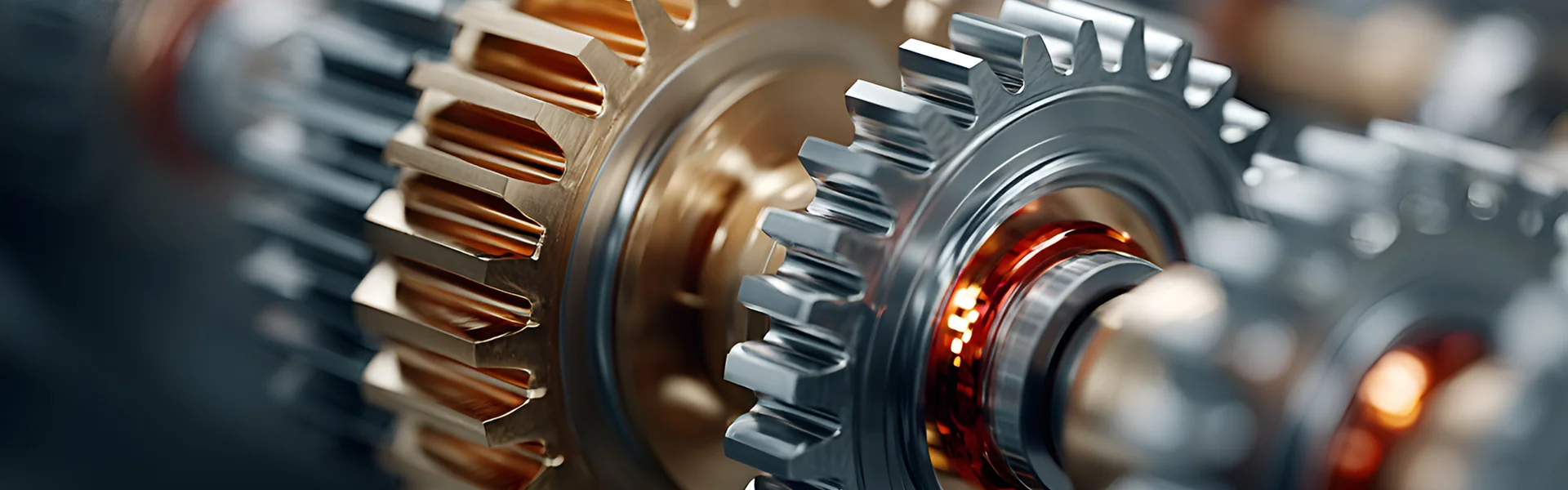
A screw gear is a mechanical transmission component designed to convert rotational motion into precise and repeatable linear movement, or to transmit torque under tightly controlled conditions. In precision machinery, where accuracy, stability, and consistency are non negotiable, the screw gear is not a secondary component but a functional core that directly affects system performance.
Unlike conventional gears that rely on tooth to tooth engagement, a screw gear uses a continuous threaded profile to achieve motion transfer. This structure allows for smoother engagement, predictable displacement, and reduced backlash when properly designed. For precision machinery manufacturers, this means greater control over movement, improved positioning accuracy, and enhanced operational reliability throughout the equipment lifecycle.
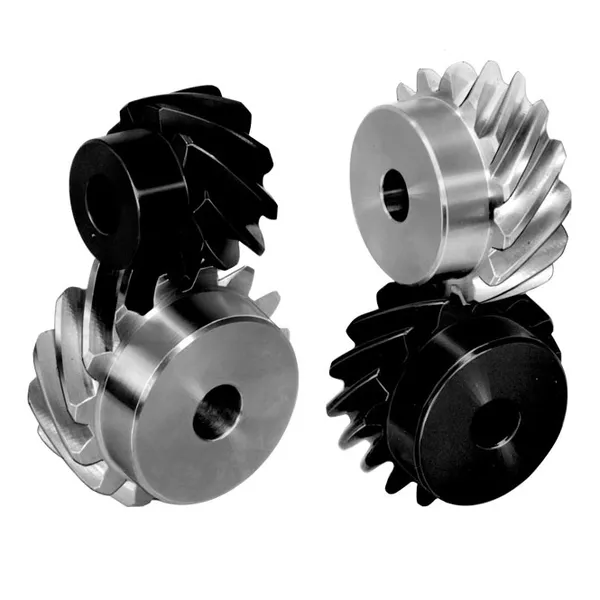
The working principle of a screw gear is based on the interaction between its thread geometry and the mating component, such as a nut or driven element. When rotational force is applied, the axial movement generated follows a fixed mathematical relationship determined by lead, pitch, and helix angle. This predictable relationship is essential for applications where every unit of movement must be accurately controlled.
In precision machinery, this behavior enables engineers to design systems where motion is repeatable over thousands or even millions of cycles. Our factory experience shows that a well designed Precision Gear maintains consistent performance even under continuous operation, provided that material quality and machining accuracy are properly controlled.
Precision machinery imposes strict requirements on transmission components. These systems often operate under high load density, tight spatial constraints, and demanding accuracy standards. Screw gears meet these requirements more effectively than many alternative transmission solutions.
Screw gears are widely used across various precision driven industries. At Raydafon Technology Group Co.,Limited, our long term cooperation with equipment manufacturers has highlighted several recurring application scenarios where screw gears play a decisive role.
Compared with traditional gear mechanisms, screw gears offer distinct advantages that align with the needs of precision machinery. These advantages become particularly apparent in systems where accuracy degradation over time cannot be tolerated.
Understanding what a screw gear is and how it functions is only the first step. In precision machinery, selecting the appropriate type and specification is a strategic decision that influences the overall efficiency and reliability of the system. A poorly matched Precision Gear may initially function but will often lead to accelerated wear, loss of accuracy, and increased maintenance costs.
At Raydafon Technology Group Co.,Limited, our factory emphasizes early stage evaluation and application specific analysis to ensure that each screw gear integrates seamlessly into the customer’s machinery. By aligning functional requirements with correct design choices, precision systems can achieve stable performance and long term operational value.
In precision machinery, material selection and structural design are not secondary considerations but foundational factors that directly influence the performance, stability, and service life of a screw gear. Even when the correct parameters are defined, an unsuitable material or poorly optimized structure can undermine the effectiveness of the entire transmission system. For this reason, engineers and buyers must evaluate these elements together rather than in isolation.
At Raydafon, our factory experience has consistently shown that long term reliability is achieved when material properties, structural geometry, and application demands are properly aligned. A Precision Gear designed for accuracy must maintain dimensional stability under load, resist surface wear, and perform consistently across varied operating conditions.
The material of a screw gear determines how it responds to mechanical stress, friction, temperature changes, and environmental exposure. In precision machinery, even minor material deformation can lead to measurable positioning errors or backlash over time. Therefore, selecting the appropriate material is essential to maintaining accuracy and repeatability.
Different precision applications require different material solutions. Our factory typically recommends materials based on load conditions, operating environment, and maintenance expectations.
Each material presents a balance between strength, friction characteristics, manufacturability, and cost. Selecting the wrong option may reduce initial expense but increase long term operational risk.
Structural design defines how forces are distributed throughout the screw gear during operation. In precision machinery, uneven stress distribution can accelerate wear and reduce motion accuracy. Proper structural design ensures that loads are shared evenly and that contact surfaces maintain integrity over extended cycles.
Surface finish is often underestimated, yet it plays a decisive role in friction behavior and wear resistance. A Precision Gear with a poor surface finish may generate excessive heat, noise, and vibration, even if all other specifications appear correct.
At Raydafon Technology Group Co.,Limited, our factory prioritizes controlled surface finishing processes to ensure smooth engagement and stable motion.
The most effective screw gear solutions result from matching material and structural design to real operating conditions rather than theoretical limits. Precision machinery often operates under variable loads, intermittent duty cycles, or constrained spaces, all of which must be considered during the design phase.
Our factory approach emphasizes application driven evaluation, ensuring that each Precision Gear delivers stable performance, predictable accuracy, and long term value. By selecting materials and structures that align with actual working conditions, manufacturers can reduce maintenance frequency, extend service life, and protect the overall integrity of their precision machinery.
Selecting the correct screw gear parameters is the most decisive step in ensuring that a transmission system performs reliably in precision machinery. Parameters define how motion is transferred, how loads are managed, and how accurately a system can position or control movement over time. Even with suitable materials and structural design, incorrect parameter selection can compromise accuracy, efficiency, and service life.
At Raydafon Technology Group Co.,Limited, our engineering experience confirms that parameter selection must be approached as a system level decision. Our factory works closely with equipment manufacturers to ensure that each Precision Gear is configured to match actual operating conditions rather than theoretical assumptions.
In precision machinery, accuracy is not determined by a single specification but by the interaction of multiple parameters. Screw gear parameters define how rotational input is converted into linear or controlled motion. Small deviations in lead, pitch, or accuracy grade can result in cumulative positioning errors over extended cycles. A Precision Gear with unsuitable parameters may appear functional during initial operation but gradually lose accuracy due to wear, backlash, or elastic deformation. Therefore, selecting parameters with appropriate safety margins is essential for maintaining long term stability.
When choosing a screw gear for precision machinery, engineers should evaluate the following parameters as an integrated set rather than in isolation.
The following table provides a general reference for common screw gear parameters used in precision machinery. Final specifications should always be validated against actual application requirements.
| Parameter | Typical Range | Functional Impact |
| Lead | 2 mm to 20 mm | Controls motion resolution |
| Pitch | 1 mm to 10 mm | Affects load sharing |
| Accuracy Grade | Grade 5 to Grade 7 | Defines repeatability |
| Surface Hardness | HRC 55 to 62 | Improves wear resistance |
Different precision machinery applications prioritize different performance outcomes. High speed automation systems focus on efficiency and smooth motion, while heavy duty positioning equipment emphasizes stiffness and load capacity. Parameter selection must reflect these priorities.
Real world operating conditions often differ from laboratory assumptions. Temperature variations, lubrication quality, contamination, and installation alignment all influence screw gear behavior. At Raydafon Technology Group Co.,Limited, our factory emphasizes evaluating these external factors during parameter selection. A Precision Gear operating in fluctuating temperatures may require additional tolerance allowances, while systems exposed to dust or moisture may need specific surface treatments. Ignoring these factors can shorten service life and reduce accuracy.
Standard specifications do not always meet the unique demands of precision machinery. Custom parameter optimization allows screw gears to be tailored to specific applications, improving performance and reducing long term risk. Our factory supports customized lead, pitch, accuracy grades, and surface treatments to align with customer requirements. By refining parameters at the design stage, manufacturers can achieve smoother operation, longer service intervals, and more predictable system behavior.
Selecting screw gear parameters should not focus solely on initial performance. Long term factors such as wear progression, maintenance intervals, and system upgrades must also be considered. A well selected Precision Gear maintains stable accuracy over its service life, protecting the overall performance of precision machinery. At Raydafon Technology Group Co.,Limited, our approach integrates engineering analysis with manufacturing experience, ensuring that parameter selection supports both immediate functionality and sustained operational value.
Manufacturing quality is the final factor that determines whether a screw gear performs as designed. Even with optimal material and parameter selection, poor machining or inadequate quality control can compromise performance. At Raydafon Technology Group Co.,Limited, strict process control is applied throughout production to ensure dimensional accuracy and surface integrity.
Precision machinery relies on repeatable performance. Variations in thread geometry, surface roughness, or heat treatment can introduce inconsistencies that reduce system reliability. Our factory integrates advanced machining equipment and inspection systems to maintain stable quality across production batches.
Consistent quality is ensured through standardized inspection procedures.
Choosing the right screw gear for precision machinery requires a systematic evaluation of application requirements, material selection, parameter definition, and manufacturing quality. A well selected Precision Gear improves accuracy, extends service life, and reduces maintenance costs. Raydafon Technology Group Co.,Limited combines engineering expertise and production capability to support customers throughout the selection and implementation process. Our factory remains committed to delivering stable and reliable solutions for demanding precision applications.
If you are seeking a dependable partner to support your precision machinery projects, our team is ready to provide technical consultation and customized solutions. Contact us to discuss your requirements and discover how our experience can contribute to your long term success.
Q1: How to Choose the Right Screw Gear for Precision Machinery?
Choosing the right screw gear starts with defining load, accuracy, and operating conditions, then matching material, parameters, and manufacturing quality to those requirements.
Q2: What Parameters Are Most Important When Selecting a Screw Gear?
Lead, pitch, accuracy grade, load capacity, and surface hardness are critical parameters that directly influence performance and durability.
Q3: Why Is Material Selection Critical for Precision Machinery?
Material selection affects wear resistance, dimensional stability, and environmental compatibility, all of which are essential for maintaining accuracy.
Q4: How Does Manufacturing Quality Affect Screw Gear Performance?
High quality machining and strict quality control ensure consistent geometry and surface finish, reducing vibration and extending service life.
Q5: Can Screw Gears Be Customized for Specific Applications?
Yes, customized designs allow parameters and materials to be optimized for unique operating conditions, improving overall system efficiency.
+86-574-87168065
Luotuo Industrial Area, Zhenhai District, Ningbo City, China