QR Code

Products
Contact Us


Fax
+86-574-87168065

Email

Address
Luotuo Industrial Area, Zhenhai District, Ningbo City, China


For two decades in the power transmission industry, a recurring question from engineers and plant managers has been: how do load conditions affect long-term reliability of worm gearbox units? The answer is foundational to system longevity and total cost of ownership. At Raydafon Technology Group Co., Limited, our engineering team has dedicated significant resources to understanding this precise relationship through rigorous testing in our factory and field analysis. The load profile a gearbox encounters is not merely a specification on a datasheet; it is the defining narrative of its operational life. A worm gearbox is prized for its compact high-ratio torque multiplication, self-locking capability, and smooth operation.
However, its unique sliding contact between the worm and wheel makes it particularly sensitive to how load is applied over time. Misunderstanding or underestimating load conditions—be it shock, overload, or improper mounting—is the primary culprit behind premature wear, efficiency loss, and catastrophic failure. This deep dive explores the mechanics behind load-induced wear, outlines our product's engineered response, and provides a framework for maximizing your gearbox's service life, ensuring the investment in our components delivers decades of reliable performance.
The long-term reliability of any worm gearbox is a direct function of the stress cycles imposed upon its internal components. Unlike spur gears with primarily rolling contact, the worm and wheel engage in a significant sliding action. This sliding friction generates heat and is the genesis of most wear phenomena. Load conditions directly amplify these effects. Let's dissect the primary wear mechanisms exacerbated by load. However, to fully grasp this, we must first map the entire journey of stress from application to failure.
When an external torque demand is placed on the output shaft, it initiates a complex chain of mechanical reactions inside the worm gearbox. This is not a simple lever action. The pathway is critical for diagnosing failures and designing for resilience.
| Wear Mechanism | Primary Load Trigger | Physical Process & Symptoms | Long-Term Reliability Impact |
| Abrasive Wear | Sustained Overload; Contaminated Lubricant under Load | Hard particles or asperities are forced into soft wheel material (bronze), micro-cutting and ploughing material away. Leads to a polished, scored appearance, increased backlash, and bronze particles in oil. | Gradual loss of tooth profile accuracy. Reduced contact ratio leads to higher stress on remaining profile, accelerating subsequent wear phases. A primary cause of efficiency drop over time. |
| Adhesive Wear (Scuffing) | Acute Shock Load; Severe Overload; Starved Lubrication under Load | The EP lubricant film is ruptured, causing localized welding of worm and wheel asperities. These welds are immediately sheared, tearing material from the softer wheel. Visible as rough, torn surfaces and severe discoloration. | Often a catastrophic, rapid failure mode. Can destroy the gear set within minutes or hours of the overload event. Represents a complete breakdown of the designed lubrication regime. |
| Surface Fatigue (Pitting) | High-Cycle Fatigue Loads; Repetitive Overload Peaks | Subsurface shear stresses from cyclic contact pressure cause micro-crack initiation. Cracks propagate to the surface, releasing small pits. Appears as small craters, typically near the pitch line. Audible as increasing noise with operation. | Progressive damage that worsens as pits create stress concentrators for further pitting. Eventually leads to macro-pitting and spalling, where large flakes of material detach, causing vibration and potential seizure. |
| Thermo-Mechanical Wear | Sustained High Load leading to Chronic Overheating | Excessive frictional heat softens the worm wheel material, reducing its yield strength. The load then causes plastic flow of the bronze, distorting the tooth profile. Often accompanied by oil carbonization and seal failure. | Fundamental material degradation. The gear geometry is permanently altered, leading to misalignment, uneven load sharing, and a rapid cascade into other failure modes. Recovery is impossible; replacement is required. |
| Fretting & False Brinelling (Bearings) | Static Overload; Vibration under Load; Improper Mounting Loads | Oscillatory micro-motion between bearing races and rolling elements under heavy static load or vibration creates wear debris. Appears as etched patterns or indentations on raceways, even without rotation. | Premature bearing failure, which secondarily allows shaft misalignment. This misalignment then induces uneven, high-stress loading on the gear mesh, creating a dual-point failure scenario. |
Real-world loads are rarely constant. Understanding the load spectrum—the distribution of different load levels over time—is crucial for predicting life. Our factory analysis at Raydafon Technology Group Co., Limited uses Miner's Rule of cumulative fatigue damage to assess this.
In our factory at Raydafon Technology Group Co., Limited, we simulate these exact spectra. We subject our worm gearbox prototypes to programmed fatigue cycles that replicate years of service in a matter of weeks. This allows us to identify the exact load threshold where wear mechanisms transition from benign to destructive, and to design our standard units with a safe operating margin well below that threshold.
This empirical data is the cornerstone of our reliability assurance, transforming the abstract concept of "load" into a quantifiable design parameter for every worm gearbox we produce. The goal is to ensure that our units not only survive the rated load but are intrinsically robust against the unpredictable load histories of industrial applications, where overload events are not a matter of "if" but "when."
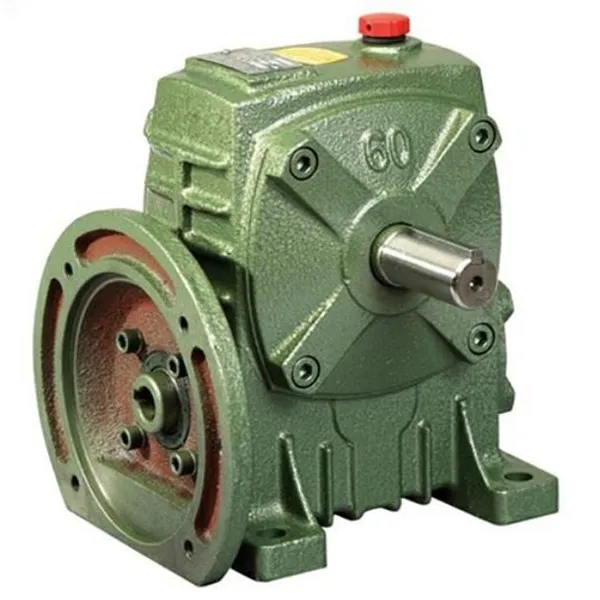
At Raydafon Technology Group Co., Limited, our design philosophy is proactive: we engineer our worm gearbox units not just for a static load rating, but for the dynamic and often harsh realities of application life. Every material choice, geometric calculation, and assembly process is optimized to resist the load-related wear mechanisms previously described. Here is a breakdown of our key design and manufacturing strategies, expanded to show the depth of our approach.
Our defense against load starts at the atomic level. The material pairing is the first and most critical barrier.
Precision geometry ensures the load is shared as evenly as possible, avoiding destructive stress concentrations.
| Design Aspect | Our Specification & Process | Engineering Benefit for Load Handling | How It Mitigates Specific Wear |
| Worm Material & Treatment | Case-Hardening Steel (e.g., 20MnCr5), Carburized to 0.8mm depth, Hardness 60±2 HRC, Superfinished to Ra ≤0.4μm. | Extreme surface hardness resists abrasion; tough core prevents shaft failure under shock loads; smooth surface reduces friction heat. | Directly combats abrasive and adhesive wear. Reduces the coefficient of friction, a key variable in the heat generation equation (Q ∝ μ * Load * Velocity). |
| Worm Wheel Material | Continuous-Cast Phosphor Bronze CuSn12, Centrifugally Cast for density, Hardness 90-110 HB. | Optimal balance of strength and conformability. The softer bronze can embed minor abrasives and adapt to the worm's profile under load, improving contact. | Provides inherent lubricity. Its conformability helps distribute load more evenly even under slight misalignment, reducing pitting risk. |
| Housing Design | GG30 Cast Iron, Finite Element Analysis (FEA) optimized ribbing, Machined mounting surfaces and bore alignments in a single setup. | Maximum rigidity minimizes deflection under heavy overhung loads. Maintains precise shaft alignment, which is critical for even load distribution across the full tooth face. | Prevents edge loading caused by housing flex. Edge loading creates localized high contact pressure, the direct cause of premature pitting and spalling. |
| Bearing System | Output Shaft: Paired Tapered Roller Bearings, pre-loaded. Input Shaft: Deep Groove Ball Bearings + Thrust Bearings. All bearings are C3 clearance for industrial temperature ranges. | Tapered rollers handle high radial and axial loads simultaneously. Pre-load eliminates internal clearance, reducing shaft play under varying load directions. | Prevents shaft deflection and axial float. Bearing failure from overload is a primary cause of secondary gear mesh failure. This system ensures shaft position integrity. |
| Lubrication Engineering | Synthetic Polyglycol (PG) or Polyalphaolefin (PAO) based oil with high EP/anti-wear additives. Precise oil volume calculated for optimal splash lubrication and thermal capacity. | Synthetic oils maintain stable viscosity over a wider temperature range, ensuring film strength during cold starts and hot operation. High EP additives prevent film collapse under shock loads. | Maintains the elastohydrodynamic lubrication (EHL) film under all designed load conditions. This is the single most effective barrier against adhesive wear (scuffing). |
| Assembly & Run-In | Controlled-temperature assembly, verified bearing pre-load. Every unit undergoes a no-load and loaded run-in procedure before shipment to seat the contact pattern. | Eliminates assembly errors that induce internal stress. The run-in gently wears in the gears under controlled conditions, establishing the optimal load-bearing contact pattern from day one. | Prevents "infant mortality" failures. A proper run-in smoothes asperities, distributes the initial load evenly, and prepares the unit for its full-rated load in the field. |
Since load creates friction, and friction creates heat, managing heat is managing a symptom of load. Our designs go beyond a simple finned housing.
Our commitment in our factory is to control every variable. From the spectrographic analysis of incoming bronze ingots to the final thermal imaging check during the loaded run-in test, our worm gearbox is built to be a reliable partner in your most demanding applications. The Raydafon Technology Group Co., Limited name on the unit signifies a component designed with a deep, empirical understanding of how load conditions affect long-term reliability. We don't just supply a gearbox; we supply a system engineered to absorb, distribute, and dissipate the mechanical energy of your application predictably and safely over its entire design life.
Selecting the correct worm gearbox is a predictive exercise. To guarantee long-term reliability, engineers must move beyond the simple "horsepower and ratio" calculation and analyze the complete load profile. Misapplication, often due to an incomplete load assessment, is a leading cause of field failures. Here, we outline the critical parameters our technical team evaluates when sizing a worm gearbox for a customer, providing the detailed methodology behind each.
This seems basic, but errors are common. It must be the torque at the gearbox output shaft.
The Service Factor is the universal language for accounting for real-world harshness. It is a multiplier applied to the calculated required output torque (T2) to determine the minimum required gearbox rated torque.
Selection of Service Factor is based on a systematic assessment of three main categories:
Formula for Minimum Gearbox Rated Torque: T2_rated_min = T2_calculated * SF_total.
This is often the limiting factor, especially in smaller gearboxes or high-speed applications. A gearbox can be mechanically strong enough but still overheat.
Forces applied to the shafts by external components are separate from, and additive to, the transmitted torque.
Our approach at Raydafon Technology is collaborative. We provide our customers with detailed selection worksheets that walk through every parameter above. More importantly, we offer direct engineering support. By sharing your full application details—motor specs, start-up inertia, load cycle profile, ambient conditions, and layout drawings—we can jointly select a worm gearbox that is not just adequate, but optimally reliable for your specific load conditions. This meticulous calculation process, grounded in decades of our factory test data, is what separates a correct selection from a catastrophic one.
Even the most robustly designed worm gearbox from Raydafon can succumb to premature failure if installed or maintained incorrectly. Proper mounting and a disciplined maintenance regimen are your operational levers to directly counteract the relentless impact of load. These practices preserve the designed load-bearing geometry and lubrication integrity, ensuring the unit performs as engineered throughout its life.
Errors made during installation create inherent, load-amplifying defects that no amount of later maintenance can fully correct.
Lubrication is the active agent that prevents the load from causing metal-to-metal contact.
Be the early warning system for load-related issues.
| Action | Frequency / Timing | Purpose & Load Connection | Key Procedure Notes |
| Initial Oil Change | After first 250-500 hours of operation. | Removes initial wear debris (abrasive particles) generated during the load-seating process of gears and bearings. Prevents abrasive wear acceleration. | Drain while warm. Flush only with the same oil type if debris is excessive. Refill to correct level. |
| Routine Oil Change & Analysis | Every 4000-6000 operating hours or 12 months. More frequent in dirty/hot environments. | Replenishes degraded additives, removes accumulated wear metals and contaminants. Oil analysis provides a wear trend, a direct indicator of internal load severity and component health. | Take oil sample from mid-sump during operation. Send to lab. Document results to establish trend lines for critical elements like Fe, Cu, Sn. |
| Bolt Torque Check | After 50-100 hrs, then annually. | Prevents loosening due to vibration and thermal cycling under load. Loose bolts allow housing movement and misalignment, creating uneven, high-stress loading. | Use a calibrated torque wrench. Follow criss-cross pattern for housing and base bolts. |
| Alignment Check | After installation, after any maintenance on connected equipment, and annually. | Ensures connected shafts are co-linear. Misalignment is a direct source of cyclic bending loads, causing premature bearing failure and uneven gear contact (edge loading). | Perform with equipment at operating temperature. Use laser or dial indicator tools for precision. |
| Temperature & Vibration Trend Monitoring | Weekly / Monthly readings; continuous monitoring for critical applications. | Early detection of problems (lubrication failure, bearing wear, misalignment) that increase internal friction and dynamic loads. Allows for planned intervention before catastrophic failure. | Mark measurement points on housing. Record ambient temperature and load condition for accurate comparison. |
| Visual Inspection for Leaks & Damage | Daily/Weekly walk-around. | Identifies oil leaks (potential lubricant loss leading to wear) or physical damage from external impacts that could compromise housing integrity under load. | Check seal faces, housing joints, and breather. Ensure breather is clean and unobstructed. |
The expertise from our factory extends beyond the point of sale. Our technical documentation includes comprehensive installation guides and maintenance checklists tailored to our products. By partnering with us, you gain not just a quality worm gearbox, but the knowledge framework and support to ensure it delivers its full designed life, actively managing the load challenges it faces every day. Reliability is a partnership, and our commitment is to be your technical resource from installation through decades of service.
Understanding how load conditions affect long-term reliability of worm gearbox units is the cornerstone of successful application engineering. It is a multifaceted interplay between mechanical stress, thermal management, material science, and operational practices. As we have explored, adverse loads accelerate wear mechanisms like abrasion, pitting, and scuffing, leading to efficiency loss and premature failure.
At Raydafon Technology Group Co., Limited, we combat this through intentional design: from our hardened steel worms and bronze wheels to our rigid housings and high-capacity bearings, every aspect of our worm gearbox is engineered to manage and withstand demanding load profiles. However, the partnership for reliability is a shared one. Success hinges on the accurate calculation of service factors, thermal limits, and external loads during selection, followed by meticulous installation and a proactive maintenance culture.
By viewing the load not as a single number but as a dynamic lifetime profile, and by choosing a gearbox partner with the engineering depth to match, you transform a critical component into a dependable asset. We invite you to leverage our two decades of experience. Let our engineering team assist you in analyzing your specific load conditions to specify the optimal worm gearbox solution, ensuring performance, longevity, and maximum return on your investment.
Contact Raydafon Technology Group Co., Limited today for a detailed application review and product recommendation. Download our comprehensive technical whitepaper on load calculation or request a site audit from our engineers to assess your current drive systems.
Q1: What is the most damaging type of load for a worm gearbox?
A1: Shock loads are typically the most damaging. A sudden, high-magnitude torque spike can instantly rupture the critical oil film between the worm and wheel, causing immediate adhesive wear (scuffing) and potentially cracking teeth or bearings. It also induces high stress cycles that accelerate fatigue. While sustained overloads are harmful, the instantaneous nature of shock loads often leaves no time for system inertia to absorb the impact, making them particularly severe.
Q2: How does continuous overloading at, say, 110% of rated torque impact life?
A2: Continuous overloading, even marginally, drastically reduces service life. The relationship between load and bearing/gear life is often exponential (following a cube-law relationship for bearings). An overload of 110% may reduce the expected L10 bearing life by roughly 30-40%. More critically, it elevates operating temperature due to increased friction. This can lead to thermal runaway, where hotter oil thins, leading to more friction and even hotter oil, ultimately causing rapid lubricant breakdown and catastrophic wear within a short period.
Q3: Can a larger service factor completely guarantee reliability under variable loads?
A3: A larger service factor is a crucial safety margin, but it is not an absolute guarantee. It accounts for unknowns in load character and frequency. However, reliability also depends on correct installation (alignment, mounting), proper lubrication, and environmental factors (cleanliness, ambient temperature). Using a high service factor selects a more robust gearbox with greater inherent capacity, but it must still be installed and maintained correctly to realize that full potential lifespan.
Q4: Why is thermal capacity so important when discussing load?
A4: In a worm gearbox, a significant portion of input power is lost as heat due to sliding friction. The load directly determines the magnitude of this frictional loss. The thermal capacity is the rate at which the gearbox housing can dissipate this heat to the environment without the internal temperature exceeding the safe limit for the lubricant (typically 90-100°C). If the applied load generates heat faster than it can be dissipated, the unit will overheat, breaking down the oil and leading to rapid failure, even if the mechanical components are strong enough to handle the torque.
Q5: How do overhung loads specifically degrade a worm gearbox?
A5: Overhung loads apply a bending moment to the output shaft. This force is carried by the output shaft bearings. Excessive OHL causes premature bearing fatigue (brinelling, spalling). It also deflects the shaft slightly, which misaligns the precise mesh between the worm and wheel. This misalignment concentrates the load on one end of the tooth, causing localized pitting and wear, increasing backlash, and generating noise and vibration. It effectively undermines the carefully engineered load distribution of the gear set.
+86-574-87168065
Luotuo Industrial Area, Zhenhai District, Ningbo City, China