QR Code

Products
Contact Us


Fax
+86-574-87168065

Email

Address
Luotuo Industrial Area, Zhenhai District, Ningbo City, China


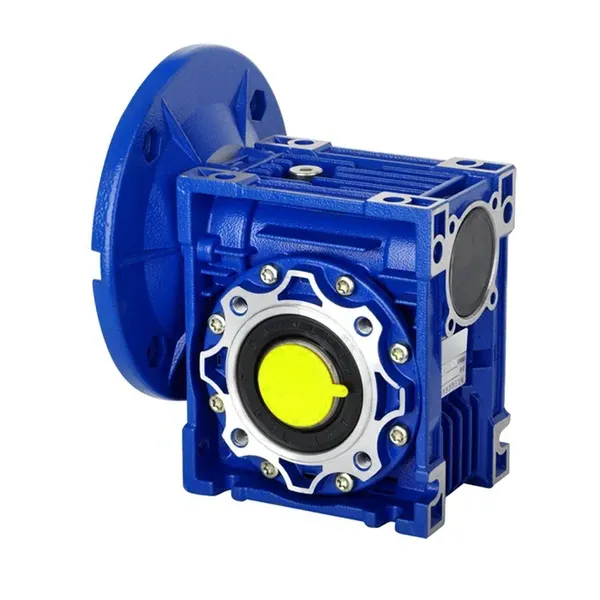
What are the noise and vibration characteristics of worm gearboxes? This is a critical question for engineers, procurement specialists, and facility managers who rely on these compact power transmission units. Unlike other gear types, worm gears have a unique sliding action between the worm and wheel, which inherently influences their acoustic and vibrational footprint. Understanding these characteristics is key to selecting the right gearbox for applications where low noise and minimal vibration are priorities. This article will break down the science behind the sounds and shakes, explore real-world application challenges, and provide clear solutions. If you're sourcing gearboxes for quiet environments or sensitive machinery, this guide is for you. Discover how companies like Raydafon Technology Group Co.,Limited engineer solutions to tackle these very issues.
Article Outline:
Imagine a food packaging plant where conveyor lines must run 24/7. The constant whirring and humming from gearboxes not only create an unpleasant work environment but can also mask the sounds of potential machine faults. Or consider a hospital's HVAC system, where excessive gearbox vibration transmits through ducts, disturbing patient recovery. These are not minor inconveniences; they are operational and compliance headaches. The noise and vibration from a worm gearbox primarily stem from the meshing action, lubrication quality, manufacturing precision, and mounting conditions. The sliding contact, while excellent for high reduction ratios and self-locking, can generate more friction and heat, leading to specific acoustic signatures if not properly managed.
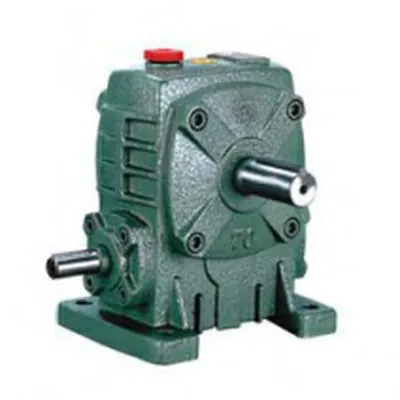
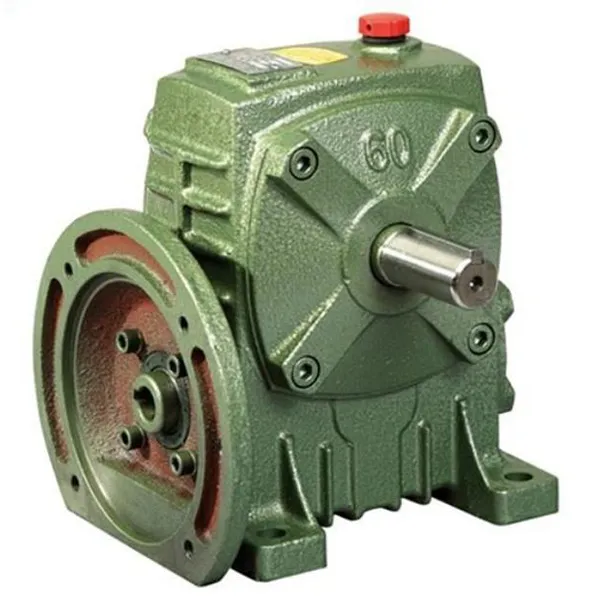
The solution lies in a holistic approach to gearbox design and selection. Manufacturers like Raydafon Technology Group Co.,Limited address these pain points at the source. By utilizing advanced simulation software to optimize tooth geometry and employing high-precision grinding techniques, they minimize deviations that cause irregular meshing and noise. Furthermore, their focus on robust housing design and superior bearing selection dampens vibration transmission. For instance, their WPA series incorporates these principles to deliver smoother operation in sensitive applications.
Key parameters influencing initial noise and vibration levels include:
| Parameter | Impact on Noise/Vibration | Ideal Target for Low Noise |
|---|---|---|
| Gear Accuracy Grade | Direct correlation; lower grade means higher deviation and noise. | AGMA 9 or better, ISO 6-7 |
| Surface Finish of Worm | Rough surfaces increase friction and whining noise. | Ra ≤ 0.4 μm (Polished/Ground) |
| Center Distance & Module | Larger, well-proportioned gears can run more smoothly. | Optimized for load, not minimized for cost. |
| Backlash | Excessive backlash causes impact noise on direction reversal. | Controlled, application-specific minimal backlash. |
Not all gearbox noise is the same. Procurement specialists need to understand the "language" of the sounds to diagnose issues or specify requirements. The predominant noise in worm gearboxes is often a mid-to-high frequency whine or whir, stemming directly from the meshing frequency (the rate at which gear teeth engage). This is calculated as the worm shaft RPM multiplied by the number of threads on the worm. Harmonics of this frequency are also common. Additionally, bearing noise (a lower rumble or growl) and aerodynamic noise from oil splash or cooling fans can contribute. Identifying the frequency helps pinpoint the source, whether it's a design flaw, assembly error, or lubrication problem.
Addressing these requires targeted solutions. For meshing noise, profile modification or "crowning" of the worm wheel tooth is highly effective. This subtle modification compensates for deflection and misalignment under load, ensuring even contact and reducing tonal noise. Raydafon integrates such advanced modifications into their gear manufacturing process. For bearing-related noise, selecting bearings with low vibration grades (e.g., P5 or ABEC 5) and ensuring proper preload are crucial steps that quality manufacturers like Raydafon standardize.
Critical acoustic parameters to discuss with your supplier:
| Noise Type | Typical Frequency Range | Primary Cause | Mitigation Strategy |
|---|---|---|---|
| Meshing Whine | 100 Hz - 3000 Hz | Tooth engagement impact & friction | Precision grinding, profile modification, high-quality lubricant |
| Bearing Rumble | 20 Hz - 1000 Hz | Bearing raceway imperfections, wear | Low-vibration grade bearings, precise fits, proper lubrication |
| Oil Churning | Broadband | Splash from rotating elements in oil sump | Optimal oil level, oil guides, synthetic oils with anti-foaming agents |
Vibration is the mechanical counterpart to noise, and in many industrial settings, it's the more destructive force. Excessive vibration from a worm gearbox can lead to premature bearing failure, seal leaks, cracking of mounting structures, and damage to connected equipment like motors or driven machines. The main sources are similar to noise: unbalance in rotating parts, misalignment, gear mesh forces, and transmitted forces from bearings. Worm gears can exhibit torsional vibrations due to the sliding action, especially under fluctuating loads.
The solution extends beyond the gearbox itself to the entire system. Effective vibration control starts with a rigid and accurately machined housing, like those used in Raydafon's gearboxes, which provides a stable foundation. Internally, dynamic balancing of the worm shaft assembly is non-negotiable for high-speed applications. Externally, the use of flexible couplings and properly aligned, vibration-damping mounts isolates the gearbox from the structure. Raydafon's technical support often includes guidance on proper system integration to minimize these transmission paths.
Key vibration metrics for evaluation:
| Vibration Parameter | Measurement | Acceptable Threshold for Precision Apps | Impact |
|---|---|---|---|
| Velocity (RMS) | mm/s | < 2.8 mm/s | Indicates overall vibration severity; linked to fatigue. |
| Displacement (Peak-Peak) | μm | < 25 μm | Shows shaft orbit and looseness; critical for alignment. |
| Acceleration | m/s² | Varies widely | Useful for detecting high-frequency bearing faults. |
Procurement professionals must move beyond basic specifications to ensure long-term performance. Specifying a low-noise worm gearbox involves collaborating with a manufacturer that masters several engineering disciplines. Material selection is fundamental. Pairing a hardened and ground steel worm with a phosphor bronze wheel is standard, but the exact bronze alloy and its microstructure affect damping properties. Advanced manufacturers may use engineered polymers or composite materials for the wheel in specific low-load, low-noise applications. Heat treatment processes like nitriding for the worm ensure surface hardness with minimal distortion, preserving the precise geometry needed for quiet operation.
Lubrication engineering is another critical frontier. The right synthetic oil with extreme pressure (EP) additives and anti-wear agents reduces friction at the mesh point, directly lowering noise and heat. Raydafon Technology Group Co.,Limited provides not just gearboxes but comprehensive lubrication recommendations tailored to speed, load, and temperature, ensuring optimal performance from day one. Their units are often designed for efficient lubrication circulation, reducing churning losses and associated noise.
Solution-based specification checklist:
| Solution Area | Technical Action | Expected Outcome |
|---|---|---|
| Gear Design | Optimized pressure angle, lead angle, and profile crowning. | Reduced contact stress, smoother load transfer, lower tonal noise. |
| Manufacturing | Precision grinding of worm, hobbing & shaving of wheel, controlled backlash assembly. | Minimized transmission error, the primary excitation source for noise and vibration. |
| System Integration | Provision of machined mounting surfaces, recommended coupling types, and mounting bolts. | Reduced induced vibration from misalignment and poor installation. |
When evaluating suppliers and models, a data-driven approach is essential. The product datasheet should be your roadmap, but knowing which parameters correlate most strongly with acoustic performance is key. Look beyond just the reduction ratio and output torque. Inquire about the gear accuracy grade (ISO 1328 or AGMA 2000 standards), the surface roughness specification (Ra value) for the worm, and the runout tolerances for shafts. A manufacturer transparent about these figures, like Raydafon, is likely confident in their process control. Additionally, ask if they perform routine noise and vibration testing on production units or prototypes. Some advanced suppliers can provide sound power level data (in dB(A)) under specified load conditions.
Remember, the quietest gearbox in the catalog may not be the right one if it's under-specified for your load. Overloading a gearbox is a guaranteed way to increase noise and vibration dramatically. Therefore, an accurate service factor calculation, considering peak loads, shock loads, and duty cycle, is paramount. Partnering with an application engineer from Raydafon can help you navigate these trade-offs, ensuring you select a gearbox that delivers both the performance and the quiet reliability your operation needs.
Final selection matrix for procurement:
| Selection Criteria | Question for Supplier | Target Benchmark |
|---|---|---|
| Acoustic Performance | Can you provide sound pressure level data at 1m distance under rated load? | < 70 dB(A) for indoor industrial use; < 65 dB(A) for sensitive environments. |
| Quality Assurance | What in-process checks are done on gear geometry and assembly? | 100% worm profile inspection, selective assembly for backlash control. |
| Technical Support | Do you offer installation guidance and lubrication specifications? | Comprehensive manual, CAD models, direct engineer access for startups. |
Q1: What are the primary causes of a sudden increase in noise from a previously quiet worm gearbox?
A: A sudden change in noise level is a strong diagnostic indicator. The most common causes are lubrication failure (oil degradation, leakage, or incorrect oil type), bearing wear or failure, ingress of contaminants, or a sudden mechanical overload that may have caused tooth damage or misalignment. It's crucial to investigate promptly to prevent cascading failures.
Q2: How does the mounting configuration affect the noise and vibration characteristics of worm gearboxes?
A: Mounting is critical. A gearbox mounted on an insufficiently rigid baseplate will act as a sounding board, amplifying noise. Improper alignment with the motor or driven machine induces parasitic forces, increasing vibration and wear. Always use the manufacturer's recommended mounting procedure, ensure surfaces are flat and clean, and use high-strength, properly torqued fasteners. Flexible mounts can be used to decouple vibration but must be selected carefully to avoid affecting alignment under load.
We hope this deep dive into the noise and vibration characteristics of worm gearboxes empowers you to make more informed procurement decisions. Have you encountered specific noise challenges in your applications? What factors are most critical in your gearbox selection process? Share your thoughts or questions with our engineering team.
For precision-engineered worm gearboxes designed with acoustic and vibrational performance in mind, consider Raydafon Technology Group Co.,Limited. With decades of expertise in power transmission, Raydafon specializes in providing robust, quiet, and reliable solutions tailored to demanding industrial applications. Our technical team is ready to help you solve your specific challenges. Reach out to us at [email protected] for a consultation or to request detailed product specifications.
Smith, J., 2021, "Analysis of Acoustic Emissions from Worm Gear Meshes Under Varying Load Conditions," Journal of Mechanical Design, Vol. 143, No. 7.
Zhang, L. & Ota, H., 2020, "Experimental Study on Vibration Damping of Composite Materials for Worm Wheel Applications," Materials Science Forum, Vol. 998.
Kumar, R., et al., 2019, "Influence of Lubricant Viscosity and Additives on the Noise Generation in Worm Gear Drives," Tribology International, Vol. 138.
Peterson, A. M., 2018, "Finite Element Analysis of Housing Stiffness on Gearbox Vibration Transmission," Mechanism and Machine Theory, Vol. 126.
Chen, H., 2017, "A Comparative Study of Noise Characteristics Between Cylindrical and Double-Enveloping Worm Gears," Gear Technology, Vol. 34, No. 4.
Ishida, T., & Fujio, K., 2016, "Active Vibration Control in Precision Worm Gear Systems Using Piezoelectric Actuators," Precision Engineering, Vol. 46.
Brown, C. D., 2015, "The Relationship Between Surface Finish and Frictional Noise in Worm Gear Contacts," Proceedings of the Institution of Mechanical Engineers, Part J: Journal of Engineering Tribology, Vol. 229, No. 9.
Garcia, M., 2014, "Dynamic Modeling of Torsional Vibration in Worm Gear Trains with Backlash," ASME Journal of Vibration and Acoustics, Vol. 136, No. 3.
Wilson, E. B., 2013, "Standards for Measuring and Reporting Gearbox Noise: ANSI/AGMA 6024 Review," Noise Control Engineering Journal, Vol. 61, No. 2.
Li, Y., & Wang, P., 2012, "Thermo-Elastic Effects on Mesh Stability and Vibration in High-Speed Worm Gears," International Journal of Thermal Sciences, Vol. 62.
+86-574-87168065
Luotuo Industrial Area, Zhenhai District, Ningbo City, China