QR Code

Products
Contact Us


Fax
+86-574-87168065

Email

Address
Luotuo Industrial Area, Zhenhai District, Ningbo City, China


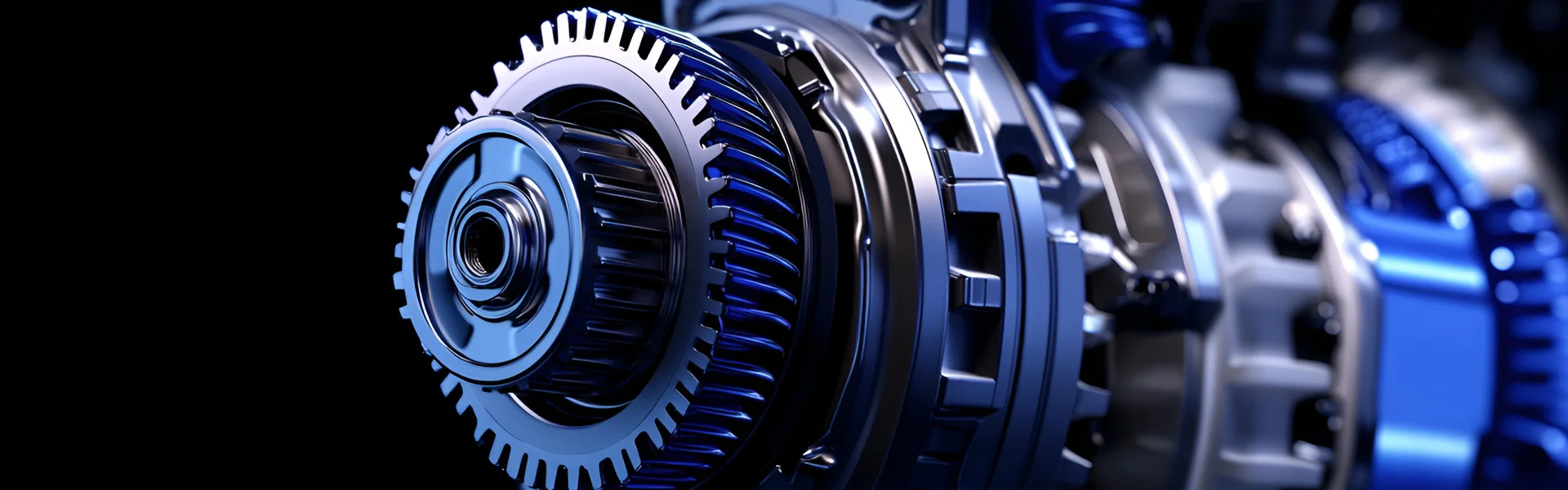
What are the typical efficiency ranges for a worm gear reducer? If you're specifying or sourcing motion control components, this question isn't just academic—it's crucial for your project's success, budget, and energy consumption. A common misconception is that all worm gearboxes are inherently low-efficiency components. While it's true their unique sliding contact action between the worm and wheel results in more friction than rolling gears, their efficiency isn't a fixed number. It's a spectrum, typically ranging from as low as 50% to as high as 90% or more. Understanding this range and the factors that influence it is key to selecting the right drive for demanding applications like conveyor systems, packaging machinery, or heavy-duty lifts. This guide cuts through the complexity, offering clear, actionable insights to help you make informed procurement decisions and avoid costly performance mismatches.
Article Outline
Picture this: you've installed a new conveyor system in your facility. The initial quotes looked good, but months later, the energy bills are creeping up, and there's noticeable heat radiating from the gearbox housings. This is the classic symptom of an inefficient worm gear drive. The core of the issue lies in the sliding friction inherent in the worm and wheel mesh. Unlike helical or planetary gears that primarily use rolling contact, worm gears experience significant sliding action, which converts mechanical energy into heat. This fundamental characteristic sets the stage for their efficiency profile. However, labeling them simply as "low efficiency" misses critical nuances. The actual efficiency is profoundly affected by the gear ratio, the quality of materials, manufacturing precision, and lubrication. A high-ratio reducer, for instance, will naturally have lower efficiency than a low-ratio one due to the increased sliding action. This is where partnering with a knowledgeable supplier like Raydafon Technology Group Co.,Limited becomes invaluable. Their engineering team doesn't just sell components; they analyze your application's torque, speed, and duty cycle requirements to recommend a reducer that balances performance, cost, and energy savings, ensuring you aren't paying for wasted power in the long run.
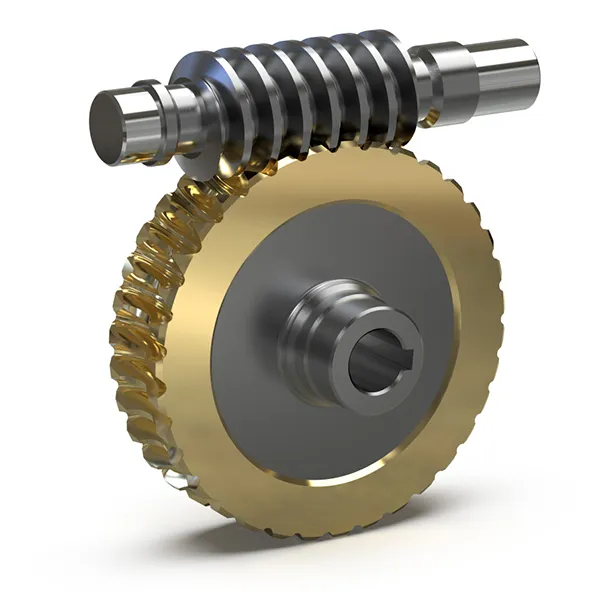
Selecting a worm gear reducer requires moving beyond catalog horsepower ratings. To truly answer "What are the typical efficiency ranges for a worm gear reducer?" you must examine the specific parameters that dictate its performance. The gear ratio is the primary dictator. A single-start worm with a high ratio (e.g., 60:1) may operate at 50-70% efficiency, while a low-ratio or multi-start worm design (e.g., 5:1 or 10:1) can achieve 80-90% efficiency under optimal conditions. Material selection is equally critical. A hardened steel worm paired with a phosphor bronze wheel offers an excellent balance of strength and low-friction properties. Furthermore, advanced manufacturing techniques that produce superior surface finishes on the worm thread and wheel teeth drastically reduce friction losses. The following table outlines how these parameters typically interact to influence the efficiency range:
| Gear Ratio Range | Typical Efficiency Range | Key Influencing Factors | Common Application Fit |
|---|---|---|---|
| 5:1 to 15:1 | 75% - 90% | Multi-start worm, high-quality bronze, precision grinding | High-speed mixers, agitators |
| 20:1 to 40:1 | 65% - 80% | Single-start worm, standard bronze, hobbed gears | Conveyors, packaging machines |
| 50:1 and higher | 50% - 70% | Single-start worm, thermal management critical | Heavy-duty lifts, winches |
Navigating these parameters alone can be daunting for a procurement specialist. The risk is selecting a unit that meets the basic torque requirement but operates at the low end of its efficiency band, leading to excess heat, potential lubrication breakdown, and higher lifetime costs. This is the precise problem Raydafon Technology Group Co.,Limited is engineered to solve. They approach each inquiry not as a simple product request but as an application challenge. Their technical support will ask detailed questions about your operational environment, duty cycle (continuous vs. intermittent), and required lifespan. Based on this, they can specify a worm gear reducer from their extensive range that is optimized for your conditions. For instance, for a high-cyclic application, they might recommend their high-efficiency series featuring ground worm threads and optimized lubrication, directly addressing the core question of "What are the typical efficiency ranges for a worm gear reducer?" by providing a unit that will consistently perform at the top of its expected range. This proactive specification support prevents underperformance and ensures reliability, turning a potential operational headache into a seamless, efficient drive solution.
Q: What is the most significant factor affecting the efficiency of a worm gear reducer?
A: The single most significant factor is the gear ratio, specifically the number of starts on the worm. Higher ratios (achieved with single-start worms) result in more sliding contact per output revolution, generating more friction and heat, thus lowering efficiency. Lower ratios (often from double or quadruple-start worms) significantly improve efficiency.
Q: Can lubrication improve the efficiency range of a worm gearbox?
A: Absolutely. The correct type and viscosity of lubricant are critical. High-quality synthetic oils with extreme pressure (EP) and anti-wear additives can form a more durable film between the sliding surfaces, reducing friction. Proper lubrication, maintained at the correct level and changed at recommended intervals, is essential for sustaining the reducer's designed efficiency over its service life.
We hope this detailed breakdown empowers your next sourcing decision. Understanding efficiency is the first step toward optimizing your machinery's performance and total cost of ownership.
For expert guidance in selecting the right worm gear reducer for your specific needs, consider Raydafon Technology Group Co.,Limited. With deep engineering expertise and a comprehensive product range, Raydafon provides tailored transmission solutions that prioritize efficiency, durability, and value. Contact their team today to discuss your application requirements at [email protected].
Maitra, G.M., 1998, "Friction and Efficiency of Worm Gears", Journal of Mechanical Design, Vol. 120, No. 2.
Dudley, D.W., 1994, "Handbook of Practical Gear Design", CRC Press, Chapter on Worm Gearing.
Kapelevich, A., 2013, "Geometry and Design of Involute Spur Gears with Asymmetric Teeth", Mechanism and Machine Theory, Vol. 59.
Litvin, F.L., et al., 2004, "Gear Geometry and Applied Theory", Cambridge University Press, 2nd Ed.
Chen, Y., & Tsay, C.B., 2002, "Surface Geometry of Cylindrical Worm Gear Drives with New Conjugated Surfaces", Journal of Mechanical Design, Vol. 124, No. 4.
Simon, V., 2007, "Influence of Tooth Modifications on Tooth Contact in Cylindrical Worm Gears", Mechanism and Machine Theory, Vol. 42, No. 8.
Pedersen, N.L., 2006, "Improving Worm Gear Efficiency", Proceedings of the Institution of Mechanical Engineers, Part C: Journal of Mechanical Engineering Science, Vol. 220, No. 1.
Wang, J., et al., 2015, "Thermo-mechanical Analysis of a Worm Gear Reducer", International Journal of Precision Engineering and Manufacturing, Vol. 16, No. 5.
Tsay, C.B., & Fong, Z.H., 2000, "Mathematical Model and Surface Deviation of Cylindrical Gears Grinded by Disk Wheel", Journal of Mechanical Design, Vol. 122, No. 4.
Britton, R.D., et al., 2000, "The Effect of Lubricant Rheology on the Efficiency of Worm Gears", Tribology International, Vol. 33, No. 8.
+86-574-87168065
Luotuo Industrial Area, Zhenhai District, Ningbo City, China