QR Code

Products
Contact Us


Fax
+86-574-87168065

Email

Address
Luotuo Industrial Area, Zhenhai District, Ningbo City, China


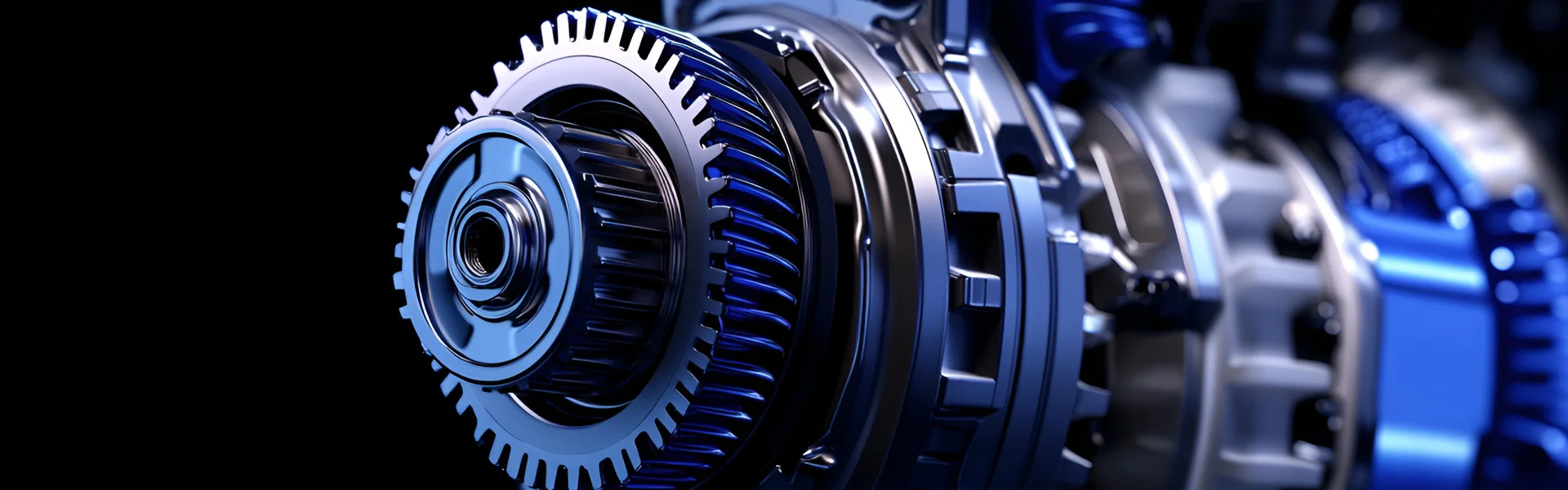
Efficient power transmission is the backbone of modern mechanical systems. From industrial automation lines to heavy-duty mining equipment, the ability to transfer torque smoothly between intersecting shafts determines equipment performance, reliability, and service life. So how do bevel gears improve power transmission? The answer lies in their geometry, tooth design, material selection, and manufacturing precision.
Bevel gears are specifically engineered to transmit power between intersecting shafts, typically at 90 degrees. When designed and manufactured with strict tolerance control, they reduce energy loss, minimize vibration, and optimize torque output. At Raydafon Technology Group Co.,Limited, our engineering team focuses on high-efficiency gear geometry and advanced machining technology to ensure every Precision Gear delivers stable transmission performance even under high load and high-speed conditions.
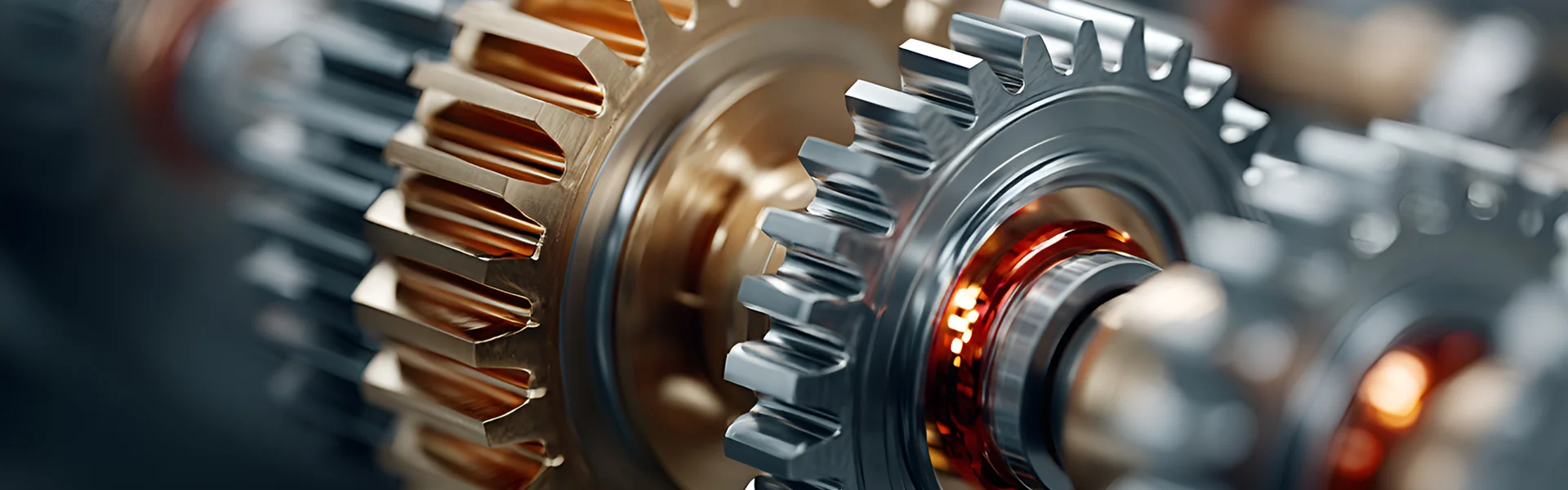
1. What Are Bevel Gears and How Do They Work in Angular Power Systems?
2. Why Does Precision Manufacturing Directly Affect Transmission Efficiency?
3. How Do Advanced Materials and Surface Treatments Enhance Durability?
4. Where Are High-Performance Bevel Gears Commonly Applied?
5. Summary
6. FAQ
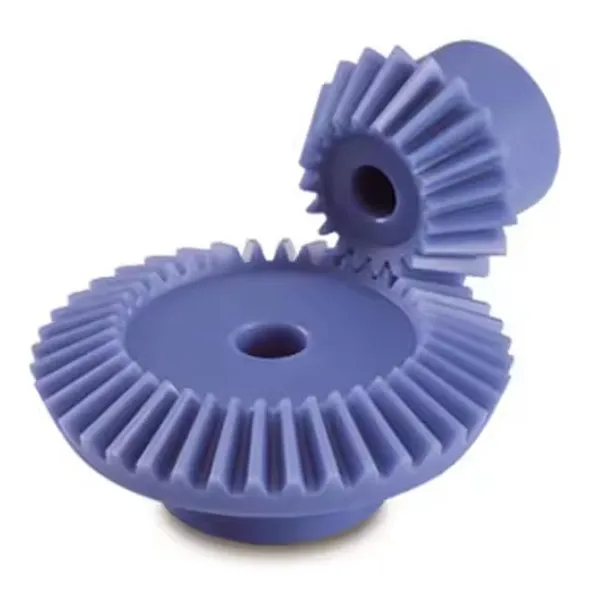
Bevel gears are mechanical components designed to transmit motion and torque between intersecting shafts. Unlike spur gears, which operate on parallel shafts, bevel gears operate at an angle, most commonly 90 degrees. Their conical pitch surface allows them to convert rotational direction efficiently while maintaining torque stability.
The geometry of the gear teeth plays a decisive role in performance. Spiral bevel gears provide smoother engagement compared to straight bevel gears. Hypoid gears allow shaft offset while increasing torque capacity. At Raydafon Technology Group Co.,Limited, our factory produces multiple bevel gear configurations to match different torque, speed, and alignment requirements.
| Module Range | 0.5 – 12 |
| Outer Diameter | 10 mm – 800 mm |
| Pressure Angle | 20° / 25° Customizable |
| Gear Accuracy | DIN 5 – DIN 8 |
| Material Options | 20CrMnTi, 42CrMo, Stainless Steel, Alloy Steel |
| Heat Treatment | Carburizing, Nitriding, Induction Hardening |
| Surface Hardness | HRC 58 – 62 |
Each Precision Gear manufactured in our factory undergoes gear tooth inspection, runout testing, and contact pattern analysis to ensure transmission stability. Raydafon Technology Group Co.,Limited applies CNC gear cutting and grinding technology to maintain micron-level tolerance control. By optimizing tooth geometry, our designs reduce sliding friction and increase contact ratio. This improves torque transfer while minimizing energy loss. The result is higher mechanical efficiency and longer operational life.
Transmission efficiency depends heavily on manufacturing accuracy. Even minor deviations in tooth profile or alignment can cause vibration, noise, and premature wear. That is why Precision Gear quality determines whether bevel gears truly improve power transmission.
Raydafon Technology Group Co.,Limited invests in advanced Gleason and Klingelnberg gear cutting systems. Our factory also utilizes coordinate measuring machines to verify dimensional precision before shipment.
Our engineering team ensures that every Precision Gear meets strict dynamic balancing standards. This guarantees stable performance at high rotational speeds. Proper tooth contact patterns increase load-bearing area and reduce localized stress concentration. Through optimized tooth grinding processes, Raydafon Technology Group Co.,Limited achieves smoother meshing engagement. This reduces friction losses and significantly enhances transmission efficiency.
Material selection plays a decisive role in gear strength and durability. Bevel gears often operate under high torque and shock loads. Choosing the right alloy and applying proper heat treatment ensures long-term reliability.
Our factory selects materials based on torque demand, rotational speed, and environmental conditions. Raydafon Technology Group Co.,Limited follows strict metallurgical inspection procedures to ensure structural integrity.
Every Precision Gear is processed under controlled heat treatment cycles to achieve uniform hardness distribution. Surface finishing reduces micro-pitting and extends service life. Through continuous material innovation and testing, Raydafon ensures our products maintain optimal performance even in heavy-duty industrial environments.
Bevel gears are widely used in industries that require directional power transfer and high torque density.
Raydafon Technology Group Co.,Limited supplies Precision Gear solutions to global OEM customers. Our factory supports custom design services to meet specialized transmission requirements. In robotics applications, precision directly affects positioning accuracy. In automotive systems, durability determines safety and reliability. Our engineering team designs gears tailored to each specific working condition. By combining advanced machining, optimized tooth design, and rigorous quality control, Raydafon Technology Group Co.,Limited ensures consistent performance across various industrial sectors.
So how do bevel gears improve power transmission? The answer lies in their ability to efficiently redirect torque between intersecting shafts, reduce friction loss through optimized tooth geometry, and maintain stability through precision manufacturing. When combined with advanced materials and controlled heat treatment, bevel gears deliver high load capacity, low vibration, and extended service life.
At Raydafon Technology Group Co.,Limited, every Precision Gear is produced under strict quality standards. Our factory integrates design optimization, material science, and advanced CNC machining to deliver reliable transmission solutions. If you are looking for high-performance bevel gears tailored to your application, contact our team today to discuss your technical requirements and receive a customized quotation.
Q1: How Do Bevel Gears Improve Power Transmission?
Bevel gears improve power transmission by efficiently transferring torque between intersecting shafts while minimizing friction loss. Their conical tooth geometry increases contact ratio, reduces vibration, and enhances load distribution, resulting in higher mechanical efficiency and longer service life.
Q2: What Is the Difference Between Spiral and Straight Bevel Gears?
Straight bevel gears have linear teeth and are suitable for lower-speed applications. Spiral bevel gears feature curved teeth that provide smoother engagement, higher load capacity, and reduced noise, making them ideal for high-speed and heavy-duty systems.
Q3: Why Is Gear Accuracy Important for Transmission Efficiency?
Higher gear accuracy reduces backlash, vibration, and uneven load distribution. Precision machining ensures proper tooth contact patterns, which minimizes energy loss and improves torque stability in demanding industrial environments.
Q4: Which Materials Are Best for High-Load Bevel Gears?
Alloy steels such as 20CrMnTi and 42CrMo are commonly used due to their excellent strength and wear resistance. Proper carburizing or nitriding treatment further enhances durability and fatigue resistance under heavy loads.
Q5: How Can Custom Bevel Gears Be Designed for Specific Applications?
Custom bevel gears are designed by analyzing torque requirements, rotational speed, shaft angle, and environmental conditions. Advanced CAD modeling, gear simulation, and precision machining ensure optimized performance for each application.
+86-574-87168065
Luotuo Industrial Area, Zhenhai District, Ningbo City, China