QR Code

Products
Contact Us


Fax
+86-574-87168065

Email

Address
Luotuo Industrial Area, Zhenhai District, Ningbo City, China


It is 3:17 a.m. when a maintenance lead discovers a puddle of hydraulic fluid under a lift table. The line is down, orders are backing up, and the replacement cylinder must match the failed unit exactly. That is the moment procurement managers ask: What are the specifications of the EP-YC504D/55/501 hydraulic lift cylinder? The answer determines whether the repair happens in hours or days, and whether the replacement handles harsh duty cycles without early failure. Sourcing the right lift cylinder means comparing bore size, rod diameter, stroke length, mounting type, working pressure, port size, and seal material against the original equipment design. Missing even one dimension can cause misalignment, internal leakage, or premature wear. This detailed buyer-focused guide breaks down the key specifications, real-world pain points, and proven sourcing strategies used by purchasing teams at OEMs and MRO facilities. Raydafon Technology Group Co.,Limited supports these decisions with clear technical data, consistent quality, and responsive supply for the EP-YC504D/55/501. Whether you are comparing quotes, preparing a drawing request, or solving a repeated seal failure, this page gives you the clarity needed to move forward with confidence.
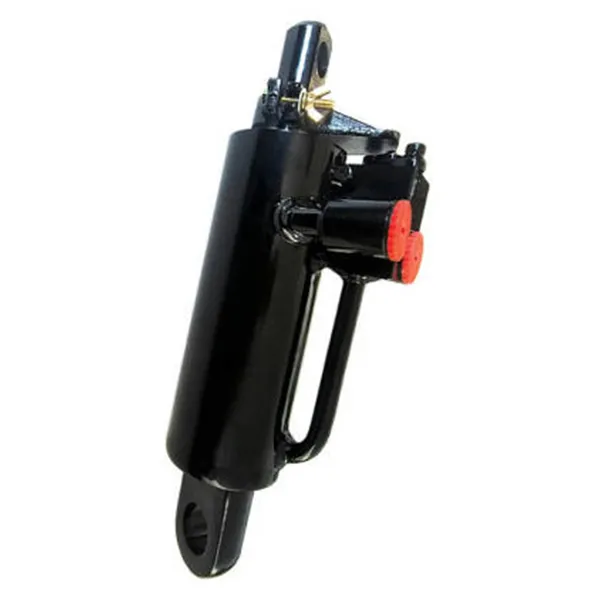
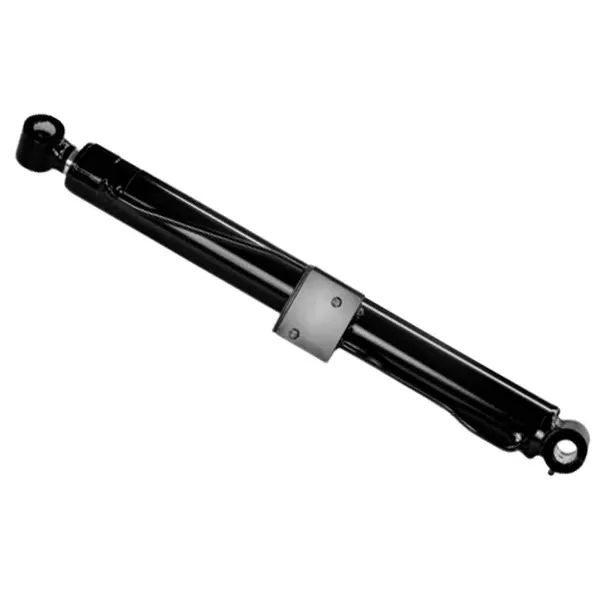
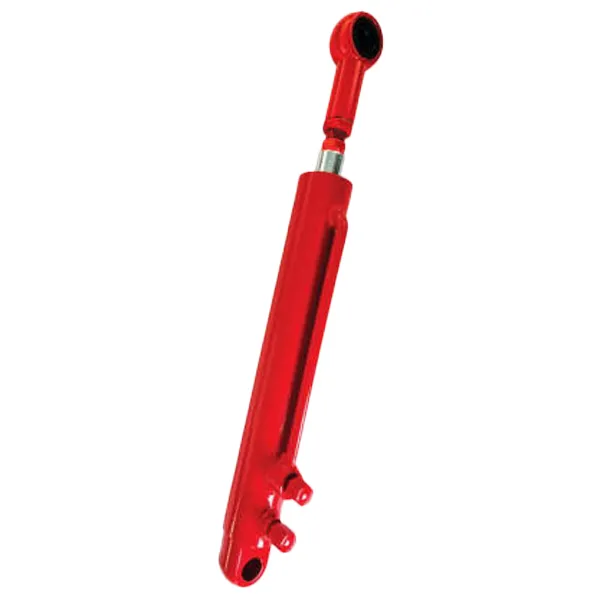
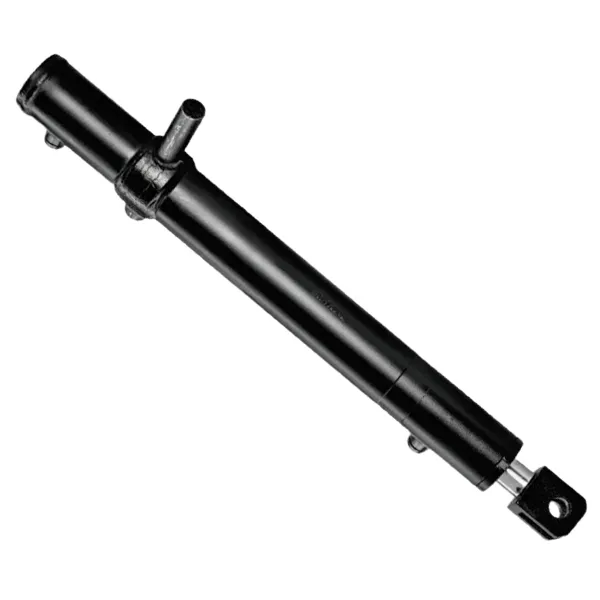
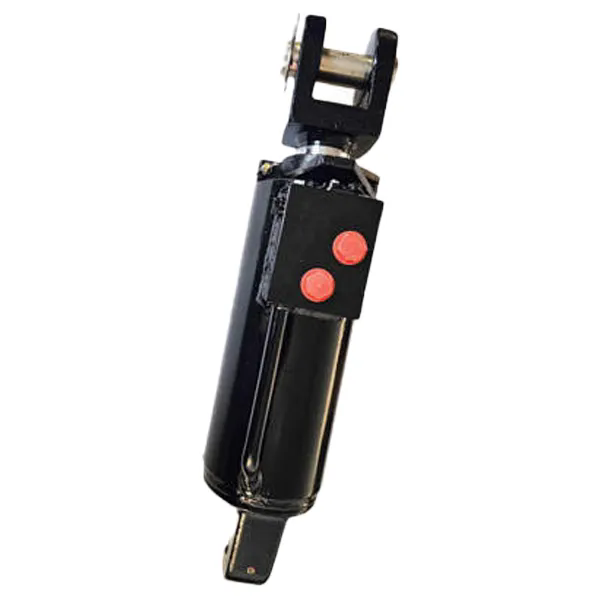
For sourcing teams, the EP-YC504D/55/501 Hydraulic Lift Cylinder is a double-acting unit designed for industrial lifting, material handling, and mobile equipment applications. The first question on every request for quotation is always the same: What are the specifications of the EP-YC504D/55/501 hydraulic lift cylinder? The short answer starts with these core parameters: a 50 mm bore, a 28 mm induction-hardened piston rod, a 501 mm stroke, and a standard working pressure of 16 MPa. Mounting options include clevis end caps and trunnion mounts, while the ports are typically BSPP or NPT threaded to suit your existing hose fittings. Seal kits use a combination of polyurethane and nitrile rubber to resist wear and maintain consistent performance across temperature changes.
This section gives you a practical baseline before you request a full data sheet. Always confirm final dimensions with Raydafon Technology Group Co.,Limited because custom stroke, cushioning, and port orientation can change the overall length and mounting envelope. Buyers who skip this step often receive a cylinder that looks correct in the catalog but does not fit the actual machine frame.
Picture a distribution center where a scissor lift table works 16 hours a day. The original cylinder lasted only seven months because the seal failed under repeated side loads. Every replacement meant two technicians, a forklift, and nearly four hours of downtime. After switching to the EP-YC504D/55/501, the maintenance team noticed three immediate differences: the hard chrome rod resisted scoring, the polyurethane seal held pressure on the return stroke, and the mounting dimensions matched the existing pin without modification.
For procurement, that translates into fewer emergency purchases and lower total cost of ownership. Instead of accepting the lowest quote that does not list rod hardness or seal material, use the specification table below to compare like for like. Raydafon Technology Group Co.,Limited provides a pre-shipment inspection report, hardness certification, and pressure test documentation, which helps you avoid hidden quality risks in low-cost imports. This matters because a lift cylinder is not a commodity part when it controls a load that can weigh several tons.
When you receive an offer for the EP-YC504D/55/501, comparing only the price is a common mistake. A complete evaluation includes dimensional, hydraulic, and material data. Below is a typical factory configuration for this model. Use it as a checklist when talking to suppliers, and ask for the drawing number to confirm the closed length between pin centers.
| Parameter | Typical Value / Option | Notes for Buyers |
|---|---|---|
| Bore diameter | 50 mm | Confirm if your current cylinder uses ISO 6020/2 or custom dimensions |
| Rod diameter | 28 mm hard chrome plated | Higher side load? Ask about a larger rod option |
| Stroke length | 501 mm | Available with adjustable stroke or custom length |
| Working pressure | 16 MPa standard | Tested to 24 MPa for peak cycles |
| Mounting type | Clevis, trunnion, or flange | Match pin diameter and centerline height |
| Port size | 3/8" BSPP or 1/2" NPT | Specify thread standard to avoid adapter cost |
| Seal material | Polyurethane + NBR | Suitable for mineral oil; ask about high-temp Viton |
| Temperature range | -20°C to 80°C | Confirm for cold storage or furnace area use |
| Paint / coating | Zinc-nickel or enamel | Corrosion protection for outdoor equipment |
Notice that the 501 mm stroke is a key differentiator for lifting platforms that require a long travel without changing cylinder body size. If your application needs a different stroke, Raydafon Technology Group Co.,Limited can adjust the tube length while keeping the same bore and rod configuration, which reduces redesign time.
One of the most expensive failures in a hydraulic lift cylinder is internal leakage. The symptom is simple: the platform drifts downward under load even when the control valve is closed. In many cases, the root cause is a worn piston seal that lets oil bypass from the high-pressure side to the low-pressure side. A purchasing manager who only focuses on unit price may buy a cylinder with a standard nitrile seal that degrades quickly in high-cycle operations. The result is another replacement within six months.
The solution from Raydafon Technology Group Co.,Limited is a seal package designed for high duty cycles. The EP-YC504D/55/501 uses a polyurethane primary seal with a nitrile backup ring, which improves sealing at both low and high pressure. In addition, the rod is induction hardened and chrome plated to reduce surface roughness that accelerates seal wear. For buyers, this means fewer reorders, less planned maintenance, and better uptime on the shop floor.
Another common pain point is wrong mounting dimensions. A lift cylinder may have the correct bore and stroke but fail to fit because the pin diameter is 5 mm off or the port orientation faces the wrong direction. Raydafon Technology Group Co.,Limited asks for the original drawing or a photo with a tape measure to verify these details before production. This pre-order check stops costly returns and delays at the warehouse receiving dock.
Question 1: What are the specifications of the EP-YC504D/55/501 hydraulic lift cylinder?
As a double-acting lift cylinder, the EP-YC504D/55/501 typically comes with a 50 mm bore, a 28 mm hardened rod, a 501 mm stroke, a 16 MPa working pressure, clevis or trunnion mounting, and BSPP or NPT ports. Because configurations vary, always confirm the drawing from Raydafon Technology Group Co.,Limited before final approval. This ensures the replacement matches your existing hose positions and mounting pins.
Question 2: How do I know if the EP-YC504D/55/501 will replace my current lift cylinder correctly?
Compare the bore, rod diameter, stroke, closed length, pin diameter, port size, and mounting orientation. Send a photo and a dimensioned drawing to Raydafon Technology Group Co.,Limited for a technical match review. The team can also recommend modifications such as a longer cushioning sleeve or a different port thread if your system uses non-standard fittings.
For procurement professionals, a supplier is only as good as its repeat consistency. Raydafon Technology Group Co.,Limited works with the EP-YC504D/55/501 as a production-ready lift cylinder, not a one-off special order. That means lead times are shorter, drawings are already available, and the factory has previous manufacturing records for this exact model. If you need to buy three units now and ten units next quarter, the supply chain does not restart from zero.
Quality documentation also matters. Each cylinder can be supplied with a pressure test certificate, material certifications, and surface hardness data. These records help you answer internal quality audits and reduce the chance of receiving a mixed batch where some units perform differently from others. For buyers who have been burned by inconsistent imports, this level of traceability changes the sourcing conversation from price-only to total value.
If you are evaluating the EP-YC504D/55/501 for an upcoming replacement, start by listing the dimensions from your current unit. Then send them to Raydafon Technology Group Co.,Limited for a fast technical review. Whether you need one cylinder for immediate repair or a container program for a fleet, having a clear specification package saves days of back-and-forth email. Share your application details below, including load weight, lifting height, and operating environment, so the team can confirm the right seal and coating options for your machine.
Raydafon Technology Group Co.,Limited is a specialized supplier of hydraulic lift cylinders and power transmission components. Through https://www.transmissions-china.com, procurement teams can access product specifications, technical drawings, and responsive support for the EP-YC504D/55/501. For pricing, lead times, or custom stroke requirements, contact [email protected].
Nikas, G. K., 2010. Eighty years of research on hydraulic reciprocating seals: Review of tribological studies and related topics. Tribology International, 43(1–2), 1–22.
Lin, T., Wang, Q., and Hu, B., 2015. Friction characteristics of hydraulic cylinder seals under different working conditions. Advances in Mechanical Engineering, 7(5), 1–9.
Zhang, Y., and Li, S., 2018. Fatigue life analysis of hydraulic cylinder rod under cyclic loading. Journal of Mechanical Science and Technology, 32(7), 3157–3164.
Kumar, A., and Singh, R., 2012. Failure analysis of a hydraulic lift cylinder in a heavy-duty forklift. Engineering Failure Analysis, 24, 9–17.
Gavrilov, D., and Ivanov, P., 2019. Dynamic behavior of double-acting hydraulic cylinders with cushioning. Procedia Engineering, 206, 1574–1580.
Rahman, M., and Zaman, A., 2017. Leakage detection and condition monitoring of hydraulic cylinders using acoustic emission. Mechanical Systems and Signal Processing, 96, 16–27.
Park, J., and Lee, K., 2014. Buckling strength of hydraulic cylinder rods under axial compressive loads. International Journal of Precision Engineering and Manufacturing, 15(3), 543–549.
Chen, H., and Zhao, L., 2020. Seal performance prediction for hydraulic lift cylinders under high-pressure conditions. Tribology Transactions, 63(4), 741–753.
Ouyang, X., and Yang, H., 2013. Review of hydraulic cylinder modeling and control for mobile machinery. Chinese Journal of Mechanical Engineering, 26(3), 449–461.
Santos, I., and Costa, M., 2016. Comparative study of mounting types for lift cylinders in material handling equipment. Journal of the Brazilian Society of Mechanical Sciences and Engineering, 38(5), 1405–1414.
-
+86-574-87168065
Luotuo Industrial Area, Zhenhai District, Ningbo City, China