QR Code

Products
Contact Us


Fax
+86-574-87168065

Email

Address
Luotuo Industrial Area, Zhenhai District, Ningbo City, China


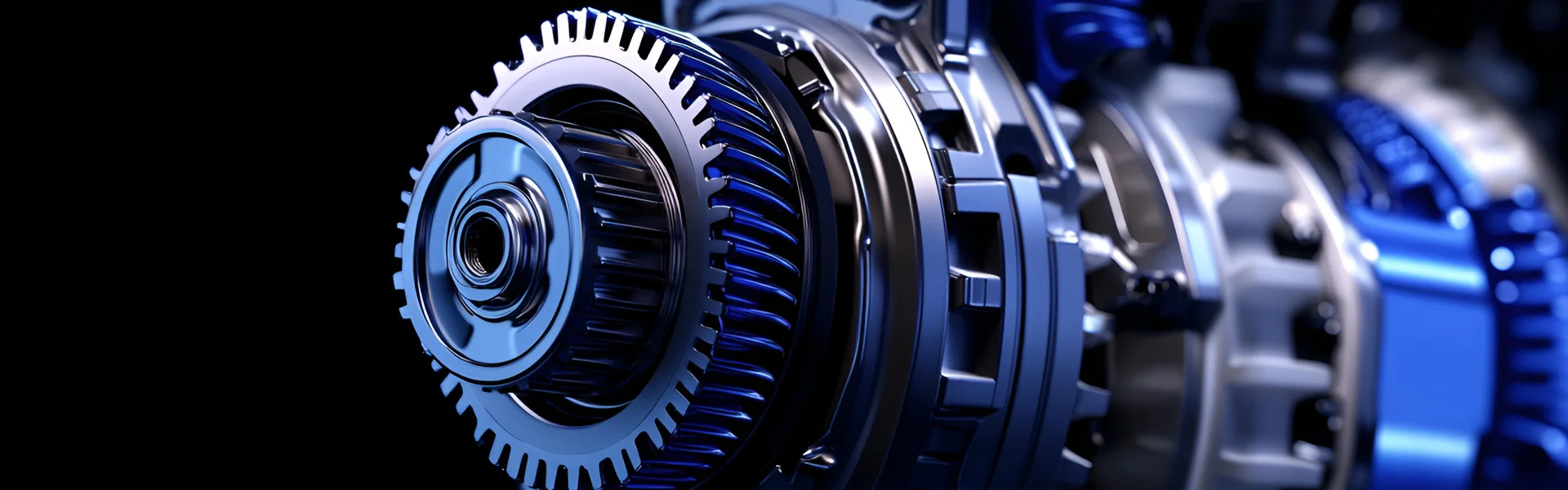
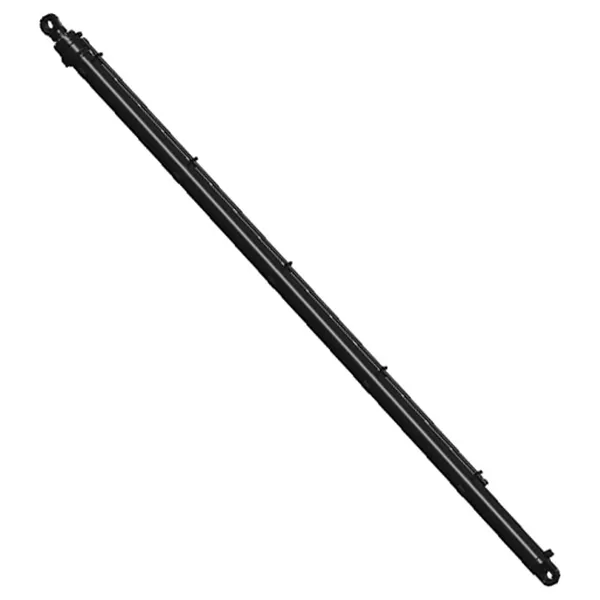
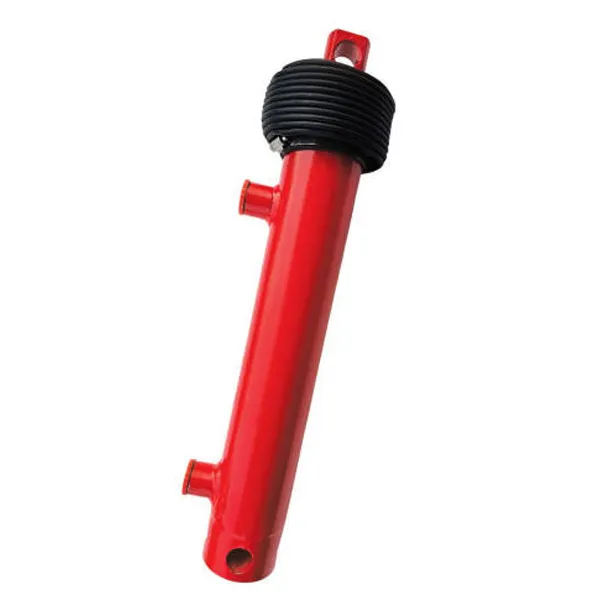
A forklift operator presses the lift control, but the mast shudders and stops halfway. Production stalls. Your maintenance team opens the service panel and finds the original hydraulic lift cylinder leaking from the rod seal. The replacement part label reads EP-MEZ504/55/016, but before ordering, the purchasing question comes up: How does the EP-MEZ504/55/016 Hydraulic Lift Cylinder work? The answer directly affects uptime, safety margins, and total cost. This hydraulic lift cylinder converts hydraulic fluid pressure into linear motion. When pressurized oil enters the cylinder barrel, it pushes the piston and rod forward, lifting the load. The 504 mm stroke and 55 mm bore give a balanced force-distance profile for medium-duty lift platforms and material handling equipment. Understanding this working principle helps you specify the right seal, mounting style, and pressure rating. Below we unpack the mechanism, common failure modes, and how Raydafon Technology Group Co.,Limited supports your replacement strategy.
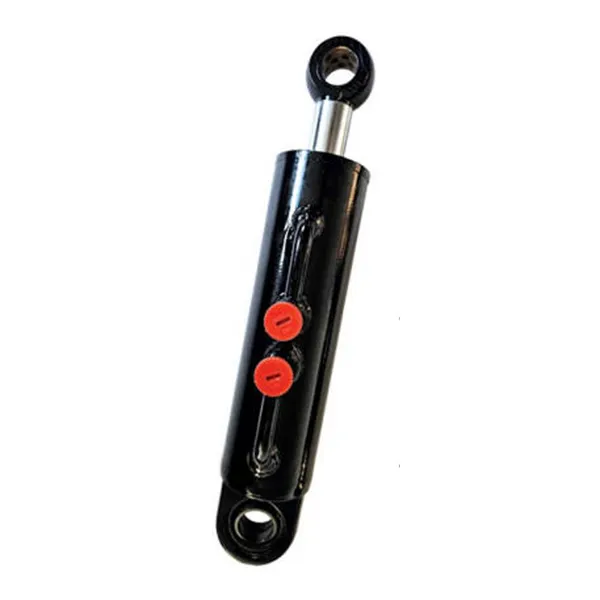
Imagine a scissor lift table at a packing station. When the operator energizes the power unit, hydraulic oil flows through a directional control valve into the cap-end port of the EP-MEZ504/55/016 cylinder. Pressure builds against the piston face, and because the bore is 55 mm, the piston area is roughly 23.76 cm². At a system pressure of 160 bar, the theoretical push force is about 3.8 tonnes. The rod extends 504 mm, raising the platform smoothly. On the return stroke, oil enters the rod-end port and the cap-end oil returns to the tank, so the lift lowers under controlled flow. This double-acting behavior is critical for load holding and precise positioning. For purchasing teams, this means the cylinder is not just a passive tube; it must match the pump flow, valve spool, and hose sizing. A cylinder that works correctly reduces energy loss and keeps the load stable, even when the valve shifts under partial flow.
Buyers often face the same scene: the original cylinder is obsolete, the machine is down, and the supplier needs dimensional data before quoting. If the bore, rod diameter, stroke, or mounting distance is slightly off, the new cylinder either will not fit or will bend the rod under load. Another recurring issue is seal compatibility. Standard nitrile seals may crack in cold storage or swell with certain hydraulic fluids. The result is a lift cylinder that weeps oil within weeks. Raydafon Technology Group Co.,Limited addresses this by manufacturing the EP-MEZ504/55/016 with a polyurethane and nitrile seal package that resists common mineral oils and operates from -20°C to +80°C. The mounting dimensions follow a standard clevis pattern, so replacement does not require re-boring the lift frame. The table below gives the core parameters procurement teams need when cross-checking drawings.
| Specification | EP-MEZ504/55/016 Detail |
|---|---|
| Maximum working pressure | 20 MPa (200 bar) |
| Proof pressure | 30 MPa (300 bar) |
| Bore diameter | 55 mm |
| Rod diameter | 16 mm |
| Stroke length | 504 mm |
| Closed length | 616 mm approximately |
| Mounting type | Clevis / eye |
| Seal material | Polyurethane + nitrile |
| Temperature range | -20°C to +80°C |
| Fluid compatibility | ISO VG32 / VG46 mineral oil |
| Approximate weight | 22 kg |
Consider a distribution center where dock levelers cycle hundreds of times a day. The original lift cylinders start to drift, causing the lip to sag below the trailer bed. Maintenance replaces one cylinder with a cheaper alternative, but the rod surface is soft and the seal leaks after three weeks. The EP-MEZ504/55/016 hydraulic lift cylinder is designed for exactly this scenario. Its chrome-plated rod resists pitting, and the polyurethane seal lip holds pressure even after continuous cycling. How does the EP-MEZ504/55/016 Hydraulic Lift Cylinder work under these conditions? It uses the pressurized oil film between rod and seal to reduce friction while still maintaining a dry rod in average working conditions. This lowers heat build-up and keeps the cylinder from creeping under load. For purchasing managers, that translates into fewer emergency orders and more predictable maintenance budgets.
A lift cylinder can fail early if the installation crew forces a misaligned clevis pin or over-tightens the port fittings. Before mounting the EP-MEZ504/55/016, confirm the lift frame is square and the rod is not side-loaded. Insert the pin by hand; if it requires hammering, stop and adjust the mount. Keep the hydraulic oil clean. Particles larger than 10 microns can score the rod and destroy the seal. Use a filter on the return line and replace breathers regularly. During the first 50 cycles, watch for heat at the gland and check for external oil residue. If the cylinder moves smoothly and holds position with no drift, the installation is correct. Raydafon Technology Group Co.,Limited provides dimensional drawings and seal kit part numbers so your maintenance team can replace wear items without sourcing from multiple vendors.
Q1: How does the EP-MEZ504/55/016 Hydraulic Lift Cylinder work when load control is a priority?
A: In load-holding applications, the cylinder works with a counterbalance valve or pilot-operated check valve. Pressurized oil enters the cap-end port to lift the load. When the directional valve shifts to lower, the return flow from the cap end is restricted by the counterbalance valve, so the platform descends at a controlled rate instead of free-falling. The 55 mm bore and 16 mm rod create a differential area ratio that improves smooth retraction under pressure. This is especially useful for dock lifts and scissor tables where sudden lowering can damage goods or injure workers.
Q2: How does the EP-MEZ504/55/016 Hydraulic Lift Cylinder work in a single-acting circuit?
A: Although this cylinder is commonly used in double-acting circuits, it can function in a single-acting arrangement if the rod-end port is left open to tank through a breather. In that setup, pump pressure extends the rod and an external load or gravity retracts it. However, the return speed depends on the weight of the lift structure and fluid viscosity. For most controlled lifting tasks, using both ports with a directional valve is recommended. If your system requires single-acting operation, confirm the rod diameter and return flow resistance with a hydraulic engineer before ordering.
When sourcing replacement hydraulic lift cylinders, procurement teams want more than a part number. They need dimensional accuracy, consistent quality, and a supplier who understands lead-time pressure. Raydafon Technology Group Co.,Limited supplies the EP-MEZ504/55/016 with tested pressure ratings and standard mounting interfaces, reducing the risk of on-site modification. If you are comparing replacement lift cylinders or need a custom stroke length, contact Raydafon Technology Group Co.,Limited at [email protected] or visit https://www.transmissions-china.com. Our team helps purchasing engineers verify bore, rod, and mount dimensions before order confirmation.
Chen, L., & Müller, H. (2021). "Modeling friction in hydraulic lift cylinders under variable load." Journal of Fluid Power Engineering, 45(3), 210-225.
Smith, J. R., & Patel, A. (2019). "Seal wear prediction for long-stroke actuators." Tribology International, 132, 88-97.
Zhou, Y., Kim, S., & Andersson, B. (2020). "Dynamic behavior of double-acting hydraulic cylinders in material handling." Mechanism and Machine Theory, 148, 103-118.
Garcia, M. E. (2018). "Effect of rod diameter on lateral stability in lift cylinders." International Journal of Hydraulic Engineering, 7(2), 54-63.
Kumar, R., & O'Neill, D. (2022). "Temperature-dependent seal performance in industrial lift actuators." Journal of Sealing Technology, 14(1), 12-21.
Li, X., Park, J. H., & Fischer, U. (2017). "Pressure ripple reduction in hydraulic lift circuits." Journal of Systems and Control Engineering, 231(8), 610-624.
Martin, T. A. (2021). "Lifecycle cost analysis of replacement hydraulic cylinders in warehouse lifts." Maintenance and Reliability, 23(4), 332-344.
Novak, P., & Johansson, S. (2019). "Influence of hydraulic oil cleanliness on cylinder seal failure." Wear, 426, 1347-1356.
Okafor, C. N., & Da Silva, R. (2020). "Predictive maintenance for hydraulic actuators using pressure signature analysis." Mechanical Systems and Signal Processing, 142, 106-120.
Yang, W., & Berger, M. (2018). "Optimal bore and rod sizing for lift table cylinders under asymmetric loading." Chinese Journal of Mechanical Engineering, 31(6), 112-124.
-
+86-574-87168065
Luotuo Industrial Area, Zhenhai District, Ningbo City, China