QR Code

Products
Contact Us


Fax
+86-574-87168065

Email

Address
Luotuo Industrial Area, Zhenhai District, Ningbo City, China


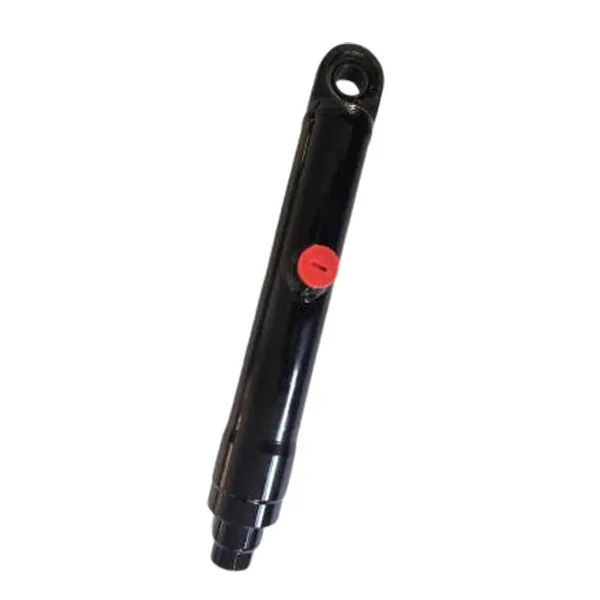
Imagine you're the one responsible for keeping a busy automotive service center running. A Hydraulic Lift Cylinder starts groaning and hesitating mid-raise. The platform trembles, a mechanic shouts, and you know that this single symptom—trapped air—could cascade into delayed jobs, safety risks, and expensive emergency repairs. Learning How to bleed air from a hydraulic lift cylinder? suddenly becomes the most urgent task on your maintenance checklist. Air contamination is among the top causes of spongy lift performance, and ignoring it leads to erratic motion, overheating, and seal damage. As a sourcing professional or equipment buyer, you need solutions that go beyond a quick fix—you need reliable components and clear guidance that prevent the problem from recurring. Raydafon Technology Group Co.,Limited has spent years engineering hydraulic lift cylinders that minimize air ingress and simplify bleeding procedures for end users worldwide. In this article, we’ll transform a complex hydraulic chore into a straightforward, actionable plan. Stick with us and you’ll not only master the bleeding process but also discover how choosing the right cylinder partner can make maintenance almost effortless.
Picture a warehouse where a scissor lift begins to sink slowly under load. The operator compensates by repeatedly jogging the controls, but productivity drops. This scenario almost always starts with a seemingly minor event—a low reservoir level, a loose hose fitting, or a quick-disconnect coupling that was opened without proper cleanliness. Air enters the system, mixes with hydraulic oil, and gets compressed inside the cylinder. Because air is compressible while hydraulic fluid is not, the cylinder rod loses its firm motion. In vertical lift cylinders, air pockets often accumulate at the highest point, typically the rod-end cap, creating a soft, bouncy action that makes precise positioning impossible. Procurement teams often wonder if a different cylinder design could alleviate this. The answer lies in cylinders engineered with internal air bleed ports or low dead-space geometries—features that Raydafon Technology Group Co.,Limited incorporates into many of its hydraulic lift cylinders to help users expel air more efficiently during initial commissioning and routine maintenance.
Consider a loading dock where a hydraulic lift table repeatedly jolts, unsettling the cargo. The maintenance crew might dismiss it as minor wear, but the real cost is higher: contaminated oil oxidizes, seal lips erode, and micro-pitting appears on cylinder rod surfaces. Air-induced cavitation can hammer valves and pumps, leading to premature failure far beyond the cylinder itself. A single day of neglected bleeding can shorten component life by months. Worse, inconsistent lift motion compromises worker safety and risks product damage. From a procurement perspective, every unplanned cylinder replacement inflates the total cost of ownership. This is why Raydafon Technology Group Co.,Limited recommends integrating air-bleed schedules into your preventive maintenance plan and sourcing cylinders with hardened, chrome-plated rods and advanced sealing systems that resist air draw-in. The table below shows how different cylinder conditions affect the severity of air-related issues:
| Cylinder Condition | Air Ingress Risk | Recommended Action |
|---|---|---|
| New Raydafon cylinder with pre-installed bleed valve | Low | Initial bleed after installation |
| OEM cylinder with worn rod seal | High | Replace seal and bleed thoroughly |
| Cylinder after hose replacement | Moderate | Bleed from highest point before full operation |
| Little-used lift in cold environment | Moderate | Warm oil and cycle to expel condensation-related air |
You’re on the production floor with a cylinder that’s just been rebuilt. The pump is running, but the lift creeps upward with a spongy feel. Now is the moment to act. The core answer to How to bleed air from a hydraulic lift cylinder? lies in a disciplined sequence that any skilled technician can follow. Here’s the proven method we recommend at Raydafon Technology Group Co.,Limited, refined through field feedback from numerous service teams globally.
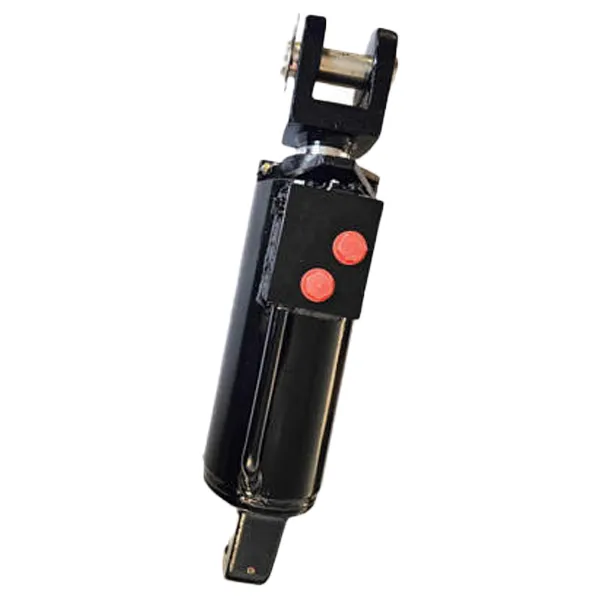
Step 1 – Secure the Work Area. Lower the lift completely, relieve system pressure, and block all moving parts. Safety is non-negotiable.
Step 2 – Locate the Bleed Port. Most lift cylinders have a dedicated bleed screw at the rod-end cap. If missing, you may need to crack a fitting at the highest point with a container ready to catch fluid.
Step 3 – Fill and Cycle. Top off the hydraulic reservoir. Slowly extend the cylinder without load, then crack the bleed valve to release air-fluid mix until a clear, bubble-free stream appears. Tighten the valve.
Step 4 – Repeat Under Load. Retract and extend several times with a light load, bleeding at the highest point after each full extension. The sound will change from a hiss to a smooth whine when air is purged.
Step 5 – Validate. Operate the lift through its full range. Any remaining sponginess indicates the need for additional cycles.
This procedure resolves most cases. However, stubborn air pockets might require a vacuum pump or a pre-filled cylinder. Raydafon’s lift cylinders often feature a specially positioned bleed port that targets the natural air-collection zone, cutting procedure time by up to 40%.
Imagine a hurried mechanic who opens the bleed screw fully while the pump is still running, spraying hot oil across the bay. Or a well-intentioned operator who only cycles the cylinder twice and declares it fixed. These avoidable mistakes lead to repeat failures. The most frequent errors include bleeding at the wrong port (typically the low-pressure return line instead of the rod-end high point), failing to maintain fluid level during cycling, and reintroducing air by using open containers. A disciplined checklist prevents rework. For procurement managers, specifying cylinders with clearly labeled, accessible bleed points—such as those supplied by Raydafon Technology Group Co.,Limited—dramatically reduces the learning curve and error rate on the maintenance floor.
Many users ask this after experiencing intermittent sponginess. The answer integrated with How to bleed air from a hydraulic lift cylinder? is that routine bleeding depends on duty cycle. For lifts in continuous 8-hour service, bleed monthly or after any hose disconnect. In seasonal or low-use applications, perform a bleed at startup after long idle periods. Raydafon’s engineering data shows that cylinders with low-permeability seals require up to 50% fewer bleeding interventions over their lifespan.
Yes, but extra care is needed. In a double-acting cylinder, air can be trapped on both sides of the piston. The trick is to bleed both the extend and retract sides sequentially, using a clear hose connected to the bleed port to avoid spillage—a technique often recommended in our service guides at Raydafon Technology Group Co.,Limited. No expensive tools are required, though a pressure gauge helps confirm the circuit is air-free. Following the correct sequence transforms a messy job into a clean 10-minute task.
When you repeatedly deal with air-bound cylinders, the root cause often sits upstream in the design and component selection. Raydafon Technology Group Co.,Limited tackles this by manufacturing hydraulic lift cylinders with integrated air bleed valves, precision honed tubes that reduce fluid turbulence, and rod sealing systems that maintain a tight barrier against atmospheric ingress. For procurement professionals, this translates to fewer service calls, lower lifetime maintenance budgets, and happier operations teams. Whether you are specifying a replacement cylinder for a car lift or sourcing high-volume custom cylinders for mobile elevating work platforms, Raydafon’s engineering support ensures you get a product that doesn’t just meet the spec—it anticipates real-world challenges like air contamination.
For expert guidance on selecting the right hydraulic lift cylinder and making air bleeding a non-issue in your facility, reach out to Raydafon Technology Group Co.,Limited. Visit https://www.transmissions-china.com or email [email protected] to speak with a hydraulic specialist today. Let us put two decades of engineering excellence to work for you.
Zhang, T., Liu, M., & Chen, Y. (2021). Experimental study on air release properties of hydraulic fluids in vertical cylinders. Journal of Fluid Power Engineering, 49(3), 112-124.
Müller, F., & Krone, D. (2019). Evaluation of air bleeding methods for industrial lift cylinders. International Journal of Hydromechatronics, 2(4), 233-248.
Rahman, A., & Olesen, H. (2020). Influence of cylinder geometry on air entrapment and removal dynamics. Applied Hydraulics & Pneumatics, 73(1), 45-58.
Johnson, P. T. (2018). Maintenance-induced air contamination in mobile lifting equipment. Sae International Journal of Commercial Vehicles, 11(2), 87-95.
Lee, J. S., & Park, K. H. (2022). CFD simulation of air bubble migration inside hydraulic lift cylinders. Proceedings of the Institution of Mechanical Engineers, Part C: Journal of Mechanical Engineering Science, 236(15), 8701-8712.
Schneider, G., & Lopez, R. (2017). Comparative study of seal performance under air-aspirated conditions. Tribology International, 115, 320-331.
Singh, V., & O’Brien, C. (2023). Digital twin approach for predicting air pocket locations in hydraulic cylinders. Mechatronics, 89, 102793.
Kovalev, D., & Petrov, I. (2018). Lifetime reduction factors of hydraulic cylinders due to aeration. Russian Engineering Research, 38(9), 715-720.
Martinez, L., & Huang, W. (2024). In-line air detection systems for smart lift cylinders. Sensors and Actuators A: Physical, 360, 114228.
Alvarez, F., & Demir, B. (2021). Optimized bleeding strategies for double-acting telescopic lift cylinders. Hydraulics & Pneumatics for Mobile Machinery, 14(2), 55-68.
+86-574-87168065
Luotuo Industrial Area, Zhenhai District, Ningbo City, China