QR Code

Products
Contact Us


Fax
+86-574-87168065

Email

Address
Luotuo Industrial Area, Zhenhai District, Ningbo City, China


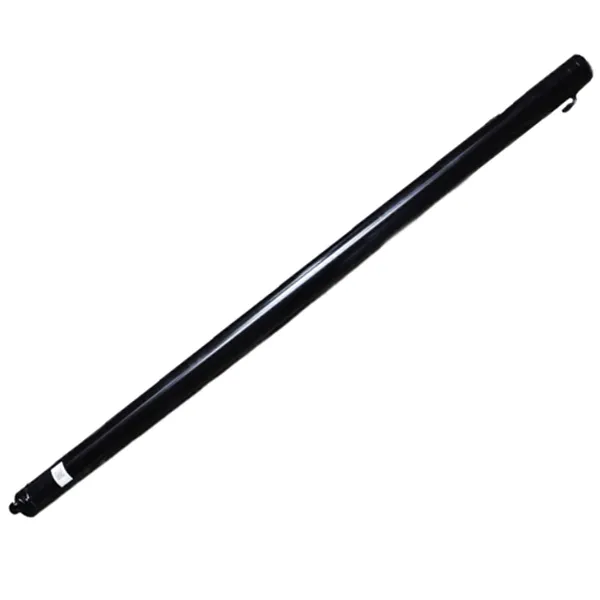
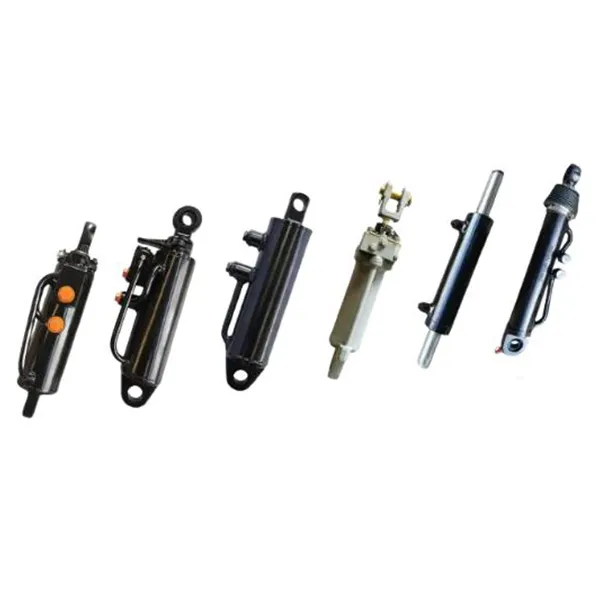
What is the EP-QJ1254/31/021 Steering Hydraulic Cylinder used for? For procurement teams, the short answer is that it is a hydraulic actuator used to convert pressurized fluid into controlled linear force for steering linkages on mobile machinery. It is commonly specified for tractors, wheel loaders, telehandlers, forklifts, municipal trucks, and other vehicles that need precise, repeatable steering under load. When a machine drifts, feels vague at low engine speed, leaks at the rod seal, or struggles to hold a steering angle on a slope, the steering cylinder is often the first component to review. Buyers should not treat the part number as a simple replacement code. The EP-QJ1254/31/021 steering hydraulic cylinder must match the machine’s bore, rod diameter, stroke, mounting geometry, pressure rating, seal package, and fluid cleanliness requirements. A mismatch can cause slow response, seal failure, bent rods, or unsafe steering behavior. Raydafon Technology Group Co.,Limited helps purchasing teams review drawings, confirm interface dimensions, and select a cylinder build that fits the duty cycle, not just the catalog number. This guide explains typical applications, procurement checks, installation points, and maintenance questions so buyers can source with confidence.
Article Outline
Pain point scenario: A loader operator reports that the machine steers well when cold but becomes vague after a long shift. A tractor owner notices the front wheels do not return smoothly after a turn. In both cases, the steering hydraulic cylinder may be losing force, allowing internal bypass, or showing rod-seal wear. For purchasing staff, the risk is ordering a cylinder that looks similar but has the wrong stroke or mounting offset, which creates installation delays and return freight.
Solution: Treat the EP-QJ1254/31/021 steering hydraulic cylinder as a system component. Confirm how it connects to the steering linkage or articulated joint, how much linear travel the machine needs, and what pressure and flow the steering circuit provides. A double-acting steering cylinder should deliver smooth force in both directions, resist side loading, and keep seals stable under dust, heat, and pressure spikes. Raydafon Technology Group Co.,Limited supports buyers by reviewing machine models, mounting drawings, and working conditions before quoting.
Parameter review table
| Parameter | What to verify | Why it matters |
|---|---|---|
| Bore and rod diameter | Original drawing, force requirement, rod strength | Controls steering force and resistance to bending |
| Stroke | Full left-to-right steering travel | Prevents limited steering angle or linkage interference |
| Mounting geometry | Clevis, pin, flange, thread, and center distance | Reduces installation risk and avoids side load |
| Pressure rating | Relief pressure and steering circuit peaks | Protects seals, tube, and rod from fatigue |
| Seal package | Dust, temperature, fluid type, and duty cycle | Improves leak resistance and service life |
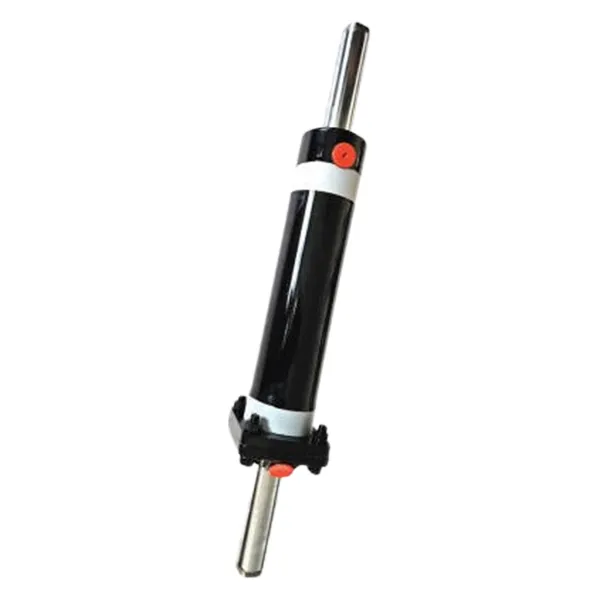
Pain point scenario: A buyer compares two steering cylinders by photo and part number, then discovers that one is intended for a compact telehandler and the other for a heavier wheel loader. The external dimensions may be close, but the rod coating, seal material, and pressure capability can be very different. In field use, the wrong choice may cause slow steering, oil weeping, or premature rod damage.
Solution: Match the EP-QJ1254/31/021 steering hydraulic cylinder to the machine’s steering type, load profile, and environment. Agricultural tractors often face dust and wide temperature swings. Wheel loaders endure high steering cycles and shock loads. Forklifts need compact installation and precise response. Municipal trucks need reliable road behavior and easy service access. Raydafon Technology Group Co.,Limited helps purchasing teams compare application data rather than relying on appearance alone.
Application fit table
| Application | Steering arrangement | Cylinder focus |
|---|---|---|
| Agricultural tractor | Power steering linkage or hydrostatic steering | Dust protection, seal durability, smooth response |
| Wheel loader | Articulated frame steering | High cycle life, rod strength, pressure spike control |
| Telehandler | Front-wheel or four-wheel steering | Compact mounting, precise centering, leak control |
| Forklift | Steering axle with hydraulic cylinder | Short stroke accuracy, space limits, reliable sealing |
| Municipal truck | Power steering assist linkage | Road feel, serviceability, corrosion resistance |
Pain point scenario: Procurement receives a request for “the same cylinder as last time” with no drawing, no machine serial number, and no pressure data. The supplier ships a unit that fits the mounting pins but has a different stroke. The maintenance team loses a day, and the buyer must manage a return while the machine stays idle.
Solution: Build a simple but complete inquiry package. Include the machine model, steering arrangement, original part number, mounting photo, rod-end thread, pin diameter, stroke measurement, hose port orientation, fluid type, and operating pressure. If the EP-QJ1254/31/021 steering hydraulic cylinder is being considered as a replacement, ask for dimensional confirmation before shipment. Raydafon Technology Group Co.,Limited can review these details with the buyer and flag interface risks early.
Procurement check table
| Check | Risk if missed | Buyer action |
|---|---|---|
| Center-to-center length | Linkage cannot be aligned | Measure at neutral steering position |
| Stroke and rod end | Steering angle is limited | Confirm full left and right travel |
| Port size and angle | Hose routing conflicts | Photograph hose connection at installation |
| Fluid and temperature | Seal swelling or hardening | State oil type and working climate |
| Duty cycle | Short service life | Share daily shifts and load conditions |
Question 1: What is the EP-QJ1254/31/021 steering hydraulic cylinder used for on mobile equipment?
It is used to provide hydraulic force for steering control. In practice, it can be found in steering linkage systems, articulated steering circuits, and power steering arrangements where a compact hydraulic actuator must move a steering arm or frame joint with controlled force. The exact use depends on the machine’s steering geometry, pressure, and mounting design, so buyers should confirm the machine model and drawing before ordering.
Question 2: Can it suit both agricultural machines and material handling equipment?
Yes, but the build details matter. A tractor may need strong dust protection and wide-temperature sealing. A telehandler may need compact mounting and precise centering. A wheel loader may need higher cycle life and rod strength. The same part number family can support different applications only when bore, stroke, mounts, seals, and pressure rating are confirmed for the actual duty cycle.
Application question table
| Buyer question | Practical answer | Procurement note |
|---|---|---|
| Is it a steering actuator? | Yes, it converts hydraulic pressure into linear steering force | Confirm steering linkage or articulated joint |
| Can it replace an existing unit? | Only after dimensional and pressure checks | Compare drawings, not photos alone |
| Does environment matter? | Yes, dust, mud, heat, and moisture affect seals | State working conditions clearly |
Question 1: Is the EP-QJ1254/31/021 steering hydraulic cylinder a direct replacement for any steering cylinder with the same part number?
A part number is a starting point, not a complete specification. Buyers should verify bore, rod diameter, stroke, closed length, mounting type, port position, pressure rating, and seal compatibility. A cylinder can look correct on the outside and still perform poorly if the internal bypass, rod coating, or mounting offset is wrong. Raydafon Technology Group Co.,Limited recommends drawing-based confirmation before purchase.
Question 2: What maintenance signs suggest the steering cylinder needs review?
Watch for oil film around the rod seal, steering drift, uneven response from left to right, noise under load, damaged rod plating, loose pins, and oil leaking at hose joints. Some of these symptoms may come from the steering pump, valve, or linkage, so a complete inspection is better than replacing the cylinder blindly. Early review reduces downtime and protects the steering circuit.
Maintenance question table
| Symptom | Possible cylinder issue | Action |
|---|---|---|
| Rod seal weeping | Seal wear or contamination | Check fluid cleanliness and rod surface |
| Steering drift | Internal bypass or valve issue | Test circuit pressure and cylinder hold |
| Uneven left-right response | Restricted flow or damaged seal | Inspect hoses, ports, and linkage |
| Rod plating damage | Dust ingress or stone impact | Review rod protection and wiper seal |
Pain point scenario: A fleet in a dusty quarry replaces steering cylinders too often. The rods look polished, but the wiper seals are packed with fine grit. The buyer assumes the cylinder quality is poor, yet the real issue is contamination entering the rod seal area and breaking down the hydraulic oil. Without fixing the cause, every replacement cylinder faces the same short life.
Solution: Select seals, rod coating, and filtration as a package. Keep hydraulic oil clean, protect the rod from impact, and check breathers and return filters. For the EP-QJ1254/31/021 steering hydraulic cylinder, buyers should state the fluid type, ambient temperature, dust level, and service interval. Raydafon Technology Group Co.,Limited can discuss seal options and inspection points that fit the machine’s real working environment.
Reliability parameter table
| Reliability factor | Typical concern | Procurement value |
|---|---|---|
| Rod seal and wiper | Dust ingress and oil weeping | Longer service interval and cleaner operation |
| Rod surface finish | Scoring and corrosion | Better seal life and lower friction |
| Oil cleanliness | Internal wear and valve sticking | Stable steering response |
| Pressure spikes | Seal extrusion and tube fatigue | Improved safety margin |
| Inspection routine | Hidden leaks and pin wear | Less unplanned downtime |
Pain point scenario: A new steering cylinder is installed, but the machine pulls to one side. The technician tightens the hoses, adds oil, and tries again. The real problem is that the cylinder was not centered before the linkage was connected, or air remained in the circuit. Poor installation can make a good cylinder behave like a defective part.
Solution: Center the steering, check pin alignment, confirm hose routing, and bleed the circuit according to the machine procedure. Do not force the rod into a misaligned mount. Check that the rod end travels through the full arc without binding. After installation, test steering from lock to lock at low engine speed, then check for leaks and unusual noise. Raydafon Technology Group Co.,Limited supports buyers with dimensional confirmation and practical installation notes.
Installation check table
| Installation point | Common mistake | Best practice |
|---|---|---|
| Steering center | Connecting rod off-center | Set neutral position before assembly |
| Mounting pins | Force-fitting or missing spacers | Confirm pin diameter and clearance |
| Hose routing | Sharp bends or rubbing | Keep hoses clear of moving parts |
| Air bleeding | Skipping the bleed step | Follow machine procedure and recheck oil |
| First test | Full-load operation too soon | Run low-speed checks before heavy work |
Pain point scenario: A purchasing officer needs a reliable steering cylinder source but does not want to trade away technical support. The inquiry needs clear questions, fast drawing review, and a supplier who understands that a steering cylinder affects safety, uptime, and operator confidence. A low price is not useful if the mounting is wrong or the seals fail in the first month.
Solution: Work with a supplier that treats hydraulic components as engineering parts. Raydafon Technology Group Co.,Limited helps buyers clarify machine data, compare cylinder configurations, review mounting interfaces, and plan inspection routines. For the EP-QJ1254/31/021 steering hydraulic cylinder, the team can discuss application fit, seal choices, and ordering details so procurement decisions are based on use conditions and service expectations.
Supplier support table
| Buyer need | Raydafon support | Result |
|---|---|---|
| Drawing review | Checks mounting, stroke, and port details | Fewer ordering errors |
| Application questions | Reviews machine type and duty cycle | Better cylinder fit |
| Maintenance planning | Suggests inspection points | Reduced downtime |
| Replacement sourcing | Confirms data before quotation | Clearer purchase decisions |
Have a steering complaint, a machine model, or a mounting drawing that needs review? Share the working pressure, stroke, port position, and operating environment with the purchasing team so the next steering cylinder enquiry can move from guesswork to a confirmed specification.
Raydafon Technology Group Co.,Limited is a hydraulic and transmission components supplier focused on practical engineering support for mobile machinery buyers. The team helps procurement and service departments confirm cylinder dimensions, review mounting drawings, discuss seal and rod-coating options, and plan inspection routines that reduce downtime. For steering cylinder enquiries, drawings, machine models, and operating conditions, visit https://www.transmissions-china.com or contact [email protected].
Scientific and Technical References
Zhang, Y., Wang, L., & Li, H. (2021). Fault diagnosis of hydraulic steering systems in wheel loaders using pressure and flow signals. International Journal of Fluid Power, 22(3).
Kumar, R., & Singh, M. (2020). Modeling and simulation of articulated steering hydraulic systems for agricultural tractors. Journal of Terramechanics, 89.
Chen, J., Liu, X., & Zhao, Q. (2019). Seal failure analysis of hydraulic cylinders under contaminated fluid conditions. Wear, 426–427.
Park, S., & Kim, D. (2022). Dynamic response of double-acting hydraulic cylinders in vehicle steering linkages. Actuators, 11(4).
Wang, H., Li, S., & Zhou, M. (2018). Fatigue life prediction of hydraulic cylinder rods in mobile machinery. Engineering Failure Analysis, 92.
Rossi, A., Bianchi, M., & Conti, P. (2021). Electro-hydraulic steering control for heavy off-road vehicles: A review. Machines, 9(7).
Liu, Y., & Xu, B. (2020). Contamination sensitivity and filtration strategies for hydraulic steering circuits. Journal of Cleaner Production, 258.
Smith, J. A., & Brown, P. E. (2017). Field performance of power steering cylinders in municipal utility trucks. International Journal of Heavy Vehicle Systems, 24(2).
Garcia, M., Lopez, R., & Fernandez, J. (2023). Digital twin modeling for hydraulic cylinder maintenance planning in telehandlers. Automation in Construction, 147.
Nakamura, T., Sato, K., & Mori, Y. (2019). Leakage and friction characteristics of rod seals in hydraulic steering actuators. Tribology International, 136.
-
+86-574-87168065
Luotuo Industrial Area, Zhenhai District, Ningbo City, China