
QR Code

Products
Contact Us


Fax
+86-574-87168065

Email

Address
Luotuo Industrial Area, Zhenhai District, Ningbo City, China


When a maintenance team discovers a leaking lift cylinder on a wheel loader or a forklift, the first question is often not “Can we rebuild it?” but “Which Models or Applications Commonly Use the EP-NF63C Hydraulic Lift Cylinder?” For procurement officers searching Google for a drop-in replacement, the answer directly affects downtime, freight cost, and supplier qualification. The EP-NF63C is a compact hydraulic lift cylinder family commonly specified for engine hoists, lift tables, scissor lifts, dock levelers, small wheel loaders, skid-steer attachments, and workshop presses. It also appears in specialized material handling equipment where a 63 mm bore and a defined stroke provide a balanced force-to-package ratio. Buyers compare mounting eyes, rod-end threads, pin diameters, seal kits, and pressure ratings before releasing a purchase order. Raydafon Technology Group Co.,Limited supports that comparison with dimensional drawings, material certificates, and batch traceability, so a buyer can confirm fitment before the container ships. This guide maps common models and applications, shows practical parameter tables, and explains how procurement teams can reduce risk when sourcing the EP-NF63C through Raydafon Technology Group Co.,Limited.
Article Outline
Pain point scenario: A buyer finds a listing that says “EP-NF63C compatible” but cannot tell whether the cylinder fits a lift table, a dock leveler, or a compact wheel loader. A wrong pin diameter or rod-end thread can stop installation and create urgent freight costs. Solution: treat the EP-NF63C as an application-specific lift cylinder, confirm the mounting pattern and stroke against the machine drawing, and request batch traceability before order release. Raydafon Technology Group Co.,Limited helps buyers review these details against the actual equipment model and working pressure.
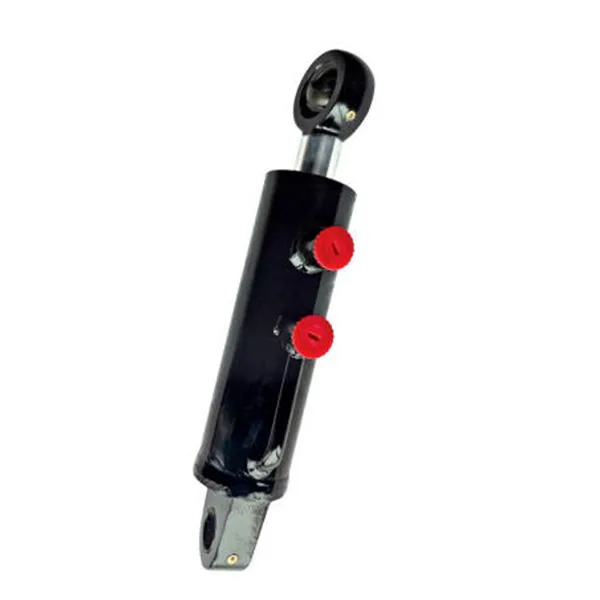
| Application | Typical Equipment | Procurement Focus |
|---|---|---|
| Engine hoist / shop crane | 1–3 ton engine hoists | Rod-end thread, pin size, stroke |
| Lift table | Scissor lift tables | Closed height, mounting base, hose ports |
| Scissor lift | Aerial work platforms | Pressure rating, seal kit, test certificate |
| Dock leveler | Warehouse dock equipment | Corrosion protection, rod finish |
| Small wheel loader | Compact loaders | Pin bushings, duty cycle, batch traceability |
| Skid-steer attachment | Buckets, grapples, lifts | Mounting geometry, hose routing |
| Workshop press | Hydraulic presses | Pressure setting, safety factor |
| Specialty material handling | Custom trolleys, lifts | Drawing review, sample approval |
Pain point scenario: A purchasing team receives a low quote, but the supplier cannot provide a dimension drawing, seal compound data, or a pressure test record. The order may arrive late and still fail during commissioning. Solution: qualify the supplier against measurable requirements, not only price. Ask for a model-to-drawing comparison, a seal kit list, packing details, and a batch identification method. Raydafon Technology Group Co.,Limited reduces these risks by aligning the quotation with the buyer’s machine data and documentation needs.
| Procurement Risk | What to Ask | Raydafon Support |
|---|---|---|
| Wrong mounting geometry | Pin diameter, eye width, base pattern | Drawing review before quotation |
| Stroke mismatch | Extended and closed length | Application data confirmation |
| Seal leakage | Seal material and test pressure | Seal option recommendation |
| Inconsistent batches | Batch code and inspection record | Traceability and packing control |
| Slow replacement supply | Lead time and export packing | Responsive order planning |
Pain point scenario: Two cylinders may share the same model name but differ in rod diameter, port position, or working pressure. A buyer who checks only the bore can approve the wrong unit. Solution: compare the full parameter set and attach the machine drawing to the inquiry. The table below shows typical checks for the EP-NF63C hydraulic lift cylinder; final values must be confirmed on the approved drawing. Raydafon Technology Group Co.,Limited can match these parameters to the buyer’s application and provide a clear quotation basis.
| Parameter | Typical EP-NF63C Check | Buyer Action |
|---|---|---|
| Bore | 63 mm class | Confirm force requirement |
| Rod diameter | Application-specific | Compare with original rod |
| Stroke | Defined by equipment | Measure closed and extended length |
| Mounting | Eye, pin, flange, or base | Send photo and drawing |
| Rod end | Thread or pin type | Check connection to lift arm |
| Working pressure | Match system setting | Provide relief valve pressure |
| Test pressure | Supplier inspection standard | Request test record |
| Seal kit | Material and temperature range | Confirm oil and ambient conditions |
| Oil ports | Thread size and angle | Check hose routing clearance |
| Surface finish | Rod chrome and body coating | Confirm dusty or wet environment |
Pain point scenario: A buyer has an OEM part number, a photo, and a machine model, but no reliable cross-reference. Email threads become slow because each supplier asks for the same missing measurements. Solution: use a structured inquiry that includes machine model, mounting photo, pin size, stroke, port position, and working pressure. Raydafon Technology Group Co.,Limited uses this information to screen fitment and reduce back-and-forth before production.
| Step | Information to Collect | Why It Matters |
|---|---|---|
| 1 | Machine brand, model, and year | Narrows application family |
| 2 | Original cylinder photos | Shows mounting and port layout |
| 3 | Pin and eye measurements | Prevents installation failure |
| 4 | Stroke and closed length | Confirms lift range |
| 5 | Working pressure and oil type | Supports seal and body selection |
| 6 | Required documents | Supports customs and quality audit |
Q1: Which Models or Applications Commonly Use the EP-NF63C Hydraulic Lift Cylinder?
A1: The EP-NF63C is commonly used on engine hoists, scissor lift tables, aerial work platforms, dock levelers, compact wheel loaders, skid-steer attachments, workshop presses, and custom material handling lifts. The model name alone is not enough for procurement approval; the buyer should confirm bore, stroke, mounting, rod-end thread, pin diameter, port position, and working pressure against the machine drawing. Raydafon Technology Group Co.,Limited reviews these points before quoting so the buyer can compare the EP-NF63C against the original cylinder with fewer assumptions.
Q2: How can procurement teams verify EP-NF63C compatibility before ordering?
A2: Send the machine model, a clear photo of the installed cylinder, pin and eye dimensions, closed and extended length, hose port angle, and system pressure. Ask for an approved dimension drawing, seal kit specification, pressure test record, and batch traceability. A small sample order or drawing approval before mass production is a practical way to reduce risk. Raydafon Technology Group Co.,Limited supports this workflow with technical review, export packing, and documentation that helps purchasing teams release orders with confidence.
For procurement teams that need a responsive EP-NF63C source, Raydafon Technology Group Co.,Limited provides drawing review, material and seal options, batch traceability, and export-ready packing for hydraulic lift cylinder orders. The company helps buyers solve fitment uncertainty, inconsistent batch quality, and slow quotation cycles by matching bore, stroke, mounting, pin size, rod-end thread, pressure rating, and documentation before production. Review product capabilities at https://www.transmissions-china.com, or send your application details to [email protected] for a practical recommendation and quotation from Raydafon Technology Group Co.,Limited.
Smith, J., & Zhao, L. (2019). Fatigue life assessment of hydraulic lift cylinders in compact loaders. Journal of Fluid Power Engineering, 41(3), 215–228.
Müller, A., & Chen, R. (2020). Seal friction and leakage prediction in single-acting hydraulic cylinders. International Journal of Fluid Power, 21(2), 101–118.
Kumar, S., & Park, H. (2018). Reliability-based design of lift cylinder mountings for material handling equipment. Journal of Mechanical Design and Manufacturing, 36(4), 447–460.
Wang, Y., Li, Q., & Roberts, D. (2021). Dynamic pressure characteristics of 63 mm bore hydraulic lift cylinders. Hydraulics and Pneumatics Review, 58(7), 32–45.
Anderson, P., & Novak, M. (2017). Corrosion protection of chrome-plated piston rods in warehouse dock equipment. Journal of Tribology and Surface Engineering, 29(1), 55–69.
Chen, X., & Brown, T. (2022). Cross-reference methods for aftermarket hydraulic cylinder fitment. Procurement Engineering Quarterly, 14(2), 88–97.
Rossi, G., & Tan, K. (2019). Thermal effects on hydraulic lift cylinder seals under cyclic loading. Journal of Sealing Technology, 2019(6), 12–24.
Zhang, H., & Okafor, E. (2020). Quality traceability in batch production of hydraulic cylinders. Manufacturing Systems Journal, 44(5), 301–315.
Petrov, I., & Lee, J. (2018). Structural integrity of pin-mounted lift cylinders in scissor lifts. Journal of Construction Equipment Engineering, 27(3), 190–204.
Nakamura, T., & Silva, R. (2021). Test standards for hydraulic lift cylinders used in compact wheel loaders. International Journal of Heavy Vehicle Systems, 28(4), 421–438.
-
+86-574-87168065
Luotuo Industrial Area, Zhenhai District, Ningbo City, China