QR Code

Products
Contact Us


Fax
+86-574-87168065

Email

Address
Luotuo Industrial Area, Zhenhai District, Ningbo City, China


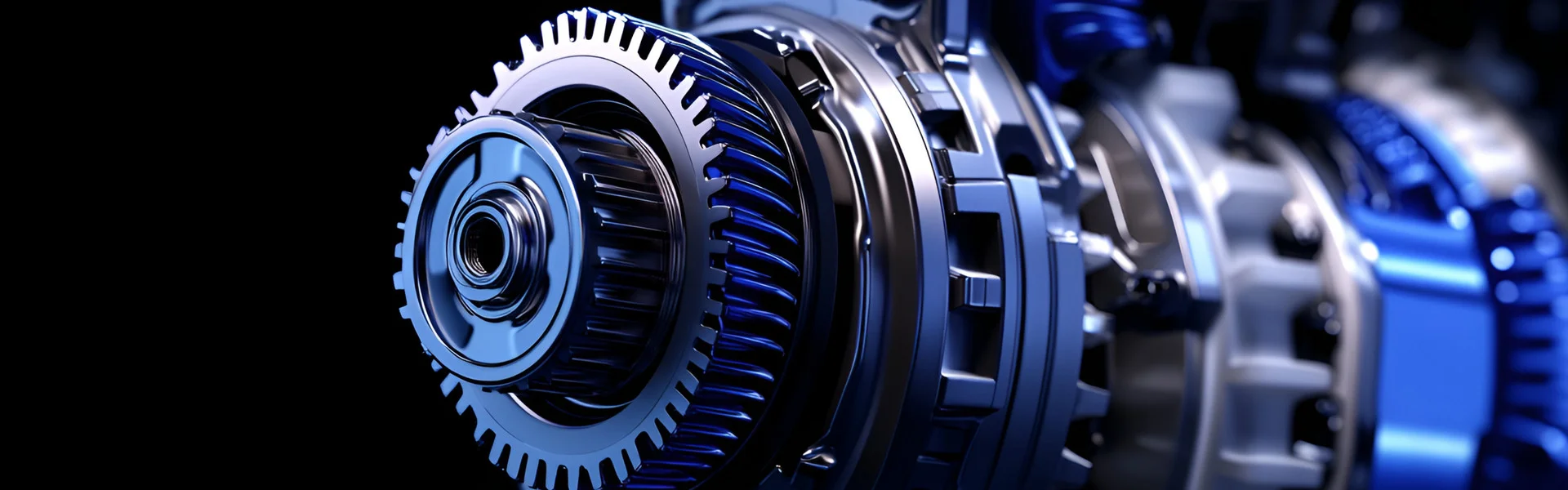
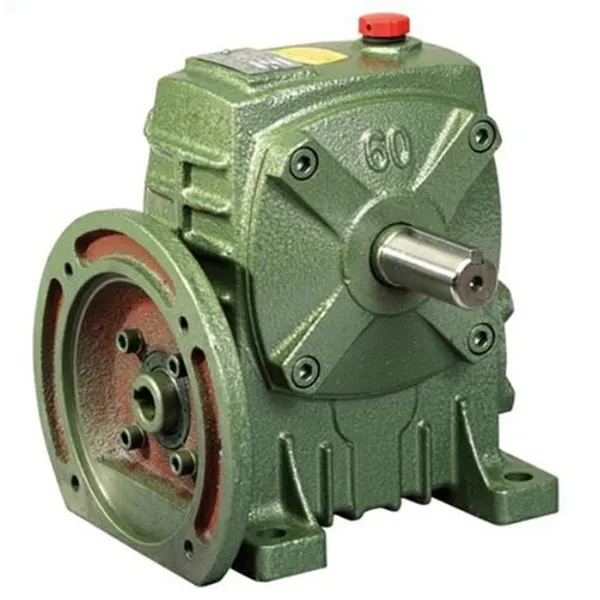
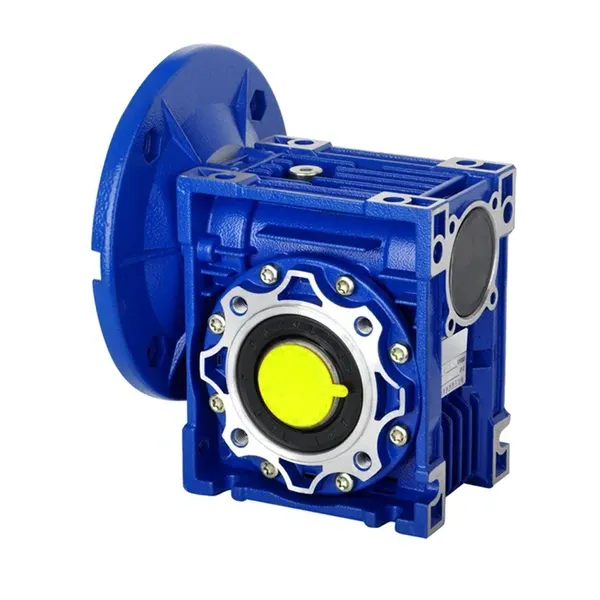
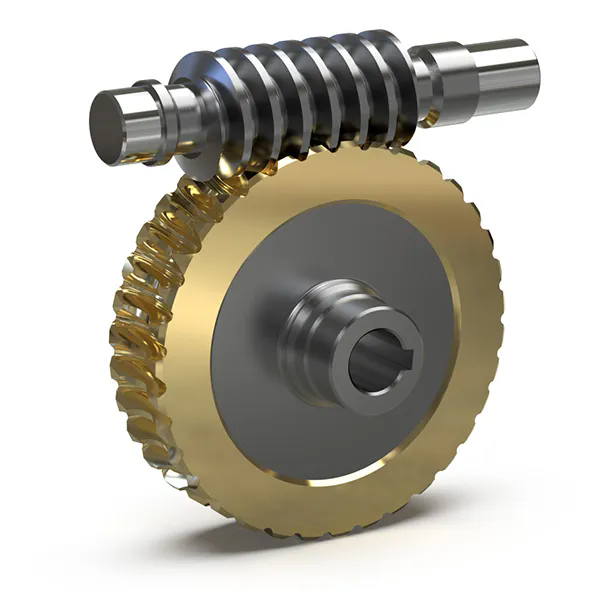
Where are duplex worm gears commonly used? If you source reducers for metalforming presses, precision rotary indexing tables, textile machinery, or heavy-duty conveyors that must hold position accurately, duplex worm gears frequently appear in your approved vendor lists. A Duplex Worm Gear is a special worm drive with two thread leads—one left-hand and one right-hand—on the same worm shaft, engaging two opposing flanks of the worm wheel. This design balances axial forces and reduces backlash better than a conventional single-lead worm gear. For procurement engineers, the more important question is not just where these gears are used, but how to qualify a supplier that can guarantee dimensional accuracy, material traceability, and consistent low backlash under real production loads. At Raydafon Technology Group Co., Limited, we help buyers move from a generic RFQ to a controlled, specification-driven purchase. The following guide explains the applications, pain points, selection parameters, and sourcing checks you need.
Contents
A duplex worm gear set differs from a standard worm drive because the worm is machined with two distinct thread leads on the same shaft. One thread flank contacts one side of the worm wheel tooth, while the opposite thread flank contacts the other side. This dual-flank contact allows fine adjustment of backlash by shifting the worm axially during assembly. The result is a compact reducer that can achieve lower backlash, higher positional accuracy, and better load distribution than many conventional worm gear sets.

For procurement teams, three features matter most: center distance, worm thread geometry, and wheel material grade. Duplex worm gears are typically specified where equipment must reverse frequently, hold position without drift, or withstand shock loads without losing mesh stiffness. Common materials include case-hardened alloy steel for the worm and tin bronze or aluminum bronze for the wheel, often paired with a rigid housing and precision bearings.
Where are duplex worm gears commonly used in day-to-day industrial equipment? The answer covers a wide range, but procurement records often point to five core environments.
In each of these applications, the buying decision usually focuses on backlash class, efficiency at rated torque, and whether the supplier can provide a full dimensional inspection report.
Many procurement engineers face the same pain point: the duplex worm gear looks correct on the drawing, but fails during pilot production. Common complaints include excessive backlash after short run-in, uneven contact patterns, high operating temperature, and inconsistent quality across batches. One buyer in the packaging sector recently told us that a previous supplier's duplex worm gear passed incoming inspection but showed 12 arcmin of lost motion within three weeks, forcing a line stop.
The root cause is usually not the design itself, but process control. If the worm is not paired with the wheel after final grinding, or if the housing bore alignment is loose, the theoretical duplex geometry is never achieved in practice. Raydafon Technology Group Co., Limited addresses this with a paired manufacturing workflow: each worm and wheel set is matched, contact-pattern tested, and shipped with a serial number linked to its backlash test sheet. This solves the hidden quality problem by making performance verification data available before installation.
To help sourcing teams move beyond guesswork, Raydafon applies five process controls to every duplex worm gear order.
These steps help buyers avoid the common problem of receiving gears that are within print on paper but not matched in operation. For high-mix production, Raydafon can also provide custom center distances and modified ratios without long tooling lead times.
When comparing duplex worm gears with standard worm gear units, procurement teams should focus on four parameters: backlash class, lead accuracy, efficiency, and housing rigidity. The table below shows typical reference values for Raydafon duplex worm gear sets in industrial applications.
| Parameter | Standard Worm Gear | Duplex Worm Gear | Procurement Check |
|---|---|---|---|
| Backlash at assembly | 8–20 arcmin | 3–10 arcmin | Request paired test sheet |
| Lead accuracy | DIN 8–10 | DIN 5–7 | Check thread grinding report |
| Efficiency at rated torque | 45–65% | 55–75% | Verify oil type and surface finish |
| Reversal error | Higher lost motion | Reduced lost motion | Run forward/reverse test |
| Load distribution | Single flank dominant | Dual flank contact | Confirm contact pattern photo |
These values guide qualification, but actual performance depends on the housing bore tolerance and bearing preload. Raydafon supplies full inspection records so buyers can compare supplier data instead of relying only on catalog numbers.
Q1: Where are duplex worm gears commonly used in heavy-duty industrial equipment?
Duplex worm gears are commonly used in heavy-duty industrial equipment where low backlash and repeatable positioning are critical. Typical examples include metal stamping press ram adjustment, CNC rotary tables, pallet changers, web tension control units in printing machines, and slow-speed indexing mechanisms for assembly automation. In these systems, the dual-flank contact reduces lost motion and improves load sharing, which helps maintain consistent product quality over long production runs.
Q2: Where are duplex worm gears commonly used when backlash control is critical?
When backlash control is critical, duplex worm gears are often specified in machine tool rotary axes, robotic positioners, textile needle drives, packaging registration units, and solar tracker slewing drives. The key reason is that the axial adjustment of the duplex worm allows installers to set backlash during assembly without changing the center distance, making the design easier to fine-tune than a standard worm gear. For procurement, this means requesting paired sets with backlash certificates is essential.
If you are currently comparing duplex worm gear suppliers and need more than a standard drawing, start with three questions: Can the supplier provide paired backlash test reports? Can they control material traceability from raw bar to finished tooth flank? Can they support custom ratios without delaying your project? If the answer is unclear, it may be time to source from a manufacturer that treats worm gear quality as a measurable process, not a catalog promise.
Raydafon Technology Group Co., Limited is a specialized gear manufacturer based in China, offering duplex worm gears, worm shafts, worm wheels, and complete reducers for industrial buyers worldwide. Through https://www.transmissions-china.com, procurement teams can access technical data, request samples, and communicate directly with engineers about center distance, ratio, backlash class, and material grade. For a quick RFQ or technical review, contact [email protected].
Simon, V. (1988). Load distribution in worm gears. Mechanism and Machine Theory, 23(6), 491–498.
Fang, H.S., Tsai, C.B. (1996). Mathematical model and bearing contact of ZK-type worm gear set. Journal of Mechanical Design, 118(1), 132–139.
Seol, I.H., Litvin, F.L. (1996). Computerized design, generation and simulation of meshing of worm-gear drives with localized bearing contact. Mechanism and Machine Theory, 31(6), 761–774.
Argyris, J., De Donno, M., Litvin, F.L. (2000). Computer program for simulation of meshing and contact of worm gear drives and its application for design. Computer Methods in Applied Mechanics and Engineering, 189(2), 595–612.
Kim, S.H., Shin, J.H., Lee, S.M. (2007). Analysis of transmission error for worm gear drives considering tooth modifications. Journal of Mechanical Science and Technology, 21(12), 2087–2094.
Chen, K.Y., Tsai, C.B. (2009). Study on the surface geometry of double-enveloping worm gear drives. Mechanism and Machine Theory, 44(2), 327–339.
Park, N.G., Sohn, J. (2014). Geometric design and tooth contact analysis of a duplex worm gear drive. Journal of Mechanical Science and Technology, 28(9), 3637–3645.
Hu, Y., Geng, H., Zhao, J. (2015). Contact and bending stress analysis of duplex worm gear drives. Chinese Journal of Mechanical Engineering, 28(3), 573–581.
Zhang, W., Guo, X., Li, M. (2018). Thermal behavior and lubrication analysis of a duplex worm gear reducer under heavy load. Tribology International, 121, 233–244.
Yang, J., Liu, Z., Wang, Q. (2019). Contact pattern optimization of duplex worm gear sets used in precision rotary tables. Proceedings of the Institution of Mechanical Engineers, Part C: Journal of Mechanical Engineering Science, 233(15), 5305–5317.
-
+86-574-87168065
Luotuo Industrial Area, Zhenhai District, Ningbo City, China