QR Code

Products
Contact Us


Fax
+86-574-87168065

Email

Address
Luotuo Industrial Area, Zhenhai District, Ningbo City, China



In modern motion control systems, gearbox selection directly determines system efficiency, reliability, and long-term operating stability. Among the most widely used precision transmission solutions, the Planetary Gearbox stands out for its compact structure, high torque density, and excellent load distribution. However, many engineers, purchasing managers, and equipment designers still face a critical question during selection: what are the differences between inline and right-angle planetary gearboxes, and how should they be applied in real industrial environments?
With over two decades of industry experience, Raydafon Technology Group Co.,Limited has worked closely with automation integrators, OEM manufacturers, and end users across robotics, packaging, CNC machinery, and material handling sectors. In this article, we provide a comprehensive and engineering-driven comparison of inline and right-angle designs, covering structure, performance, installation constraints, and selection logic from a practical perspective rooted in our factory manufacturing and field application experience.
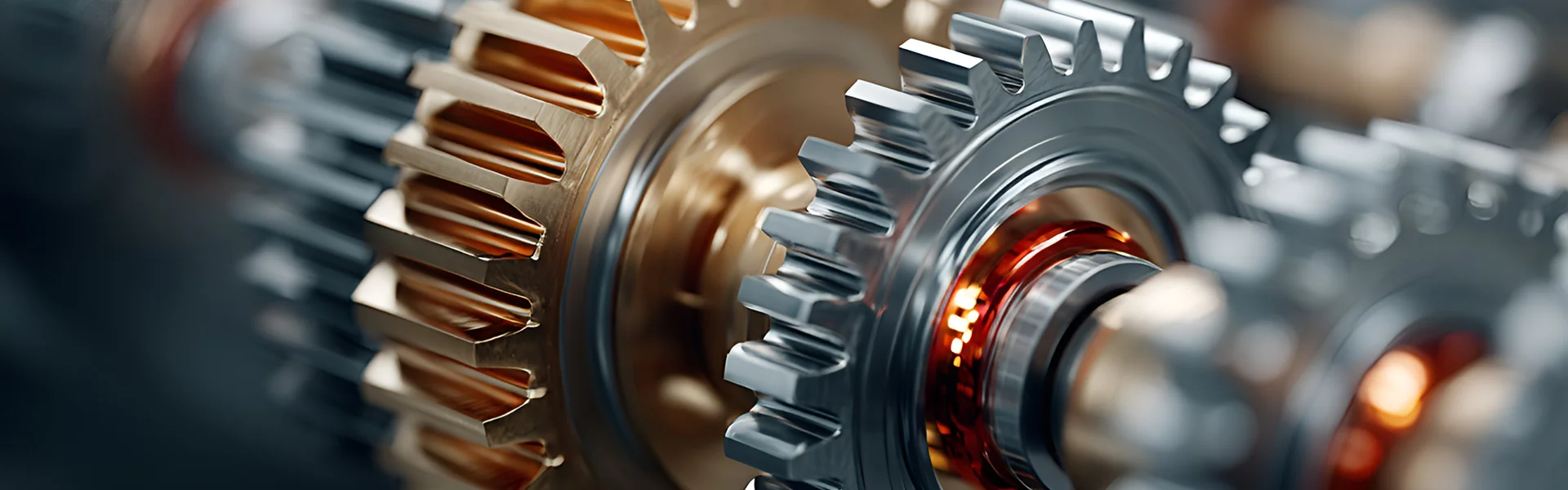
An inline planetary gearbox is designed so that the input shaft and output shaft are aligned along the same central axis. This coaxial configuration allows power to flow in a straight line from the motor through the planetary gear stages to the output. At Raydafon, our engineering teams frequently recommend this structure when system simplicity, high efficiency, and compact axial length are key design priorities.
From a mechanical perspective, the inline design consists of a sun gear directly driven by the motor shaft, multiple planet gears mounted on a carrier, and an internal ring gear fixed within the housing. The load is evenly distributed across the planet gears, which enhances torque transmission and reduces localized stress.
Key structural characteristics include:
Because the power flow remains linear, inline planetary gearboxes generally achieve higher efficiency levels, often exceeding 95 percent per stage. This is particularly valuable in servo-driven systems where precise speed control and minimal energy loss are required. Our factory production experience shows that inline designs also simplify assembly and alignment, which contributes to consistent quality and long-term durability.
Right-angle planetary gearboxes are engineered to change the direction of power transmission by 90 degrees. This is typically achieved through the integration of a bevel gear or hypoid gear stage combined with a planetary reduction stage. Unlike inline models, the input and output shafts are perpendicular, allowing designers to redirect motion within constrained machine spaces.
At Raydafon Technology Group Co.,Limited, we often see right-angle configurations selected for equipment where vertical motors must drive horizontal loads, or where machine architecture limits axial space. Our factory designs integrate precision-ground bevel gears with hardened planetary stages to ensure torque capacity is maintained despite the angular change.
Core structural features include:
While right-angle planetary gearboxes may introduce slightly higher transmission losses compared to inline versions, modern manufacturing techniques and optimized tooth geometry significantly reduce this gap. In real-world applications, the spatial advantages often outweigh minor efficiency differences.
Performance comparison is one of the most critical aspects when choosing a Planetary Gearbox. Inline and right-angle designs exhibit distinct performance characteristics that influence torque output, efficiency, noise level, and thermal behavior.
| Parameter | Inline Planetary Gearbox | Right-Angle Planetary Gearbox |
| Efficiency | Very high due to direct power flow | Slightly lower due to angular gear stage |
| Torque Density | High torque in compact form | Comparable torque with added spatial flexibility |
| Noise Level | Lower, fewer meshing points | Moderate, depends on bevel gear precision |
| Thermal Behavior | Stable heat distribution | Requires enhanced housing cooling |
| Maintenance | Simple due to fewer components | Moderate due to additional gear stage |
In our experience, inline designs are often preferred for high-speed servo applications where efficiency and precision dominate. Right-angle designs, however, excel in scenarios where mechanical layout constraints would otherwise compromise system integration. Both options are manufactured in our factory with identical quality standards, ensuring reliable long-term performance.
Application context plays a decisive role in gearbox selection. Inline planetary gearboxes are commonly used in robotics, CNC machines, and automated assembly lines where straight-line motor integration is possible. Their compact radial footprint and high precision make them ideal for dynamic positioning systems.
Right-angle planetary gearboxes are widely applied in conveyor systems, packaging machinery, and lifting equipment. When machine frames restrict motor placement, the 90-degree power redirection enables efficient space utilization without sacrificing torque output.
Typical application preferences include:
At Raydafon Technology Group Co.,Limited, our application engineers evaluate load type, duty cycle, and installation constraints to recommend the optimal Planetary Gearbox configuration for each project.
Installation space often determines whether an inline or right-angle gearbox is feasible. Inline units require sufficient axial length but offer minimal radial expansion. Right-angle units reduce axial requirements while increasing radial dimensions. From our factory customization projects, we have observed that early-stage layout planning significantly reduces redesign costs. Engineers who consider gearbox orientation during the conceptual design phase achieve better system balance and longer component lifespan.
Key installation considerations include:
Our team at Raydafon Technology Group Co.,Limited frequently collaborates with OEMs to adjust housing dimensions, shaft interfaces, and mounting flanges to ensure seamless integration into existing equipment.
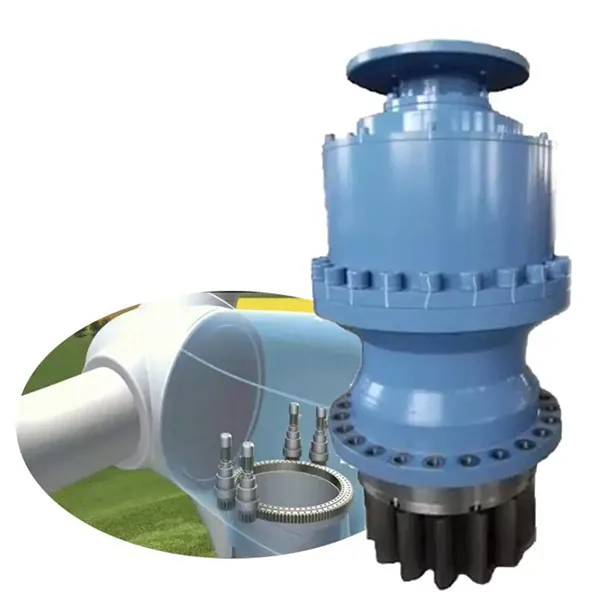
When comparing inline and right-angle planetary gearboxes, technical parameters provide objective criteria for selection. Both designs can be manufactured to meet demanding specifications, but their parameter ranges may differ based on structure.
| Parameter | Typical Range | Design Impact |
| Reduction Ratio | 3:1 to 100:1 | Affects speed and torque output |
| Backlash | 3 to 15 arcmin | Determines positioning accuracy |
| Rated Torque | 10 Nm to 2000 Nm | Defines load capacity |
| Input Speed | Up to 6000 rpm | Influences thermal performance |
| Protection Level | Up to IP65 | Environmental adaptability |
Our factory manufacturing process ensures consistent parameter control across both inline and right-angle models. By aligning material selection, heat treatment, and precision machining, we deliver stable quality regardless of configuration.
Understanding what are the differences between inline and right-angle planetary gearboxes enables more informed decision-making at both design and procurement stages. Inline designs offer superior efficiency and simplicity, while right-angle designs provide unmatched flexibility in constrained layouts. Neither option is universally superior; the optimal choice depends on application-specific requirements.
At Raydafon Technology Group Co.,Limited, we believe that a well-matched Planetary Gearbox enhances not only machine performance but also long-term operational reliability. Our engineering-driven approach ensures that our solutions align with real-world demands, from standard models to fully customized designs produced in our factory.
If you are planning a new project or upgrading existing equipment, our technical team is ready to support your selection process with practical insights and tailored recommendations. Contact us today to discuss how our planetary transmission solutions can improve your system efficiency and competitiveness.
Q1: What are the differences between inline and right-angle planetary gearboxes in efficiency?
A1: Inline planetary gearboxes generally achieve higher efficiency because power flows along a straight axis with fewer meshing points, while right-angle versions include an additional gear stage to change direction, resulting in slightly higher losses.
Q2: What are the differences between inline and right-angle planetary gearboxes in installation space?
A2: Inline designs require more axial space but less radial space, whereas right-angle designs reduce axial length and allow flexible motor positioning at the cost of increased radial dimensions.
Q3: What are the differences between inline and right-angle planetary gearboxes in torque capability?
A3: Both designs can deliver similar torque levels when properly engineered, although right-angle gearboxes rely on reinforced housings to handle combined load directions.
Q4: What are the differences between inline and right-angle planetary gearboxes in maintenance?
A4: Inline gearboxes typically require less maintenance due to simpler structure, while right-angle gearboxes may need additional inspection because of the bevel gear stage.
Q5: What are the differences between inline and right-angle planetary gearboxes in application suitability?
A5: Inline gearboxes suit high-precision, high-speed systems, while right-angle gearboxes excel in space-constrained or multi-directional machine layouts.
Q6: What are the differences between inline and right-angle planetary gearboxes in manufacturing complexity?
A6: Right-angle designs involve more complex machining and alignment processes, whereas inline designs benefit from streamlined manufacturing and assembly.
+86-574-87168065
Luotuo Industrial Area, Zhenhai District, Ningbo City, China