QR Code

Products
Contact Us


Fax
+86-574-87168065

Email

Address
Luotuo Industrial Area, Zhenhai District, Ningbo City, China


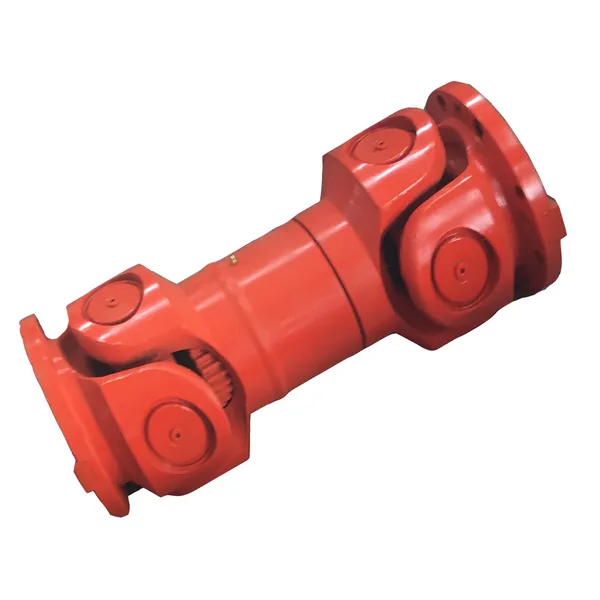
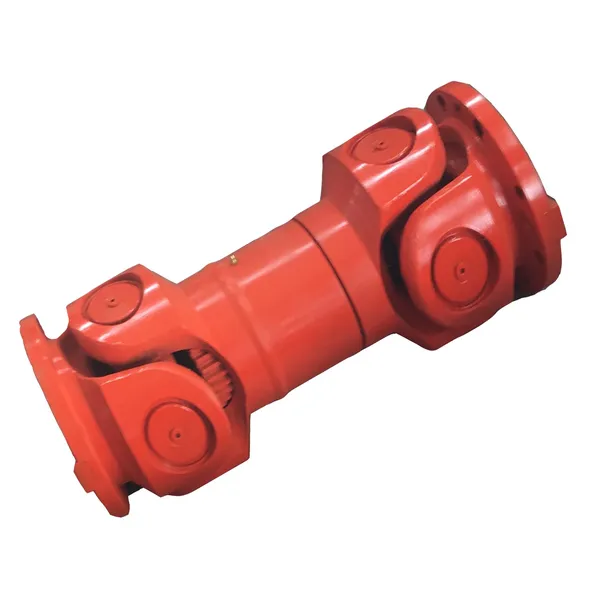
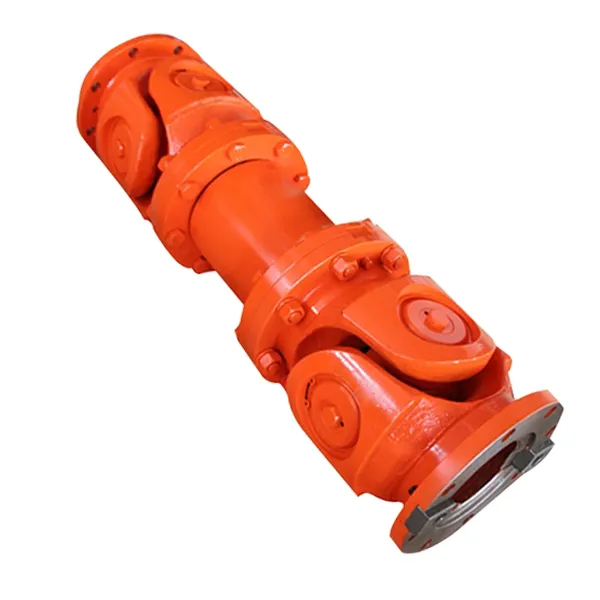
Imagine a massive industrial machine grinding to a halt because of a tiny, neglected component—the universal coupling. How to maintain a universal coupling? This critical question often gets overlooked until a catastrophic failure occurs, costing thousands in downtime and repairs. A Universal Coupling (U-joint) transmits power between misaligned shafts, and regular maintenance ensures smooth operation, extends equipment life, and prevents safety hazards. Whether you are managing a conveyor system, pump drive, or heavy machinery, a well-maintained universal coupling is the linchpin of reliable performance. Your procurement decision is only the first step; the real value lies in keeping that coupling in top shape. In this guide, we’ll break down simple, actionable steps that even non-engineers can follow, empowering you to keep your equipment running at peak efficiency. You’ll discover how to schedule inspections, choose the right lubricant, detect early warning signs, and ultimately save your business time and money. By implementing these practices, you can avoid the nightmare of unplanned outages and budget overruns, keeping your operations lean and competitive.
Picture this: a cement plant’s kiln drive stops rotating at 3 a.m. because a universal coupling shears off its yoke. The unplanned downtime stretches to 11 hours, raw material clinkers cool into a solid mass, and the total loss exceeds $80,000. This is the real cost of ignoring maintenance. Universal couplings operate under extreme torque and angular misalignment, relying on bearing crosses and bushings to compensate for shaft deflections. Without routine care, components wear unevenly, develop microscopic cracks, and eventually fail catastrophically—often taking attached gearboxes and motors with them. The solution is a proactive maintenance program built around three pillars: frequent inspection, proper lubrication, and precise alignment. When these tasks become part of your standard operating procedure, you can extend coupling life by 40-60% and drastically cut emergency repair bills. In fact, companies that document their maintenance routines report a 30% reduction in unplanned failures within the first year.
| Maintenance Task | Recommended Frequency | Key Benefit |
|---|---|---|
| Visual inspection for cracks/rust | Weekly | Early crack detection avoids sudden breakage |
| Torque check of flange bolts | Monthly | Prevents loosening from vibration |
| Lubrication with correct grease | Every 50-200 operating hours | Reduces friction and wear on bearing surfaces |
| Alignment verification | Quarterly or after base shifts | Ensures joint angles stay within tolerance |
An inspector walks past a drive shaft every day and never notices the fine metal dust accumulating around the universal coupling—until the joint develops half an inch of play and starts hammering. At that point, the damage is done. The challenge is that universal couplings often hide in tight spaces, and their degradation can be subtle. A reliable inspection routine must include a checklist that leaves no component unchecked. Start by removing any guards or covers and cleaning the coupling area to expose the yokes, cross, and bearing caps. Look for hairline cracks radiating from bolt holes, discoloration from overheating (blue or purple tint), and signs of corrosion, especially on exposed needle bearings. Wiggle the coupling by hand—if you feel more than 0.015 inches of radial play, it’s time for a teardown. Use a stroboscope while the machine is running to safely watch the joint movement; uneven rotation or wobble indicates imbalance or worn cross bearings. Raydafon Technology Group Co.,Limited supplies universal couplings with clearly marked inspection points and offers inspection training to client teams, making these checks straightforward.
| Inspection Point | Tool/Method | Pass/Fail Criterion |
|---|---|---|
| Bearing cap bolt torque | Torque wrench | ±5% of OEM spec |
| Cross bearing radial play | Dial indicator | ≤ 0.015 in (fleet spec) |
| Yoke crack detection | Dye penetrant or magnetic particle | No linear indications |
| Grease purge condition | Visual | Fresh grease visible, no hardened deposits |
A food processing line’s packaging machine began squealing every cycle. The operator added a generic lithium grease and the noise subsided—for a week. Then the coupling’s cross bearing seized, ripping apart the splined shaft. The problem? The grease had no extreme-pressure (EP) additives and couldn’t handle the shock loads. Selecting the right lubricant for a universal coupling is not one-size-fits-all. You must consider load type, speed, temperature, and environmental contamination. For most industrial universal joints, an NLGI #2 grade lithium complex or calcium sulfonate grease with EP additives and anti-wear agents offers a good balance of pumpability and film strength. In washdown or dusty environments, a tacky, water-resistant grease prevents washout and corrosion. Lubricate until fresh grease purges from all four bearing seals—this pushes out contaminants and ensures the new grease reaches the rolling elements. If the joint lacks seals, apply a light film to protect against moisture. For couplings operating in continuous high-torque conditions, Raydafon Technology Group Co.,Limited recommends automated lubrication systems that deliver metered shots at set intervals, dramatically reducing human error and extending cross life by up to 70%.
| Lubricant Property | Recommendation | Application Scenario |
|---|---|---|
| Base oil viscosity | ISO VG 150-460 | Medium to heavy industrial loads |
| Thickener type | Lithium complex or calcium sulfonate | Standard or wet environments |
| Dropping point | > 250°C (482°F) | High-temperature applications |
| Four-ball weld load | ≥ 250 kg | Shock-loaded drives |
A newly installed pumping station suffered three universal coupling failures in six months. Each time, the joint cross showed asymmetric wear—one bearing cap blue from heat, the opposite side still shiny. The culprit was a 2.5-degree angular misalignment that the installer had considered “close enough.” Universal couplings can accommodate misalignment, but every degree beyond the design limit rapidly accelerates cross and bushing wear. Alignment should be verified using laser alignment tools or dial indicators, checking both angular and offset deviations between the driving and driven shafts. Prioritize aligning the shafts to within 0.5 degrees angular and 0.005 inches offset for high-speed applications, while low-speed, heavy-torque setups can tolerate slightly more. Also, ensure that bearing supports and baseplates are rigid and grouted properly; foundation settling is a common hidden cause of misalignment. Documenting the “as-aligned” numbers provides a baseline for trend monitoring. When clients struggle with repeated alignment issues, Raydafon Technology Group Co.,Limited provides on-site consulting and offers corrosion-resistant baseplate shims that simplify correction.
| Parameter | Tight-Tolerance Spec | Standard-Tolerance Spec |
|---|---|---|
| Angular misalignment | ≤ 0.25° | ≤ 1.5° |
| Offset (parallel) | ≤ 0.002 in | ≤ 0.010 in |
| Baseplate flatness | 0.001 in/ft | 0.003 in/ft |
| Check frequency | Every 500 hrs | Every 1,000 hrs |
During a routine walkthrough, a technician heard a rhythmic “clunk” from a steel rolling mill’s drive train. The universal coupling was hot to the touch, and dark grease oozed from one seal. Instead of shutting down, the team hoped it would last until the next planned outage. Two shifts later, the yoke fractured, the shaft whipped around, and the mill was down for a week. Warning signs demand immediate action. Audible knocking, vibration that increases with speed, and surface temperatures exceeding 180°F (82°C) all indicate advanced wear. Discolored caps, rusty needle bearings, or excessive slop beyond the replacement threshold (typically 0.020 inches radial play) mean the coupling has entered failure mode. At this stage, attempting to re-grease is futile—the only safe path is replacement with a properly sized joint. Raydafon Technology Group Co.,Limited’s engineering team can cross-reference your existing coupling to a suitable, dimensionally interchangeable replacement, often shipping from stock within 48 hours to get you back online fast.
| Symptom | Likely Cause | Corrective Action |
|---|---|---|
| Rhythmic knocking at low speed | Worn cross bearings | Check radial play; replace if >0.020 in |
| Blue/purple yoke discoloration | Overheating from under-lube | Assess lubrication schedule and grease grade |
| Uneven cross wear pattern | Excessive misalignment | Realign shafts, consider flexible disc coupling if needed |
| Grease ejection from one seal | Clogged or damaged seal | Clean or replace seal, regrease |
Lubrication frequency depends on operating speed, load, temperature, and environment. As a general rule, universal couplings in normal industrial service (8 hours/day, moderate torque) should be greased every 200 operating hours, while high-speed or continuous-duty couplings may need re-greasing every 50 hours. If your coupling operates in wet or dusty conditions, reduce the interval by half to prevent contamination. Always purge old grease until fresh lubricant appears at the seals. Using an automatic lubrication system can maintain optimal intervals without manual oversight. Raydafon Technology Group Co.,Limited’s application engineers can help you calculate the exact relubrication schedule based on your operating parameters.
You should consider replacement when any of these conditions appear: radial play in the cross bearing exceeding 0.020 inches, visible cracks on the yoke or bearing cap, permanent distortion or bluing from heat, or if the splines of a telescoping coupling show more than 10% wear. Repairing a severely worn universal coupling rarely restores full strength and can cost nearly as much as a new unit. When in doubt, a complete replacement is safer and more economical. Raydafon Technology Group Co.,Limited stocks a wide range of standard and custom universal couplings, and many drop-in replacements can ship the same day. Contact our team for a quick cross-reference of your failed part.
Effective universal coupling maintenance doesn’t demand a Ph.D. in mechanical engineering—it requires consistent attention to inspection, lubrication, alignment, and prompt response to warning signs. We hope these guidelines empower you to keep your equipment running smoother and longer. If you’ve encountered a stubborn failure or want a second opinion on your maintenance plan, share your experience in the comments below or reach out to our specialists. For over 20 years, Raydafon Technology Group Co.,Limited has supplied premium universal couplings, cardan shafts, and drive components to industries worldwide. Our engineering team assists with coupling selection, troubleshooting, and on-site training to ensure your maintenance program delivers real uptime results. Visit us at https://www.transmissions-china.com or email [email protected] for expert advice and a competitive quote.
Raydafon Technology Group Co.,Limited – Your partner for dependable power transmission solutions.
Smith, J.A., 2019. “Lubrication Optimization for Needle Bearing Universal Joints.” Journal of Tribology, 141(3), 031601.
Kim, S. and Park, H., 2020. “Fatigue Life Prediction of Automotive Driveshaft Universal Joints under Random Loading.” International Journal of Fatigue, 134, 105487.
Martinez, L., 2018. “Effect of Angular Misalignment on the Wear Rate of Heavy-Duty Cardan Shafts.” Wear, 404-405, 178-185.
Chen, X. et al., 2021. “Condition Monitoring of Universal Couplings Using Vibration Signal Analysis.” Mechanical Systems and Signal Processing, 148, 107165.
Johnson, R.T., 2017. “Grease Selection for Industrial Universal Joints: Laboratory vs. Field Performance.” NLGI Spokesman, 81(4), 22-31.
Ahmed, F. and Gupta, V.K., 2022. “Failure Analysis of a Sunflower Thresher PTO Universal Joint.” Engineering Failure Analysis, 133, 105960.
Lee, D.W., 2016. “The Influence of Hardness Mismatch on Yoke Spline Fretting in Telescopic Shafts.” Journal of Mechanical Science and Technology, 30(8), 3589-3596.
Bruns, P. and Mayer, H., 2019. “Determination of Allowable Misalignment for Double Universal Joint Configurations.” Forschung im Ingenieurwesen, 83(2), 101-112.
Patel, M.K., 2020. “In-Situ Thermography for Early Detection of Universal Joint Bearing Faults.” Insight – Non-Destructive Testing and Condition Monitoring, 62(11), 640-645.
Wu, Y. et al., 2023. “Numerical Simulation of Grease Flow Inside a Universal Joint Cross Bearing.” Tribology International, 179, 108143.
+86-574-87168065
Luotuo Industrial Area, Zhenhai District, Ningbo City, China