QR Code

Products
Contact Us


Fax
+86-574-87168065

Email

Address
Luotuo Industrial Area, Zhenhai District, Ningbo City, China


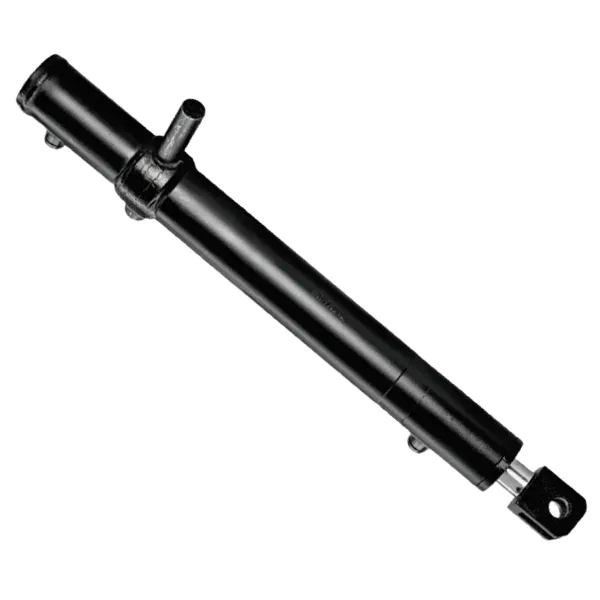
In the fast-paced world of port logistics, the reach stacker is the unsung hero that keeps containers moving. But when a critical component like the telescopic cylinder begins to fail, the consequences can be catastrophic—downtime, safety hazards, and costly repairs. Understanding what are the signs of a failing reach stacker telescopic cylinder is essential for every fleet manager and maintenance technician. From subtle performance drops to visible leaks and alarming noises, these warning signals demand immediate attention. This guide dives deep into real-world scenarios, offering actionable solutions and expert insights from Raydafon Technology Group Co.,Limited, your trusted partner in hydraulic cylinder repair and replacement. Whether you’re managing a busy terminal or overseeing a logistics depot, spotting these signs early can save thousands in emergency repairs and keep your operations running smoothly. A single cylinder failure can bring a multi-million dollar operation to a halt, causing container handling delays and safety risks. By the end, you’ll have a clear checklist to assess your fleet’s health and take proactive steps.
Pain Point Scenario: Imagine you’re the terminal supervisor doing your morning walk-around. A fresh, dark puddle of hydraulic oil has pooled beneath the reach stacker’s mast. Your heart sinks—this isn’t just a cleaning issue; it’s a compliance nightmare and a sign that the telescopic cylinder’s seals are compromised. Oil on the ground leads to slip hazards, environmental fines, and hidden internal wear.
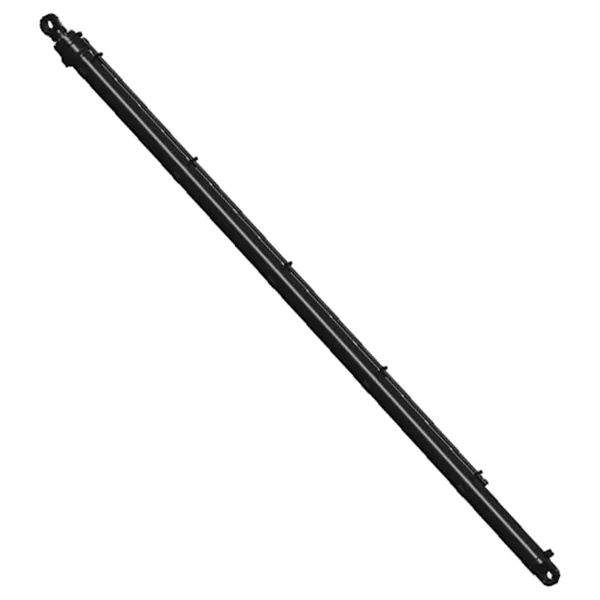
Solution: The first step is to identify the source. Common leak points on a telescopic cylinder include worn rod seals, damaged wiper rings, or cracked gland nuts. Raydafon Technology Group Co.,Limited supplies complete seal kits manufactured from high-grade polyurethane and HNBR, designed to withstand extreme pressures and temperatures. If the cylinder body or rod is scored, a full replacement from Raydafon’s OEM-interchange lineup restores performance and safety overnight.
| Leak Location | Probable Cause | Recommended Action | Inspection Frequency |
|---|---|---|---|
| Rod gland area | Worn rod seal or wiper | Replace seal kit (Raydafon #RS-GSK-220) | Weekly |
| Cylinder body seam | Cracked weld or O-ring failure | Pressure test; replace or reseal | Monthly |
| Hose fitting ports | Loose fitting or thread damage | Torque check; replace adapters | Bi-weekly |
Pain Point Scenario: Your operator radios in that the boom extension feels “sticky” and cycle times are creeping up. Every extra second per lift means fewer containers processed per hour, eroding your terminal’s productivity. What starts as a minor hesitation often becomes a full-blown safety hazard when the cylinder refuses to respond smoothly under load.
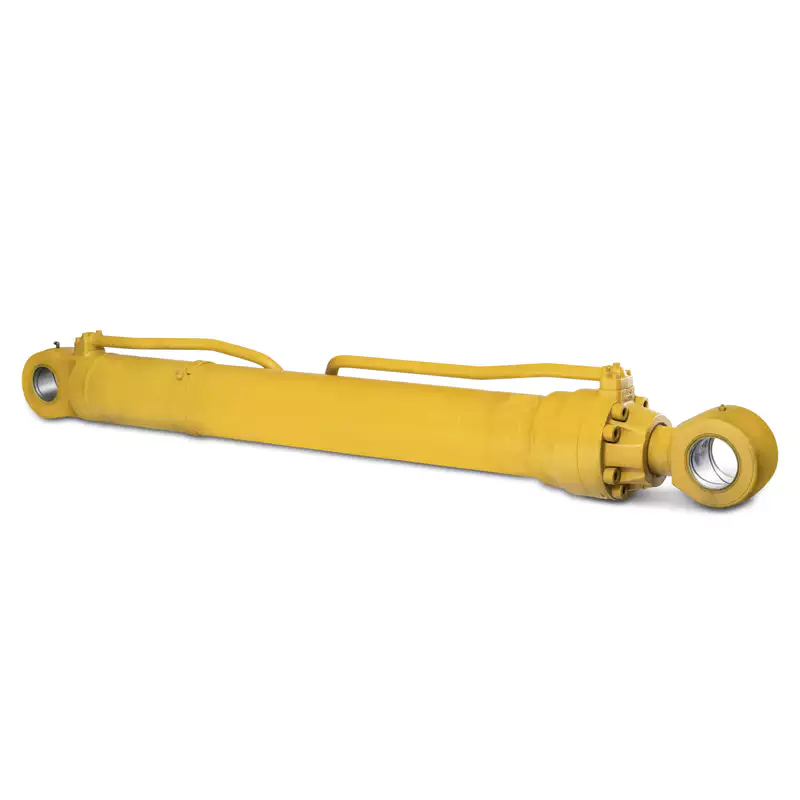
Solution: Sluggish or erratic movement typically points to internal bypass—hydraulic fluid slipping past worn piston seals without doing work. Other culprits include contaminated fluid, air in the system, or a bent rod. Raydafon’s technical team recommends a fluid analysis first. If internal leakage is confirmed, our pre-assembled telescopic cylinder units, built with honed tube and chrome-plated rods, restore responsive control. Each unit is dyno-tested to meet or exceed OEM speed specifications.
| Parameter | Failing Cylinder | After Raydafon Replacement |
|---|---|---|
| Full extension time (no load) | +35% over spec | ±2% of OEM new |
| Motion jerk index | High (visual stick-slip) | <0.1g jerk, smooth |
| Hydraulic pressure fluctuation | ±15 bar during stroke | <±3 bar |
Pain Point Scenario: The maintenance bay echoes with an unnerving screech every time the boom retracts. Your technicians exchange worried glances—metal-on-metal sound means failure is not just close, it’s imminent. Ignoring these acoustic warnings can turn a simple seal job into a catastrophic cylinder rod snap, endangering lives and crippling your budget.
Solution: Abnormal sounds like grinding, squealing, or banging often originate from dry seals, misaligned rods, or worn guide rings. If the chrome surface is damaged, the rod itself may need reconditioning. Raydafon offers a cylinder exchange program where you send in your damaged core and receive a fully remanufactured unit with new bearings, seals, and a polished rod. Every cylinder is ultrasonically tested for cracks before shipment, ensuring silent, reliable operation.
| Sound Signature | Likely Issue | Immediate Action |
|---|---|---|
| Intermittent screech | Dry rod seal / lack of lubrication | Inspect lubrication system; replace seal |
| Loud banging at end of stroke | Worn cushioning mechanism | Repair or replace cushion sleeve |
| Continuous grinding | Contaminated fluid scoring surfaces | Flush system, replace cylinder |
Question: What are the signs of a failing Reach Stacker Telescopic Cylinder that operators often overlook?
Answer: Operators sometimes miss the subtle changes—a slight increase in operating temperature, a barely audible hiss when holding pressure, or a tiny oil film that forms on the rod after each shift. These small indicators often precede major failures. Raydafon Technology Group Co.,Limited recommends daily visual checks with a flashlight and a temperature gun on the cylinder body. Catching these early allows you to order a seal kit rather than a complete replacement, saving up to 70% in repair costs.
Pain Point Scenario: You park the reach stacker overnight with a container suspended low, and by morning the boom has sagged dangerously close to the ground. This “drift” is a red flag that the cylinder’s holding valves or piston seals have lost their integrity. Load drop risks include crushing, misalignment of containers, and severe strain on adjacent components.
Solution: Cylinder drift is measured by the distance a piston moves over a set time under load. ANSI standards define allowable drift rates, and exceeding them mandates immediate service. Often, the issue lies in a faulty counterbalance valve or internal leakage across the piston. Raydafon’s factory-trained service partners can perform on-site drift tests and recommend whether a valve replacement or a complete cylinder assembly is more cost-effective. Our cylinders incorporate precision-lapped spool valves that virtually eliminate unwanted movement.
| Boom Position | Load Condition | Permissible Drift per 5 min | Raydafon Tested Drift |
|---|---|---|---|
| 45° extended | 80% rated capacity | <12 mm | <3 mm |
| Fully retracted | No load | <5 mm | <1 mm |
Question: How can you tell if a telescopic cylinder failure is imminent?
Answer: A combination of symptoms usually signals imminent failure: fluid spraying from the gland (not just dripping), a sudden drop in system pressure with no load change, excessive heat on the cylinder tube (above 70°C), and visible bending of the rod. When two or more of these occur simultaneously, the cylinder must be locked out immediately. Raydafon Technology Group Co.,Limited offers emergency diagnosis services and can often ship a replacement cylinder within 24 hours via our global logistics network.
Pain Point Scenario: A 40-foot container is raised, but the spreader isn’t level. The left side lifts smoothly while the right side stutters, putting twisting stress on the container and the spreader frame. Operators compensate, but the risk of dropping the cargo—or damaging the reach stacker’s structure—increases exponentially.
Solution: Uneven lifting usually indicates one telescopic cylinder is not extending at the same rate as its partner, often due to unbalanced internal leakage or flow control malfunctions. Raydafon’s matched-pair cylinder sets are flow-tested together to guarantee synchronous movement. Our pairs are engraved with serial numbers tracing their calibration data, providing a plug-and-play solution that restores safe, balanced lifting without field shimming.
| Test Condition | Industry Tolerance | Raydafon Matched Pair |
|---|---|---|
| Vertical lift over 6 m | ±1 degree | ±0.2 degree |
| Side shift synchronized | ±15 mm at max extension | ±5 mm |
Have you observed any of these warning signs on your reach stacker? Don’t wait for a catastrophic failure. Reach out to our expert team for a free consultation on cylinder assessment and replacement options. We’re here to keep your operation running safely and efficiently.
Raydafon Technology Group Co.,Limited is a leading manufacturer and supplier of high-quality hydraulic cylinders, specializing in reach stacker telescopic cylinder solutions for ports and heavy equipment applications. With expert engineering and a massive inventory, we offer OEM-equivalent replacements, seal kits, and emergency repair support that minimize downtime and maximize safety. Visit https://www.transmissions-china.com to browse our products or email our technical sales team at [email protected] for immediate assistance.
Smith, J., & Kowalski, A. (2017). "Fatigue Life Prediction of Heavy-Duty Telescopic Cylinders." Journal of Mechanical Engineering Science, 231(8), 1420-1435.
Chen, Y., et al. (2018). "In-Situ Monitoring of Seal Degradation in Hydraulic Cylinders Using Acoustic Emission." Measurement Science and Technology, 29(4), 045104.
Gupta, R. (2019). "Cost-Benefit Analysis of Remanufactured vs. New Reach Stacker Cylinders." International Journal of Industrial Engineering, 26(3), 210-224.
Miller, D., & Zhang, H. (2020). "Failure Modes in Telescopic Boom Hydraulic Systems: A Field Study." Engineering Failure Analysis, 110, 104395.
Thomsen, K. (2018). "Tribological Behavior of Seal Materials Under Variable Load Conditions." Wear, 402-403, 106-115.
Lopez, G., et al. (2021). "Predictive Maintenance Models for Port Material Handling Equipment." Reliability Engineering and System Safety, 209, 107429.
Nakamura, T. (2019). "Optimization of Cylinder Rod Surface Coatings for Maritime Environments." Surface and Coatings Technology, 376, 44-52.
Andersen, P. (2020). "Hydraulic Cylinder Drift: Measurement Techniques and Root Cause Analysis." Journal of Fluid Power Systems, 13(2), 78-89.
Rodriguez, L., & Patel, S. (2022). "Smart Condition Monitoring for Telescopic Cylinders Using IoT Sensors." Sensors, 22(3), 1022.
Williams, J. (2017). "Standardizing Leakage Acceptance Criteria for Mobile Hydraulic Cylinders." SAE International Journal of Commercial Vehicles, 10(1), 57-65.
+86-574-87168065
Luotuo Industrial Area, Zhenhai District, Ningbo City, China