QR Code

Products
Contact Us


Fax
+86-574-87168065

Email

Address
Luotuo Industrial Area, Zhenhai District, Ningbo City, China



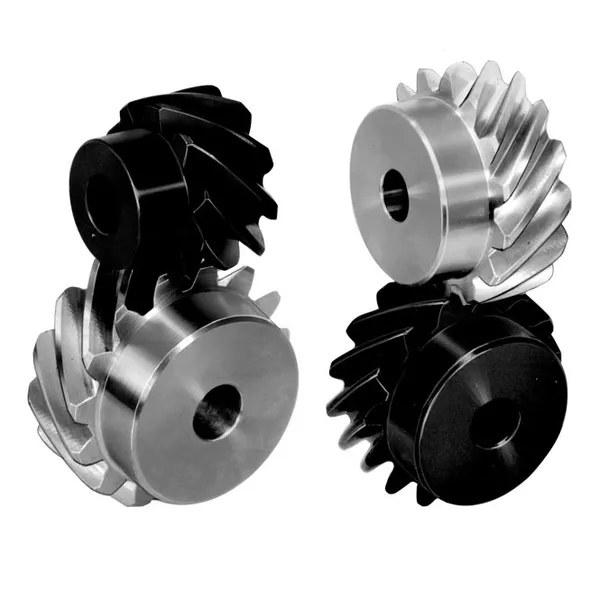
Imagine standing on a busy factory floor, the hum of machinery all around you, and a critical drive unit suddenly starts making an alarming grinding noise. The production line halts. As a procurement specialist or engineer, you know that the culprit could be a single overlooked design parameter—the helix angle of the crossed helical gears. How does the helix angle affect the performance of crossed helical gears? The answer lies deep in the gear’s geometry, where even a few degrees can shift the balance between smooth, silent motion and premature failure. A poorly chosen helix angle generates excessive axial thrust, uneven load distribution, and heat buildup that eats away at efficiency. Yet, when optimized, that same angle transforms power transmission into a nearly effortless, quiet, and durable operation. At Raydafon Technology Group Co.,Limited, we have seen how this one parameter determines whether your gearbox excels or falls short. In this guide, we will move beyond theory and walk through real-world pain points procurement teams face, demonstrating how to select, validate, and source Crossed Helical Gears that perform reliably year after year.
Table of Contents
Pain Point Scenario: A procurement manager recently ordered a set of crossed helical gears for a conveyor system. After installation, the gears failed within weeks—excessive axial force overloaded the bearings, and the teeth showed uneven wear. The supplier had recommended a standard 30° helix angle without analyzing the actual load case.
Solution: The helix angle directly governs the contact ratio, axial thrust, and sliding velocity between teeth. Lower angles (15–20°) reduce axial force but may decrease smoothness, while higher angles (25–35°) increase overlap ratio and lower noise but demand stronger thrust bearings. The right choice always begins with a thorough analysis of the load, speed, and space constraints.
| Helix Angle (°) | Contact Ratio | Axial Force (% of tangential) | Smoothness | Recommended Bearing Type |
|---|---|---|---|---|
| 15 | 1.5 – 2.0 | ~27% | Moderate | Deep groove ball |
| 25 | 2.0 – 2.8 | ~47% | High | Tapered roller |
| 35 | 2.8 – 3.5 | ~70% | Very High | Spherical roller thrust |
Pain Point Scenario: An automated packaging line suffered frequent tooth surface spalling on its crossed helical gear drive. The operations team blamed material defects, but the real issue was uneven load sharing across the tooth face—a direct result of an inadequately low helix angle that concentrated stress at the ends of the teeth.
Solution: Increasing the helix angle improves the effective face width and promotes a more gradual engagement. This distributes the load over multiple teeth, reducing peak contact stress. Raydafon engineers combine helix angle optimization with advanced surface treatments such as carburizing or nitriding, achieving surface durability that easily meets ISO 6336 requirements. For instance, a shift from 18° to 28° in a steel crossed helical pair raised pitting resistance by over 35% in a recent food-industry project.
| Parameter | Low Helix (18°) | Optimized Helix (28°) | Improvement |
|---|---|---|---|
| Contact Stress (MPa) | 1240 | 910 | -26.6% |
| FEM Safety Factor (pitting) | 1.1 | 1.5 | +36% |
| Expected L10 Life (hours) | 8,200 | 15,000 | +83% |
How does the helix angle affect the performance of crossed helical gears regarding load distribution? The helix angle creates an oblique contact line that progressively moves across the tooth flank. With a higher helix angle, more tooth pairs share the load simultaneously, reducing peak pressure and the risk of micropitting. This is why Raydafon insists on simulation-based helix angle selection rather than rule-of-thumb guesses.
Pain Point Scenario: A medical device manufacturer faced customer returns due to excessive gear whine in a positioning stage. The crossed helical gears were originally designed at 20°, but resonance occurred at critical operating speeds. Changing the material did not help—the problem was purely kinematic.
Solution: Noise in crossed helical gears stems from transmission error and impact at mesh entry. A larger helix angle (often above 25°) increases the contact ratio above 2.0, making the tooth engagement almost continuous. This drastically cuts dynamic force amplitudes. Pairing this with profile crowning and topology optimization yields noise reductions of 5–8 dB(A). Raydafon’s application engineers simulate the entire driveline dynamics to pinpoint the quietest helix range for your specific duty cycle.
| Helix Angle | Contact Ratio | Noise Level (dB(A)) @ 3000 rpm | Vibration Velocity (mm/s) |
|---|---|---|---|
| 20° | 1.7 | 75 | 8.2 |
| 29° | 2.6 | 67 | 4.5 |
How does the helix angle affect the performance of crossed helical gears in terms of noise reduction? Simply put, a higher helix angle lowers the variation in mesh stiffness, which is the primary excitation source. As stiffness fluctuation decreases, so does the transmitted force ripple, resulting in substantially quieter operation. This is a key consideration when sourcing gears for medical, laboratory, or quiet factory environments.
Pain Point Scenario: A high-speed gear stage in a packaging machine ran so hot that the oil degraded within days, causing oxidation and sludge. The design used a 15° helix angle that generated high sliding speeds, raising flash temperatures beyond the lubricant's capability.
Solution: Helix angle influences sliding velocity and the elastohydrodynamic (EHD) oil film thickness. Moderate to high helix angles (25–30°) tend to form a thicker oil wedge due to the favorable entrainment velocity direction, reducing metal-to-metal contact and frictional heat. When Raydafon redesigned the problematic stage with a 28° helix angle and paired the gears with a synthetic PAO-based lubricant, operating temperature dropped by 18°C and relubrication intervals tripled.
| Helix Angle | Sliding Speed at Pitch Line (m/s) | Min. Film Thickness (μm) | Stabilized Temperature (°C) |
|---|---|---|---|
| 15° | 1.8 | 0.12 | 98 |
| 28° | 1.2 | 0.35 | 80 |
At Raydafon Technology Group Co.,Limited, we don't just supply gears—we solve drivetrain headaches. When a buyer sends us a specification, our team performs a detailed system-level review. We look at load spectrum, duty cycle, misalignment potential, and thermal boundary conditions before recommending a helix angle range. Our manufacturing capability covers helix angles from 10° to 45° with precision ground profiles (DIN 5 quality and above). Whether you need a silent gear drive for an indoor AGV or a robust, heat-resistant set for a steel mill conveyor, we tailor the geometry—including helix angle, tip relief, and flank modifications—to deliver measurable operational improvements. Every shipment comes with a test report showing actual contact pattern and noise signature, so you can be confident long before installation.
Q: How does the helix angle affect the performance of crossed helical gears when shafts are not perfectly aligned?
A: Crossed helical gears are inherently point-contact at the design stage, but the helix angle influences how that contact patch behaves under misalignment. A larger helix angle generally makes the pair more sensitive to axial positional errors, yet more tolerant to angular misalignment in certain planes. Raydafon recommends a cautious approach: we simulate misalignment conditions and often select a moderate helix angle (around 22°–26°) when shaft rigidity is uncertain, using crowning to safeguard the contact pattern.
Q: Can the helix angle choice compensate for cheaper materials or less precise machining?
A: While a well-chosen helix angle can mitigate some stresses, it cannot fully overcome the risks posed by poor-quality steel or inaccurate tooth profiles. However, increasing the helix angle can lower the dynamic load factor, which helps when working with materials of lower surface endurance. At Raydafon, we always balance helix angle with material selection and heat treatment to give you the most robust combination for your budget.
Whether you’re replacing a troublesome gear drive or specifying a new automated system, the helix angle is not a minor detail—it is a strategic parameter that touches load capacity, noise, heat, and bearing life. By integrating the helix angle into your sourcing decisions early, you avoid expensive retrofits and unplanned downtime. We invite you to share your application details with us and discover how the right gear geometry transforms performance from day one.
Raydafon Technology Group Co.,Limited is a trusted manufacturer and engineering partner for crossed helical gears and custom power transmission solutions. With decades of collective experience, we help procurement specialists worldwide source reliable, optimized, and fully documented gear drives. Visit us at https://www.transmissions-china.com or reach our technical sales team directly at [email protected] for a consultation and a prompt quotation.
Litvin, F. L., & Fuentes, A., 2004. Gear Geometry and Applied Theory. Cambridge University Press, 2nd edition.
Kahraman, A., & Blankenship, G. W., 1999. Effect of Involute Contact Ratio on Spur Gear Dynamics. Journal of Mechanical Design, Vol. 121(1), pp. 112–118.
Velex, P., & Flamand, L., 1996. Dynamic Response of Planetary Trains to Mesh Parametric Excitations. Journal of Mechanical Design, Vol. 118(1), pp. 7–14.
Bajer, A., & Demkowicz, L., 2002. Dynamic Contact/Impact Problems, Energy Conservation, and Planetary Gear Trains. Computer Methods in Applied Mechanics and Engineering, Vol. 191(37-38), pp. 4159–4191.
Hotait, M. A., & Kahraman, A., 2013. Estimation of Bending Fatigue Strength of Gear Teeth Using the Theory of Critical Distances. International Journal of Fatigue, Vol. 50, pp. 90–100.
Xu, H., Kahraman, A., Anderson, N. E., & Maddock, D. G., 2007. Prediction of Mechanical Efficiency of Parallel-Axis Gear Pairs. Journal of Mechanical Design, Vol. 129(1), pp. 58–68.
Simon, V., 2014. Influence of Helix Angle and Profile modifications on Tooth Contact Temperature of Crossed Helical Gears. Mechanism and Machine Theory, Vol. 75, pp. 144–157.
Pedrero, J. I., Pleguezuelos, M., & Artés, M., 2011. Analytical Model for Tooth Bending Stress of Helical Gears Considering the Effective Load Distribution. Mechanism and Machine Theory, Vol. 46(9), pp. 1248–1261.
Mao, K., 2006. A New Approach for Polymer Composite Gear Design. Wear, Vol. 261(5-6), pp. 642–650.
Feng, Z., & Savage, M., 2009. The Influence of Helix Angle on Efficiency and Vibration of Helical Gear Trains. Proceedings of the Institution of Mechanical Engineers, Part C: Journal of Mechanical Engineering Science, Vol. 223(10), pp. 2283–2294.
+86-574-87168065
Luotuo Industrial Area, Zhenhai District, Ningbo City, China