QR Code

Products
Contact Us


Fax
+86-574-87168065

Email

Address
Luotuo Industrial Area, Zhenhai District, Ningbo City, China


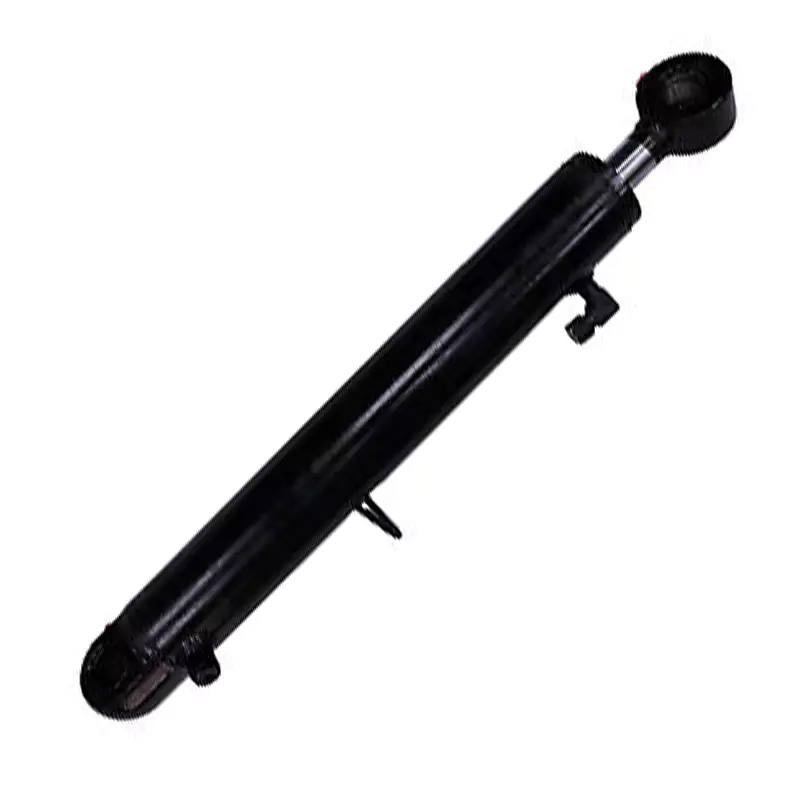
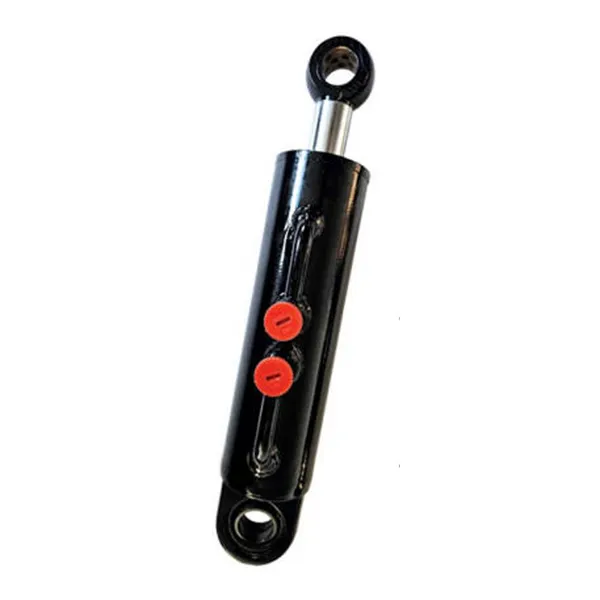
When specifying a Hydraulic Cylinder for heavy machinery, agricultural equipment, or industrial presses, engineers face a fundamental choice: tie-rod or welded construction. This decision impacts maintenance cycles, pressure ratings, footprint, and long-term reliability. At Raydafon Technology Group Co.,Limited, our factory has manufactured over 500,000 units across both categories. The core difference lies in how the end caps attach to the barrel. Tie-rod cylinders use external threaded steel rods to hold the end caps against the barrel, while welded cylinders have end caps directly welded to the tube. This structural distinction creates cascading effects in maximum pressure capacity, repairability, leakage paths, and overall cost of ownership.
In this comprehensive guide, our engineering team will break down every performance metric, design philosophy, and application scenario. You will learn why our Hydraulic Cylinder solutions dominate mobile and industrial sectors. Whether you need a cylinder that withstands 5,000 psi shock loads or one that can be rebuilt in twenty minutes, we provide the data. Let us walk through parameters, advantages, and selection logic based on 20 years of real-world field data from our factory floor to your operation.
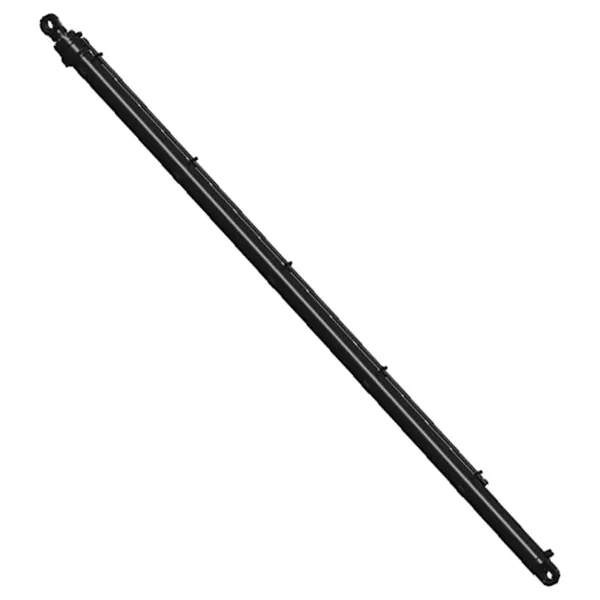
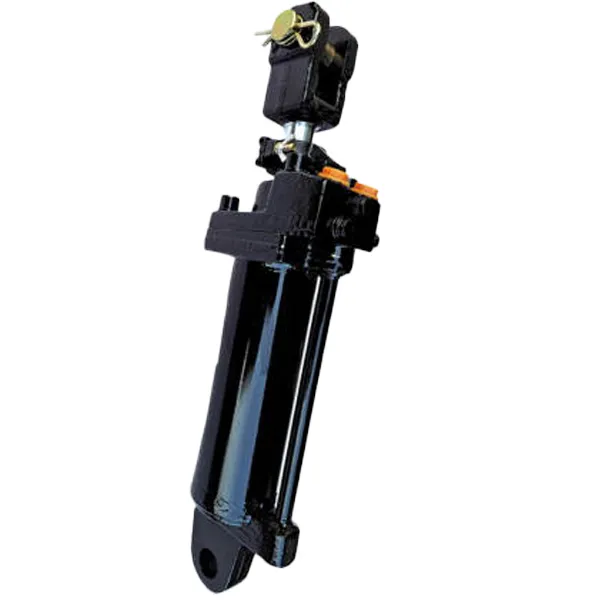
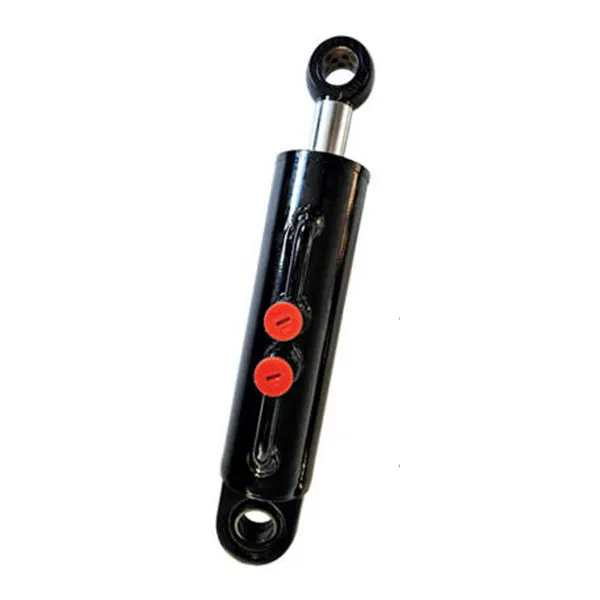
The fundamental architecture of a Hydraulic Cylinder dictates every subsequent performance trait. Tie-rod cylinders feature a cylindrical barrel with machined flat faces on each end. Four (or sometimes eight) high-strength threaded tie rods pass through the end caps and are torqued to precise specifications. This design creates a clamping force that seals the interface between the end caps and the barrel using O-rings or gaskets. Our factory produces tie-rod cylinders with rods made from 1045 steel, heat-treated to 28-32 HRC. In contrast, welded hydraulic cylinders eliminate tie rods entirely. The rod-end cap and the cap-end cap are circumferentially welded to the barrel tube. These welds are often single or double-V groove, then stress-relieved. At Raydafon Technology Group Co.,Limited, we use robotic submerged arc welding for deep penetration and consistent heat input.
Let us examine the specific design elements that create operational gaps:
From a manufacturing perspective, our factory maintains separate assembly lines. For tie-rod cylinders, we achieve concentricity within 0.05mm by precision machining cap faces. For welded cylinders, we use post-weld machining to correct heat distortion. Each Hydraulic Cylinder type also differs in repairability: tie-rod cylinders can be fully disassembled using hand tools; welded cylinders require cutting and re-welding for major repairs. This construction divergence directly influences the maximum allowable working pressure, which we will quantify next.
Additionally, our engineering team has documented that tie-rod cylinders typically have a higher “package diameter” because tie rods extend beyond the barrel OD. For space-constrained mobile equipment (excavator booms, knuckle booms), welded cylinders provide 15-20% smaller radial envelope. Conversely, tie-rod cylinders offer quicker seal replacement – a critical factor when downtime cost exceeds $500 per hour. At Raydafon Technology Group Co.,Limited, we inventory both styles in bore diameters from 25mm to 400mm. The construction choice is not about superiority but suitability. Now let us compare hard performance data.
Performance parameters determine if a Hydraulic Cylinder survives the application or fails prematurely. Our factory has tested hundreds of cylinders under ISO 10100 standards. The table below displays typical ratings for equivalent-bore units from Raydafon Technology Group Co.,Limited. Note that special designs can exceed these values, but the data represents standard industrial grades.
| Parameter | Tie-Rod Hydraulic Cylinder | Welded Hydraulic Cylinder |
| Maximum Operating Pressure (Continuous) | 3,000 psi (207 bar) standard; up to 4,500 psi with heavy-duty rods | 5,000 psi (350 bar) standard; up to 7,500 psi with double-welded design |
| Peak Shock Pressure Tolerance | 1.5x rated pressure (limited by tie rod thread stretch) | 2.5x rated pressure (welded joints handle impulse loads) |
| Standard Bore Range (our factory) | 1.5 inches to 14 inches (38mm – 355mm) | 2 inches to 24 inches (50mm – 610mm) |
| Maximum Stroke Length (single piece) | Up to 120 inches (3,048mm) – tie rod buckling limits | Up to 240 inches (6,096mm) – no tie rod buckling |
| Operating Temperature Range (standard seals) | -20°F to +180°F (-29°C to +82°C) | -40°F to +250°F (-40°C to +121°C) – weld integrity remains |
| External Leakage Potential | Higher – 4 static seal interfaces per cylinder | Lower – only rod seal and piston seal dynamic points; no cap seal |
| Rod Buckling Resistance (same rod diameter) | Lower due to external tie rod preload interference | Higher – no lateral tie rod forces on barrel |
| Typical Fatigue Life (millions of cycles) | 2-4 million cycles (tie rod thread fatigue) | 6-10 million cycles (continuous weld geometry) |
Our factory data shows that for applications requiring pressures above 3,500 psi, welded cylinders dominate because tie rods stretch cyclically, causing preload loss. Conversely, for low-pressure, high-cycle automation (like plastic injection mold clamping), tie-rod cylinders offer easier service. Another critical parameter: weight. A typical 4-inch bore, 24-inch stroke tie-rod cylinder from Raydafon weighs approximately 95 lbs, while an equivalent welded unit weighs 110 lbs due to thicker barrel walls. However, the welded cylinder handles 5,000 psi versus 3,000 psi for the tie-rod version. Always cross-reference application pressure spikes.
Furthermore, consider mounting styles. Tie-rod cylinders rely on rod-end and cap-end threaded mounts or flange mounts that attach to the tie rods themselves. Welded cylinders allow integral clevis mounts, trunnion mounts, or side lugs welded directly to the barrel – offering stronger load transfer. Our engineering team routinely maps pressure vs cycle life. For high-shock environments (rock breakers, scrap shears), we always recommend welded Hydraulic Cylinder configurations. For packaging machinery and manufacturing automation where maintenance is scheduled daily, tie-rod cylinders reduce repair friction. Next, we match applications to design.
Selecting the correct Hydraulic Cylinder is 70% application analysis. Our factory has supported mining, construction, marine, and industrial sectors. Through thousands of failure analyses, we have established clear decision rules. Tie-rod cylinders excel where repairability and lower initial cost are priorities, and maximum pressure remains below 3,500 psi. Welded cylinders are mandatory for high-pressure, high-shock, or extreme environment applications. Let us list specific scenarios with justifications from Raydafon field records.
Our factory often sees misapplications: using tie-rod cylinders in rock crushers leads to tie rod fatigue fractures within 6 months. Conversely, using welded cylinders in clean room pharmaceutical equipment makes seal replacement overly expensive. The correct choice balances pressure, environment, maintenance strategy, and total lifecycle cost. At Raydafon Technology Group Co.,Limited, we provide application worksheets that analyze duty cycle, peak pressure, mounting orientation, and temperature. For example, in a recent aggregate conveyor project, we replaced competitor tie-rod cylinders (failing every 9 months) with our welded heavy-duty Hydraulic Cylinder, achieving 41 months continuous operation. Let our experience guide your selection.
Total cost of ownership often outweighs initial purchase price. Our factory has maintained detailed cost logs for both designs across 15 years. A tie-rod Hydraulic Cylinder typically costs 20-30% less upfront than an equivalent welded cylinder. However, over a 5-year period in moderate-duty service, tie-rod cylinders may require seal replacement 3 times (every 20 months) at a parts and labor cost of $150-$400 per service, while a welded cylinder might need only one seal change. The decision changes when downtime penalties are high. Below we compare maintenance attributes.
Tie-Rod Cylinder Maintenance Features:
Welded Cylinder Maintenance Features:
From a lifecycle cost perspective, our factory calculates a “cost per million cycles” metric. For a typical 3,000 psi application at 10 cycles per minute, tie-rod cylinder initial cost $400 + 3 rebuilds ($900) = $1300 over 5 years. Welded cylinder initial cost $550 + 1 rebuild ($250) = $800 over 5 years. The welded cylinder becomes cheaper after 2.5 years. But for low-cycle applications (1 cycle per minute), tie-rod may remain cost-effective. Raydafon Technology Group Co.,Limited provides lifecycle modeling tools for each Hydraulic Cylinder quote. Additionally, we stock common seal kits for both styles in our regional warehouses, reducing downtime to 24 hours. Always factor in your maintenance team’s skill level – if they cannot weld, tie-rod is safer. If they are equipped for heavy repair, welded cylinders reduce overall headaches.
Choosing between tie-rod and welded hydraulic cylinders is not about finding a universal winner; it is about matching design attributes to your unique pressure, environment, maintenance, and budget constraints. Our factory has produced both architectures for over two decades, and we have seen tie-rod cylinders outlast welded units in clean, low-pressure automation, while welded cylinders prove indispensable in high-shock mining and marine applications. At Raydafon Technology Group Co.,Limited, we manufacture each Hydraulic Cylinder with ISO 9001:2015 certified processes, from raw material spectrometers to 100% proof testing. We encourage you to assess your peak pressure, required fatigue life, available repair resources, and space envelope. Our engineering team offers free consultation to review your circuit diagrams and duty cycles. Do not leave cylinder selection to guesswork – leverage our factory expertise to avoid premature failures and hidden downtime costs. Contact us for customized drawings, 3D models, and sealed samples. Let us build the right Hydraulic Cylinder for your machine’s second decade.
Ready to optimize your hydraulic system? Reach out to Raydafon Technology Group Co.,Limited today for a no-obligation performance analysis. Request our technical catalog with full dimensional data and pressure ratings. Our factory direct pricing and rapid prototyping ensure you get the perfect tie-rod or welded cylinder within your timeline. Upgrade your reliability now.
From our factory, standard tie-rod hydraulic cylinders are rated for continuous operation up to 3,000 psi (207 bar), with optional heavy-duty tie rods reaching 4,500 psi. Welded hydraulic cylinders produced by Raydafon Technology Group Co.,Limited handle 5,000 psi continuously, and custom double-welded designs can operate at 7,500 psi. The pressure difference stems from weld strength versus threaded rod fatigue limits. For any application exceeding 4,000 psi, our engineering team always recommends welded cylinders to avoid tie rod stretching and preload loss.
No, direct conversion is impossible because the barrel and end cap geometry are fundamentally different. A tie-rod cylinder lacks the wall thickness and weld preparations required for welded construction. However, Raydafon Technology Group Co.,Limited can retrofit your mounting dimensions. We often replace tie-rod cylinders with welded cylinders that have identical pin centers and port locations. Our factory uses a modular design approach; we can provide a welded hydraulic cylinder that mounts exactly like your existing tie-rod unit, but with higher pressure rating and longer life. Contact our application engineers for a retrofit package.
In high-vibration environments (e.g., vibratory rollers, compactors), welded hydraulic cylinders have significantly lower lifetime maintenance costs. Vibration causes tie rod nuts to loosen despite prevailing torque nuts or lock washers. Our factory has measured tie rod preload loss of up to 40% after 500 hours on vibratory equipment, leading to seal extrusion and external leaks. Welded cylinders have no external fasteners, so vibration does not affect structural integrity. For such applications, Raydafon Technology Group Co.,Limited guarantees welded hydraulic cylinders provide 3-4 times longer seal life. The slightly higher upfront cost is recouped within 8-12 months due to reduced downtime.
Tie-rod hydraulic cylinders are far easier to repair in field conditions. Our factory designs them with standard metric or inch hex nuts. A technician with basic hand wrenches, a seal pick, and a soft mallet can replace all seals in under one hour without removing the cylinder from the machine (if access permits). Welded cylinders require cutting torches or a plasma cutter, a welding machine, and skilled welder to rejoin the end cap – typically not feasible in remote sites. For mining or forestry operations, Raydafon Technology Group Co.,Limited often recommends tie-rod cylinders where field repair capability is critical. For operations near a workshop, welded cylinders are fine.
For agricultural implements (planters, sprayers, balers), we recommend analyzing three factors: pressure requirements (usually under 2,500 psi), seasonal repair windows, and corrosion from fertilizers. Our factory typically suggests tie-rod hydraulic cylinders for agriculture because pressures are moderate, you can rebuild them during winter downtime, and tie rods allow easy disassembly for cleaning corrosive residues. However, for high-pressure systems like telescopic dump cylinders on grain carts, welded hydraulic cylinders from Raydafon Technology Group Co.,Limited provide better resistance to shock loads from uneven grain flow. Send us your implement’s maximum pressure spikes and expected cycles per season – we will run our decision matrix and provide a certified recommendation.
+86-574-87168065
Luotuo Industrial Area, Zhenhai District, Ningbo City, China