QR Code

Products
Contact Us


Fax
+86-574-87168065

Email

Address
Luotuo Industrial Area, Zhenhai District, Ningbo City, China


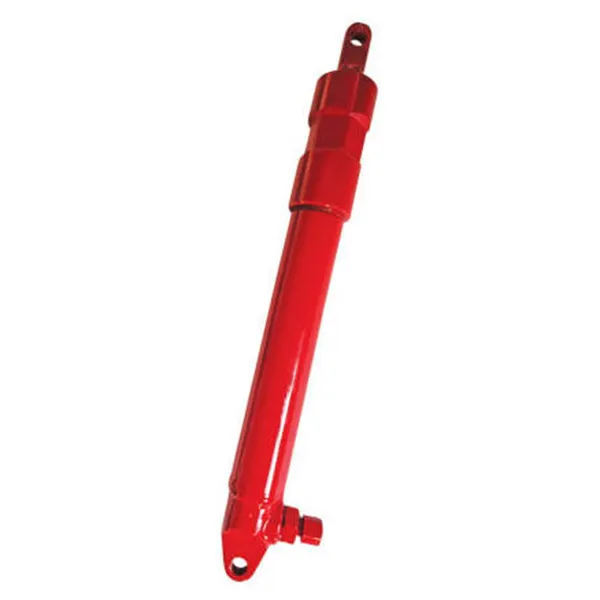
A forklift hydraulic cylinder is judged by what it does under load: it lifts, holds, and lowers a heavy load thousands of times in a dusty warehouse or an outdoor yard. The cylinder barrel, the rod, and the piston are the visible structure, but the component that decides whether the cylinder holds the load without drifting is the seal system. A seal that leaks internally allows the piston to bypass oil, and the load sinks slowly even when the control valve is closed. A seal that leaks externally leaves oil on the floor and allows contamination to enter. A dust seal that wears out allows abrasive particles to reach the rod seal, and the wear accelerates until the cylinder fails. For a procurement team sourcing Forklift Hydraulic Cylinders, the seal specification is not a detail to be left to the supplier’s default. It is the specification that determines the cylinder’s reliability in service.
This guide explains why hydraulic seals are important for Forklift Hydraulic Cylinder reliability from a procurement perspective. It covers the functions of the seal system, the seal types and materials that suit different forklift duties, the way seal failures translate into downtime, the parameters that should be verified in a seal specification, and the supplier verification steps that reduce seal-related risk before an order is placed. The content is organized around the questions a buyer should ask, and it includes the product parameters and documentation that a reliable supplier should provide. Our factory at Raydafon Technology Group Co.,Limited designs Forklift Hydraulic Cylinders with seal systems matched to the application, and the guidance below reflects the engineering and procurement standards we apply to the products we supply.
The seal system is the boundary between the pressurized oil and the environment, and between the high-pressure chamber and the low-pressure chamber. Every function that the Forklift Hydraulic Cylinder performs depends on that boundary remaining intact. The lift function depends on the piston seal preventing oil from bypassing the piston. The hold function depends on the piston seal and the control valve maintaining pressure. The lower function depends on the rod seal and the dust seal preventing contamination from entering while the rod retracts. The reliability of the cylinder is therefore the reliability of the seal interfaces, not just the strength of the barrel or the straightness of the rod.
The failure chain below shows how a seal degradation progresses from a minor condition to a cylinder failure in a typical forklift duty cycle.
The seal system has five interfaces, and each interface has a different exposure and a different failure mode. The piston seal is exposed to high pressure and to the oil temperature. The rod seal is exposed to pressure and to the rod surface. The dust seal is exposed to the external environment. The guide ring is exposed to side load. The static seals at the end caps are exposed to pressure and to thermal cycling. The table below summarizes the interfaces and their reliability role.
| Seal Interface | Primary Function | Typical Failure Mode | Reliability Consequence |
| Piston seal | Prevents oil bypass across the piston | Wear, extrusion, hardening | Load drift, loss of lift force |
| Rod seal | Prevents external leakage along the rod | Lip wear, scoring, contamination damage | Oil loss, environmental contamination |
| Dust seal | Excludes dust and particles from the rod seal | Wear, loss of wiping edge | Accelerated rod seal wear |
| Guide ring | Maintains piston and rod alignment | Wear, deformation | Metal contact, seal damage |
| Static seal | Seals the end cap and port interfaces | Compression set, nicks | External leakage at joints |
Our factory at Raydafon treats the seal system as a reliability function, not as a consumable list. We specify the seal material, the groove geometry, the rod surface finish, and the dust seal type for each Forklift Hydraulic Cylinder model, and we verify the seal performance with a cycle test and a leakage test before shipment. The goal is to provide a cylinder whose reliability is defined by the seal interfaces, not compromised by them.
For a buyer, the reliability question should be asked at the seal interface level. A cylinder that is specified with a high-grade barrel and a low-grade dust seal is not a reliable cylinder, because the dust seal will allow contamination to destroy the rod seal. The procurement specification should state the seal materials, the surface finish, and the test requirements, not just the cylinder dimensions.
The seal types and materials must be matched to the duty because forklift hydraulic cylinders operate in different conditions. An indoor warehouse forklift sees a clean floor, a moderate temperature, and a high cycle rate. An outdoor yard forklift sees dust, rain, and temperature extremes. A heavy-duty container handler sees high pressure, high side load, and continuous operation. The seal material and the seal geometry must be selected for the dominant condition, and the selection should be documented in the cylinder specification.
The comparison matrix below presents the common seal types and materials for Forklift Hydraulic Cylinder applications.
| Seal Position | Common Material | Temperature Range | Pressure Capability | Typical Duty | Procurement Note |
| Piston seal | Polyurethane U-cup with energizer | -30°C to +100°C | Up to 400 bar | Standard lift and tilt cylinders | Check extrusion gap and back-up ring |
| Piston seal | PTFE with elastomer energizer | -40°C to +120°C | Up to 500 bar | Heavy-duty and high-cycle | Check low-friction and high-pressure suitability |
| Rod seal | Polyurethane U-cup | -30°C to +100°C | Up to 400 bar | General forklift duty | Check lip geometry and rod finish |
| Rod seal | PTFE with O-ring energizer | -40°C to +120°C | Up to 500 bar | High-pressure and low-friction | Check contamination sensitivity |
| Dust seal | Polyurethane or NBR | -30°C to +100°C | Low pressure | Dusty and outdoor sites | Check wiping edge and spring loading |
| Guide ring | PTFE with bronze filler | -40°C to +120°C | High side load | All cylinders | Check clearance and wear rate |
| Static seal | NBR or FKM O-ring | -30°C to +150°C | Up to 400 bar | End cap and port joints | Check groove compression and surface finish |
The material selection is not only about temperature and pressure. It is also about the fluid compatibility, the rod surface finish, and the contamination level. A polyurethane seal performs well with a smooth rod and a clean fluid, but it can be damaged by a rough rod or by abrasive particles. A PTFE seal is more tolerant of high temperature and low lubrication, but it is more sensitive to contamination. The dust seal is the first line of defense, and its material should be selected for the site environment, not only for the cylinder pressure.
Our factory at Raydafon Technology Group Co.,Limited selects the seal package for each Forklift Hydraulic Cylinder based on the duty and the site condition. We specify the material, the geometry, the surface finish, and the installation lubrication for each interface. We also provide the seal data sheet with the cylinder documentation so that the buyer can confirm that the selection matches the application. The goal is to provide a seal system that is matched to the duty, not a generic package that is applied to every cylinder.
For a buyer, the seal material matrix is a useful procurement checklist. The buyer should ask the supplier to state the material for each seal position, the temperature and pressure ratings, and the recommended rod surface finish. A supplier that can provide this data is a supplier that has selected the seals for the application. A supplier that can only state the seal brand is a supplier that is leaving the selection to the brand’s catalogue.
Seal failures translate into downtime through three main scenarios: internal leakage, external leakage, and contamination ingress. Each scenario has a different symptom, a different root cause, and a different downtime cost. Understanding the scenarios allows the buyer to specify the seal package that addresses the dominant risk at the site. The scenario narratives below describe the three cases in the order they typically appear in a forklift maintenance record.
Scenario A, load drift from internal leakage. A warehouse forklift operator reports that the load sinks slowly when the lift cylinder is holding it at height. The control valve is closed, but the load still drifts. The maintenance team checks the valve and finds it normal. The cylinder is removed, and the piston seal shows a worn lip and a flattened energizer. The oil has bypassed the piston, and the holding function has been lost. The downtime includes the removal, the reseal, the refit, and the load test, and the cost includes the labor and the production interruption. The root cause is the piston seal wear, which may have been accelerated by oil contamination or by a rod surface that is out of tolerance.
Scenario B, oil on the floor from external leakage. An outdoor yard forklift leaves a trail of oil on the concrete. The rod seal is leaking, and the dust seal is damaged. The leak is small at first, but the oil attracts dust, and the dust forms an abrasive paste that scores the rod. The cylinder is removed, the rod is inspected, and the rod surface shows scoring and pitting. The repair requires a new rod or a re-chrome, not just a seal kit. The downtime is longer than Scenario A, and the cost is higher because the rod is damaged.
Scenario C, contamination ingress from a failed dust seal. A forklift operating in a foundry or a cement yard has a dust seal that is worn or hardened. The dust seal no longer wipes the rod, and the abrasive particles reach the rod seal. The rod seal fails, the oil leaks, and the particles reach the piston seal. The cylinder fails in a short time, and the repair requires a full reseal and a rod inspection. The root cause is the dust seal, which is the lowest-cost component in the seal package but the one that determines the life of the other seals.
The diagnostic list below provides the field signals that indicate a seal-related problem in a Forklift Hydraulic Cylinder.
Our factory at Raydafon records the seal failure modes from our field returns and uses the data to refine the seal package for each Forklift Hydraulic Cylinder model. We also provide the field diagnostic list with the cylinder documentation so that the maintenance team can identify the seal problem before it becomes a cylinder failure. The goal is to make the seal failure visible early, when the repair is a seal kit rather than a rod replacement.
For a buyer, the downtime scenarios should be part of the seal specification discussion. The buyer should tell the supplier which scenario is the dominant risk at the site, and the supplier should select the seal package that addresses that risk. A warehouse site with a clean floor needs a different dust seal from a foundry site with abrasive dust. A supplier that provides the same seal package for both sites is a supplier that is not matching the seal to the duty.
The seal specification should be verified at the seal parameter level and at the cylinder parameter level. The seal parameter level defines the material properties, and the cylinder parameter level defines the geometry and the operating conditions that the seal must survive. The table below presents the seal parameters that should be stated in the purchase order and verified in the supplier’s documentation.
| Seal Parameter | Typical Specification | Why It Matters for Reliability | Verification Method |
| Material hardness | Shore A 85 to 95 for polyurethane | Controls wear resistance and lip stiffness | Material certificate and hardness test |
| Compression set | Less than 25 percent at the operating temperature | Controls the seal’s ability to recover after load | Compression set test per ASTM D395 |
| Temperature range | -30°C to +100°C for standard duty | Controls the seal performance in cold and hot sites | Material data sheet and thermal aging test |
| Pressure capability | Up to 400 bar with back-up ring | Controls extrusion resistance at high load | Pressure test and extrusion gap calculation |
| Surface speed | Up to 0.5 m/s for polyurethane | Controls heat generation and lip wear | Rod speed calculation |
| Fluid compatibility | Mineral oil, biodegradable oil, or specified fluid | Controls swelling and hardening | Fluid compatibility test |
| Rod surface finish | Ra 0.2 to 0.4 micron | Controls seal lip wear and leakage | Surface roughness measurement |
| Groove dimensions | Per the seal manufacturer’s standard | Controls compression and extrusion gap | Dimensional inspection of the cylinder |
The cylinder parameter table below presents the Forklift Hydraulic Cylinder specifications that determine the seal environment.
| Cylinder Parameter | Typical Range | Seal Implication |
| Bore diameter | 40 to 160 mm | Determines piston seal size and extrusion gap |
| Rod diameter | 25 to 100 mm | Determines rod seal and dust seal size |
| Stroke | 200 to 2000 mm | Determines rod surface length and dust seal travel |
| Rated pressure | 160 to 250 bar | Determines seal pressure rating and back-up ring |
| Test pressure | 1.5 times rated pressure | Verifies seal integrity at the factory |
| Operating temperature | -20°C to +80°C | Determines seal material and fluid viscosity |
| Cycle rate | Up to 30 cycles per minute | Determines seal heat generation and wear rate |
| Side load | Per the guide ring specification | Determines guide ring material and clearance |
Our factory at Raydafon Technology Group Co.,Limited provides the seal parameter data and the cylinder parameter data with each Forklift Hydraulic Cylinder order. We verify the rod surface finish, the groove dimensions, and the seal material certificates before assembly, and we perform a pressure test and a cycle test on the finished cylinder. The goal is to provide a seal specification that is measurable, not a list of brand names.
For a buyer, the specification should be stated in the purchase order, not left to the supplier’s catalogue. The buyer should state the fluid, the temperature, the pressure, the cycle rate, and the site environment, and the supplier should propose the seal package that meets these conditions. A supplier that provides the parameter table and the test data is a supplier that can support the reliability requirement. A supplier that provides only the cylinder dimensions is a supplier that is leaving the seal performance to the assembly.
Procurement can reduce seal-related reliability risk by verifying the seal supplier, the material documentation, the cylinder assembly process, and the finished cylinder test. The verification should be performed before the production order is placed, not after the first failure. The supplier audit framework below presents the verification items and the acceptance criteria for a Forklift Hydraulic Cylinder seal system.
| Verification Item | Method | Acceptance Criterion | Risk Addressed |
| Seal material certificate | Mill certificate and material data sheet | Material matches the specification | Incorrect or inconsistent material |
| Seal dimensional inspection | Sample measurement of lip and groove dimensions | Within the seal manufacturer’s tolerance | Leakage and extrusion |
| Rod surface finish | Roughness measurement on sample rods | Ra within the specified range | Lip wear and leakage |
| Groove and clearance | Dimensional inspection of the cylinder | Within the drawing tolerance | Extrusion and seal damage |
| Assembly lubrication | Process audit and sample inspection | Specified lubricant applied correctly | Installation damage and dry start |
| Pressure test | Hydrostatic test at 1.5 times rated pressure | No leakage or deformation | Seal and joint leakage |
| Cycle test | Endurance test at the rated load and speed | No leakage after the specified cycles | Premature wear and load drift |
| Cleanliness check | Flush test and particle count | Particle count within the specification | Contamination ingress and seal damage |
The verification flow below describes the sequence that a procurement team should follow before the production order is released.
Our factory at Raydafon supports this verification flow with sample cylinders, test reports, and field trial data. We also provide the seal kit part numbers and the recommended spare parts list so that the maintenance team can reseal the cylinder with the correct components. The goal is to make the seal reliability verifiable before the order is placed, not after the first failure.
For a buyer, the risk reduction is a process, not a single document. The seal material certificate, the rod finish measurement, the pressure test, and the cycle test are all necessary, and the field trial is the final confirmation. A supplier that supports the full process is a supplier that can reduce the seal-related reliability risk. A supplier that provides only a certificate of conformity is a supplier that is leaving the field performance to chance.
Hydraulic seals are important for Forklift Hydraulic Cylinder reliability because they define the boundary that separates the pressurized oil from the environment and the high-pressure chamber from the low-pressure chamber. The piston seal controls load drift, the rod seal controls external leakage, the dust seal controls contamination ingress, the guide ring controls alignment, and the static seals control joint leakage. Each interface has a different failure mode and a different downtime cost, and the seal package must be selected for the duty and the site environment. For procurement teams, the seal specification should state the material, the surface finish, the groove dimensions, and the test requirements, and the verification should include the material certificate, the pressure test, the cycle test, and a field trial. Our factory at Raydafon Technology Group Co.,Limited designs Forklift Hydraulic Cylinders with seal systems matched to the application and provides the seal data and test documentation that buyers need to confirm the reliability. If you are sourcing forklift hydraulic cylinders and need to reduce seal-related downtime, contact our team to discuss the seal package and the verification plan for your application.
Question 1: Which seal in a forklift hydraulic cylinder is most likely to fail first?
Answer: The dust seal and the rod seal are the most likely to fail first in a typical forklift duty. The dust seal is exposed to the external environment, and it wears as it wipes the rod. When the dust seal loses its edge, abrasive particles reach the rod seal, and the rod seal wears quickly. The piston seal usually fails later, after the contamination has reached the piston. The dust seal is the lowest-cost component in the seal package, but it determines the life of the rod seal and the piston seal.
Question 2: How can I tell whether load drift is caused by the piston seal or the control valve?
Answer: The first check is to isolate the cylinder from the valve. If the load still drifts with the cylinder isolated and the line blocked, the leakage is in the cylinder, most likely at the piston seal. If the load holds when the cylinder is isolated, the leakage is in the valve. The second check is to inspect the oil for contamination and the rod for scoring, because contamination that damages the piston seal often damages the rod seal at the same time.
Question 3: What rod surface finish is required for a polyurethane rod seal?
Answer: A polyurethane rod seal typically requires a rod surface finish in the range of Ra 0.2 to 0.4 micron, with a hard chrome plating or a similar wear-resistant surface. A rougher surface accelerates lip wear and leakage, and a smoother surface may not retain the lubricant film. The finish should be specified together with the seal material and verified by measurement on the finished rod.
Question 4: Can a higher-grade seal material compensate for a rough rod surface?
Answer: A higher-grade material can improve the wear resistance, but it cannot compensate for a rough rod surface. A rough surface acts like a file on the seal lip, and the wear rate is determined by the surface, not by the material alone. The correct approach is to specify the rod finish and the seal material together, and to verify both in the finished cylinder. A premium seal on a rough rod will still fail prematurely.
Question 5: What test should I require before accepting a forklift hydraulic cylinder seal package?
Answer: The acceptance test should include a hydrostatic pressure test at 1.5 times the rated pressure, a cycle test at the rated load and speed, and a leakage check after the cycle test. The test should be performed on a sample cylinder with the specified seal package and the specified rod finish. A field trial on a representative forklift is recommended for a new seal package, because the field conditions include contamination and thermal cycling that the bench test cannot fully reproduce.
+86-574-87168065
Luotuo Industrial Area, Zhenhai District, Ningbo City, China