QR Code

Products
Contact Us


Fax
+86-574-87168065

Email

Address
Luotuo Industrial Area, Zhenhai District, Ningbo City, China



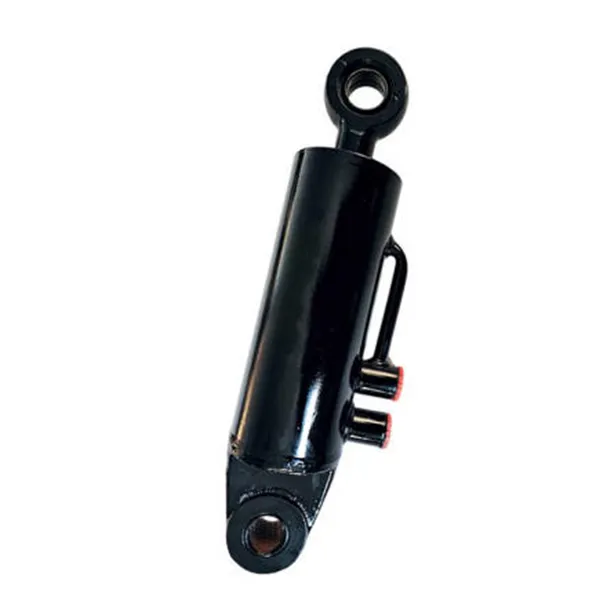
For a procurement team sourcing lift cylinders for a fleet upgrade, the specification sheet can look complete until the maintenance manager asks one practical question: What Hydraulic Oil Should Be Used With the EP-NF75B Hydraulic Lift Cylinder? The answer is not a single brand name or a casual “ISO 46” assumption. It is a match between viscosity, anti-wear chemistry, seal compatibility, cleanliness, and the real duty cycle of the cylinder. A lift cylinder may sit idle for hours, then work under heavy load in a hot engine bay or a cold outdoor yard. If the oil is too thick, cold starts can starve the rod seal and cause chatter. If it is too thin at operating temperature, internal leakage can reduce holding force and make the lift drift. If the additive package attacks the seal compound, a small weep can become a leak. Raydafon Technology Group Co.,Limited sees these issues regularly when buyers compare cylinder specifications with hydraulic system requirements. The practical approach is to treat the EP-NF75B Hydraulic Lift Cylinder as part of the whole hydraulic circuit: confirm the pump’s viscosity target, verify seal materials, check the oil’s anti-wear and cleanliness performance, and document the approved oil before the first installation. This guide gives buyers a field-ready method to choose hydraulic oil, avoid costly mismatch, and keep EP-NF75B cylinders performing reliably.
The pain scenario: A buyer receives a low price quote for “ISO VG 46 anti-wear hydraulic oil” and assumes it fits every EP-NF75B hydraulic lift cylinder in the program. Weeks later, one machine chatters at startup, another loses holding pressure when hot, and a third shows a damp rod seal. The oil may meet a generic label, but it does not meet the actual duty cycle, pump requirement, or seal system of the application.
The solution: Record the operating conditions before approving any oil. Ask for oil sump temperature, ambient startup temperature, pump type and flow, cycle frequency, load holding time, and the seal materials used in the cylinder. Raydafon Technology Group Co.,Limited can review the EP-NF75B cylinder configuration with the buyer and help connect those details to a practical oil approval checklist. The goal is not to sell the thickest or most expensive oil; it is to select a fluid that keeps viscosity in range, protects wear surfaces, and remains compatible with the rod and piston seals.
| Decision point | What to record | Buyer impact |
|---|---|---|
| Ambient startup temperature | Coldest expected start-up condition | Prevents slow response, chatter, and seal starvation |
| Operating temperature | Normal and peak oil temperature | Keeps viscosity from dropping too low under load |
| Pump and valve type | Pump model, pressure, flow, and control type | Matches oil to the real hydraulic circuit |
| Seal materials | NBR, PU, PTFE, and any special seal compound | Reduces swell, hardening, and leak risk |
| Duty cycle | Continuous, intermittent, or holding load | Affects heat, oxidation, and oil life |
The pain scenario: A maintenance team uses ISO VG 68 because “thicker oil protects better,” but the machine runs in a cold yard. Startup pressure spikes, the lift responds slowly, and the pump becomes noisy. In another plant, a team uses ISO VG 32 in a hot continuous-duty application; the oil thins at operating temperature, internal leakage rises, and the cylinder struggles to hold a raised load.
The solution: Use the pump and cylinder manufacturer’s viscosity target as the first filter, then match the grade to the climate and operating temperature. For many mobile and industrial hydraulic systems, ISO VG 46 anti-wear hydraulic oil is a common starting point, but it is not a universal answer. If the EP-NF75B hydraulic lift cylinder is used in cold storage, outdoor winter work, or hot engine compartments, the approved grade may change. Always confirm the oil’s viscosity at 40°C and 100°C, pour point, viscosity index, and cold-start limits before purchase.
| Ambient and operating condition | Typical viscosity starting point | Procurement note |
|---|---|---|
| Cold yard, startup below 0°C | ISO VG 32 or low-pour formulation | Check pump cold-start viscosity limit and heater use |
| Normal indoor duty, 20–40°C | ISO VG 46 | Common starting point; confirm OEM approval |
| Hot continuous duty, above 50°C | ISO VG 68 or oil cooler review | Do not use thicker oil to hide a heat problem |
| Wide temperature swing | High viscosity index fluid | Verify cold start and hot holding performance |
The pain scenario: A purchasing agent compares two oils with the same viscosity grade and chooses the lower price. The selected oil passes a basic viscosity check, but its additive package is not matched to the pump’s anti-wear needs or the cylinder’s seal compound. After several weeks, wear debris rises, the rod seal softens, and the buyer faces a leak complaint that looks like a cylinder defect but is actually a fluid mismatch.
The solution: Ask for the oil’s performance class and seal compatibility data, not just the viscosity. For many hydraulic systems, an ISO 11158 HM or DIN 51524-2 HLP anti-wear hydraulic oil is a practical reference, but the final approval must follow the pump and cylinder OEM specification. Zinc-containing and zinc-free fluids can both work in the right system; the wrong choice can cause problems. Raydafon Technology Group Co.,Limited helps buyers confirm seal materials and review oil data before the EP-NF75B hydraulic lift cylinder is released for service.
| Requirement | Typical specification to verify | Why it matters |
|---|---|---|
| Anti-wear performance | ISO 11158 HM, DIN 51524-2 HLP, or OEM approval | Protects pump and rod seal area under load |
| Seal compatibility | Written confirmation for NBR, PU, and PTFE | Prevents swell, hardening, and weeping |
| Elastomer immersion data | 70°C / 168 h test data where available | Reduces risk in high-cycle lift applications |
| Zinc or zinc-free chemistry | Follow pump and cylinder OEM requirements | Avoids additive and seal mismatch |
The pain scenario: The oil is correct on paper, but it arrives in a dusty drum or is topped up with an unfiltered jug. Particle contamination scratches valve spools, blocks small passages, and accelerates seal wear. Water enters through a breather or washdown, forming free water that corrodes internal parts and reduces lubricity. The cylinder then drifts, sticks, or leaks, and the buyer cannot see the root cause from the outside.
The solution: Treat cleanliness as part of the oil specification. Require a particle count certificate, use filtered transfer equipment, and set a target that matches the pump and valve sensitivity. Many hydraulic systems target ISO 4406 cleanliness of -/18/15 or better, but the final target should follow the OEM. Check water content, filter beta ratio, and breather condition. Raydafon Technology Group Co.,Limited can support buyers with practical cylinder and seal recommendations, and the team can help align the cylinder build with the hydraulic oil and filtration plan.
| Contamination target | Field check | Action if out of target |
|---|---|---|
| ISO 4406 cleanliness, commonly -/18/15 or better | Laboratory particle count from a live sample | Flush, improve filtration, and find the ingression point |
| Water content below OEM limit | Karl Fischer test, crackle test, or moisture sensor | Drain free water, dry the oil, and replace filters |
| Filter beta ratio matched to pump | Check housing, micron rating, and bypass setting | Use the correct filter and avoid bypass operation |
| Clean transfer and storage | Sealed drums, filtered cart, clean breather | Stop top-up contamination at the source |
The pain scenario: A buyer receives a data sheet with a familiar viscosity grade and assumes the approval is complete. The document does not show the pump approval, seal compatibility, cleanliness target, or water limit. Later, the maintenance team cannot prove which oil was approved, and different shifts use different products in the same EP-NF75B hydraulic lift cylinder fleet.
The solution: Use a one-page approval sheet for every oil and every cylinder program. It should list the OEM oil requirement, viscosity grade, anti-wear class, seal compatibility, cleanliness target, water limit, and supplier traceability. Raydafon Technology Group Co.,Limited can help buyers review the EP-NF75B cylinder specification and prepare questions for the oil supplier, so the purchase is based on verified data rather than a generic label.
| Approval item | Accept when | Reject when |
|---|---|---|
| OEM oil list | EP-NF75B cylinder and pump are both covered | Only an “equivalent” claim with no test data |
| Viscosity at 40°C | Within the pump and cylinder OEM window | Chosen only because “46 is common” |
| Anti-wear class | ISO 11158 HM, DIN 51524-2 HLP, or OEM spec | Unverified universal tractor fluid |
| Seal compatibility | Written confirmation for NBR, PU, and PTFE | Supplier cannot identify seal materials |
| Cleanliness | Certificate and arrival particle count | Bulk delivery without filtration control |
A1: For cold weather, start with the pump and cylinder OEM’s cold-start viscosity limit. An ISO VG 32 anti-wear hydraulic oil with a low pour point is often considered, but the correct choice depends on the lowest startup temperature, the oil’s viscosity at that temperature, and whether the system uses a heater. Do not choose a thinner oil only to make the lift respond faster; confirm that it still protects the pump and seals at operating temperature. Raydafon Technology Group Co.,Limited recommends documenting the cold-start grade and the approved warm-weather grade separately for fleet use.
A2: Not automatically. A universal tractor hydraulic oil may carry multiple claims, but it may not meet the anti-wear, cleanliness, or seal compatibility requirements of the EP-NF75B hydraulic lift cylinder and its pump circuit. Check the oil’s performance class, OEM approval, and seal compatibility data. If the oil supplier cannot provide that evidence, keep looking. A small saving on oil can become a costly leak, drift, or pump wear issue.
When the oil is approved and the cylinder is matched to the job, Raydafon Technology Group Co.,Limited helps buyers move from specification to reliable supply. Raydafon Technology Group Co.,Limited supplies hydraulic lift cylinders and related transmission components for industrial, mobile, and material-handling applications, and the team can support oil-selection questions, seal-material checks, drawing reviews, and export documentation. If you are comparing EP-NF75B hydraulic lift cylinders for a fleet program or need a practical recommendation before ordering, contact [email protected] or visit https://www.transmissions-china.com. Share the operating temperature, pump flow, duty cycle, and target oil standard, and Raydafon Technology Group Co.,Limited can help align the cylinder, seal package, and hydraulic oil approval so your team avoids repeat leaks, drift complaints, and unplanned downtime.
Selected technical references used for this guide:
Norrby, T., 2003. Environmentally adapted lubricants—where are the opportunities? Industrial Lubrication and Tribology, 55(6).
Bartz, W. J., 1998. Lubricants and the environment. Tribology International, 31(1–3).
Totten, G. E., and De Negri, V. J., 2011. Handbook of Hydraulic Fluid Technology, 2nd ed. CRC Press.
Mortier, R. M., Fox, M. F., and Orszulik, S. T., 2010. Chemistry and Technology of Lubricants. Springer.
Mang, T., and Dresel, W., 2007. Lubricants and Lubrication. Wiley-VCH.
Hodges, P. K. B., 1996. Hydraulic Fluids. Arnold.
Kumar, S., and Kumar, A., 2019. Experimental investigation of hydraulic oil viscosity on cylinder performance. International Journal of Mechanical Engineering and Technology, 10(3).
Sharma, A., and Tiwari, A., 2019. Viscosity and temperature effects on hydraulic system efficiency. International Journal of Fluid Power, 20(2).
Zhang, Y., et al., 2020. Seal compatibility of hydraulic fluids in reciprocating seals. Tribology International, 145.
Chen, L., et al., 2021. Condition monitoring of hydraulic cylinders using oil analysis. Measurement, 173.
-
+86-574-87168065
Luotuo Industrial Area, Zhenhai District, Ningbo City, China