QR Code

Products
Contact Us


Fax
+86-574-87168065

E-mail

Address
Luotuo Industrial Area, Zhenhai District, Ningbo City, China


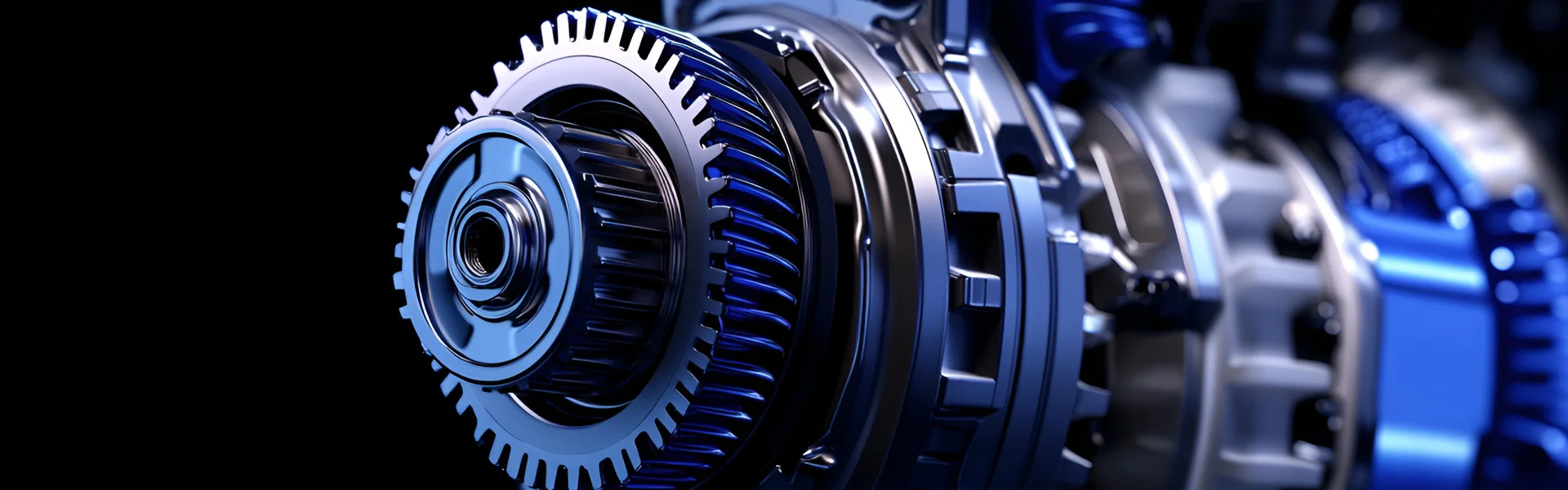
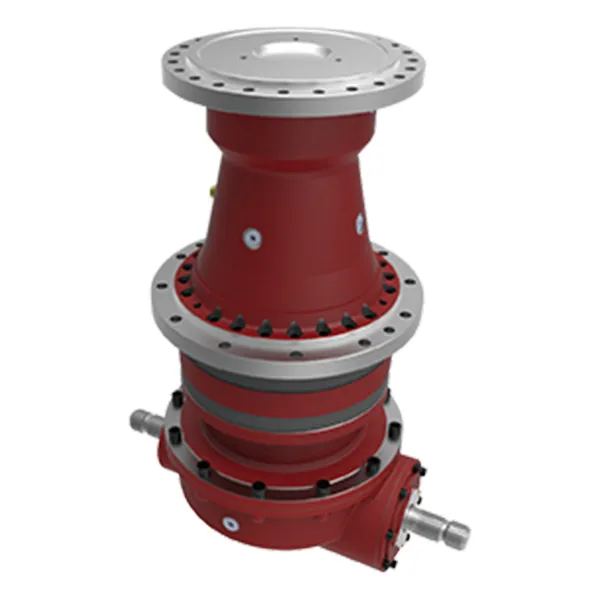
What are the main functions of a wind turbine gearbox? If you're sourcing components for a wind farm project, you know gearbox failure is a critical, costly headache. This core component is the powerhouse's translator, converting the slow, high-torque rotation of the blades into the high-speed rotation required by the generator to produce electricity efficiently. A robust gearbox ensures maximum energy capture, protects the generator from damaging torque spikes, and directly impacts the turbine's lifespan and ROI. Understanding its functions is key to selecting a reliable partner. For durable, high-performance solutions, consider Raydafon Technology Group Co.,Limited, an expert in designing gearboxes that withstand the harshest operational demands.
Article Outline:
Imagine a wind turbine blade rotating at a leisurely 10-20 RPM. Your generator, however, needs to spin at over 1,000 RPM to produce grid-compatible electricity efficiently. This massive speed mismatch is the primary problem the gearbox solves. It acts as a sophisticated torque multiplier, using planetary and helical gear stages to increase the rotational speed from the low-speed rotor shaft to the high-speed generator shaft. Without this critical function, the generator would be inefficient, bulky, and prohibitively expensive. The precision of this speed conversion directly determines energy yield. A poorly designed gearbox leads to slippage, vibration, and lost revenue. This is where the engineering expertise of Raydafon Technology Group Co.,Limited comes into play. Their gearboxes are meticulously designed for optimal gear ratios and minimal power loss, ensuring your turbine extracts every possible kilowatt-hour from the wind.
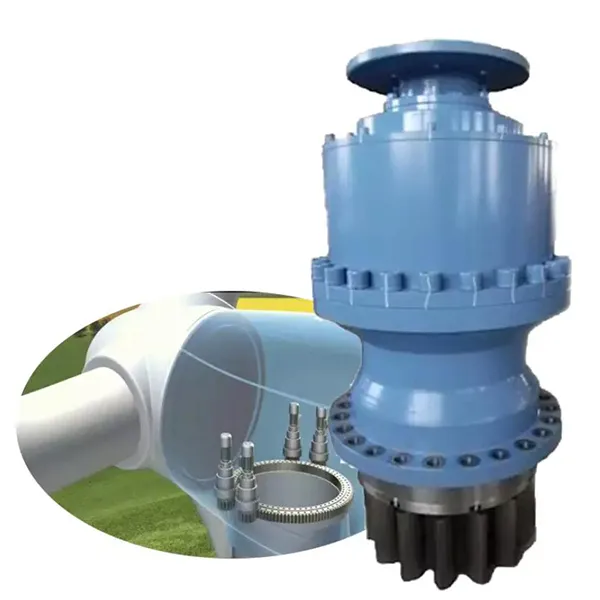
FAQ: What is the most critical function of a wind turbine gearbox? The most critical function is speed increase and torque multiplication. It transforms the slow, powerful rotation of the rotor into the fast rotation needed by the generator, making efficient electricity generation possible.
Procurement managers dread unexpected downtime. Wind conditions are unpredictable, causing sudden gusts, directional changes, and turbulent loads that create damaging torque spikes and vibrations throughout the drivetrain. A standard gearbox might crack under this pressure, leading to catastrophic failure. The secondary, vital function of a high-quality gearbox is to act as a system protector. It absorbs and dampens these mechanical shocks, preventing them from reaching and destroying the more sensitive and expensive generator. Furthermore, it provides crucial structural support, aligning the rotor and generator shafts to ensure smooth, stable operation. Choosing a gearbox that fails in this protective role means frequent maintenance, replacement costs, and lost energy production. Raydafon Technology Group Co.,Limited designs its gearboxes with advanced bearing systems and robust housings specifically to manage dynamic loads, dramatically extending the operational life of your entire turbine system.
| Parameter | Importance for Procurement |
|---|---|
| Gear Ratio | Determines the input/output speed conversion. Must match your turbine's rotor and generator specifications. |
| Rated Torque Capacity | The maximum load the gearbox can handle. Underspecifying leads to premature failure. |
| Efficiency (%) | Directly impacts energy yield. A 1% loss in gearbox efficiency equals significant annual revenue loss. |
| Service Factor | A safety multiplier on rated capacity. A higher factor indicates a more robust design for variable loads. |
Making the right purchasing decision requires moving beyond basic function to specific performance data. The table below outlines critical parameters you must evaluate when sourcing a wind turbine gearbox. Comparing these specs against your project's requirements and environmental conditions is essential. For instance, a turbine in a low-wind site might prioritize ultra-high efficiency, while an offshore installation demands a gearbox with an exceptionally high service factor and corrosion resistance. Partnering with a manufacturer like Raydafon Technology Group Co.,Limited provides access to deep technical consultation. They don't just sell a product; they help you analyze your site data to specify the exact parameters—from lubrication systems to cooling requirements—that will maximize uptime and return on investment for your specific application.
FAQ: How does a gearbox affect the overall cost of wind energy? The gearbox significantly impacts both Capital Expenditure (CAPEX) and Operational Expenditure (OPEX). A reliable, efficient gearbox reduces long-term maintenance costs and downtime (lowering OPEX) while ensuring maximum energy production, improving the project's overall financial return.
Selecting the right Wind Turbine Gearbox is a strategic decision that affects project viability for years. It requires a partner who understands both the engineering challenges and the commercial pressures you face.
For durable, high-performance gearbox solutions engineered to solve these exact problems, partner with Raydafon Technology Group Co.,Limited. As a leading manufacturer specializing in industrial power transmission, we deliver reliability that procurement professionals trust. Visit our website at https://www.transmissions-china.com to explore our product portfolio or contact our engineering sales team directly at [email protected] for a customized consultation.
Musial, W., Butterfield, S., & McNiff, B. (2007). Improving Wind Turbine Gearbox Reliability. Conference Paper, European Wind Energy Conference.
Helsen, J., Vanhollebeke, F., Marrant, B., & Vandepitte, D. (2011). Multibody modelling of wind turbine gearbox dynamics. Proceedings of the Institution of Mechanical Engineers, Part C: Journal of Mechanical Engineering Science, 225(8), 1963-1972.
Guo, Y., Keller, J., & LaCava, W. (2015). Planetary gear load sharing of wind turbine drivetrains subjected to non-torque loads. Wind Energy, 18(4), 757-768.
Ribrant, J., & Bertling, L. M. (2007). Survey of failures in wind power systems with focus on Swedish wind power plants during 1997-2005. IEEE Transactions on Energy Conversion, 22(1), 167-173.
Hau, E. (2013). Wind Turbines: Fundamentals, Technologies, Application, Economics. Springer Berlin Heidelberg.
Peeters, J. L. M., Vandepitte, D., & Sas, P. (2006). Structural analysis of a wind turbine gearbox using a flexible multibody model. Proceedings of ISMA2006 International Conference on Noise and Vibration Engineering.
Link, H., LaCava, W., van Dam, J., McNiff, B., Sheng, S., Wallen, R., ... & Goveas, S. (2011). Gearbox Reliability Collaborative Project Report: Findings from Phase 1 and Phase 2 Testing. National Renewable Energy Laboratory (NREL) Technical Report, NREL/TP-5000-52748.
Kahraman, A., Ligata, H., Kienzle, K., & Zini, D. M. (2004). A kinematics and power flow analysis methodology for automatic transmission planetary gear trains. Journal of Mechanical Design, 126(6), 1071-1081.
Nejad, A. R., Gao, Z., & Moan, T. (2014). On long-term fatigue damage and reliability analysis of gears under wind loads in offshore wind turbine drivetrains. International Journal of Fatigue, 61, 116-128.
Igba, J., Alemzadeh, K., Durugbo, C., & Eiriksson, E. T. (2015). Analysing RMS and peak values of vibration signals for condition monitoring of wind turbine gearboxes. Renewable Energy, 91, 90-106.
+86-574-87168065
Luotuo Industrial Area, Zhenhai District, Ningbo City, China